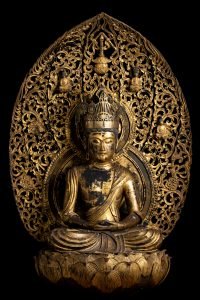
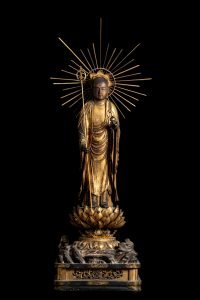
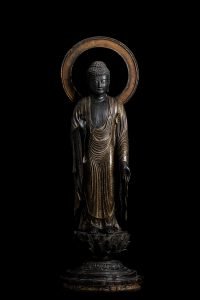
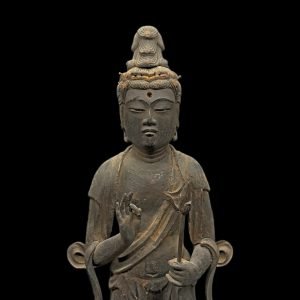
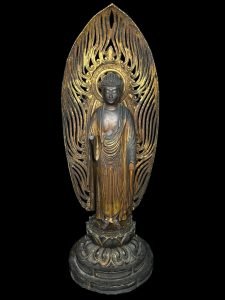
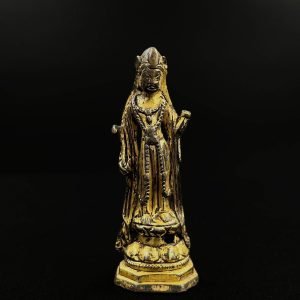
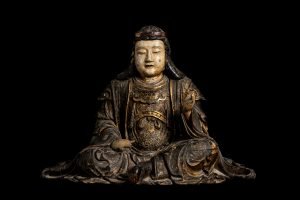
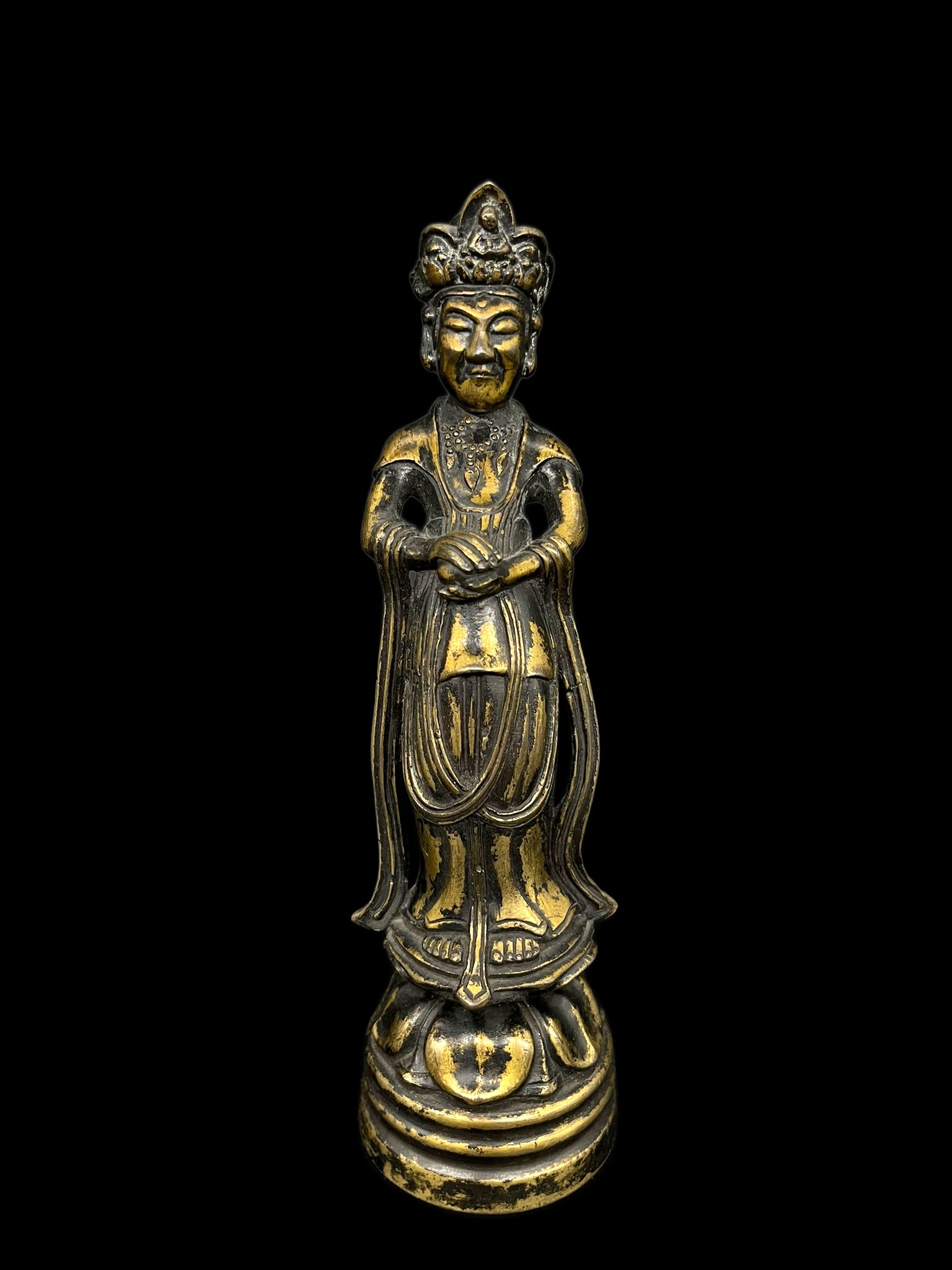
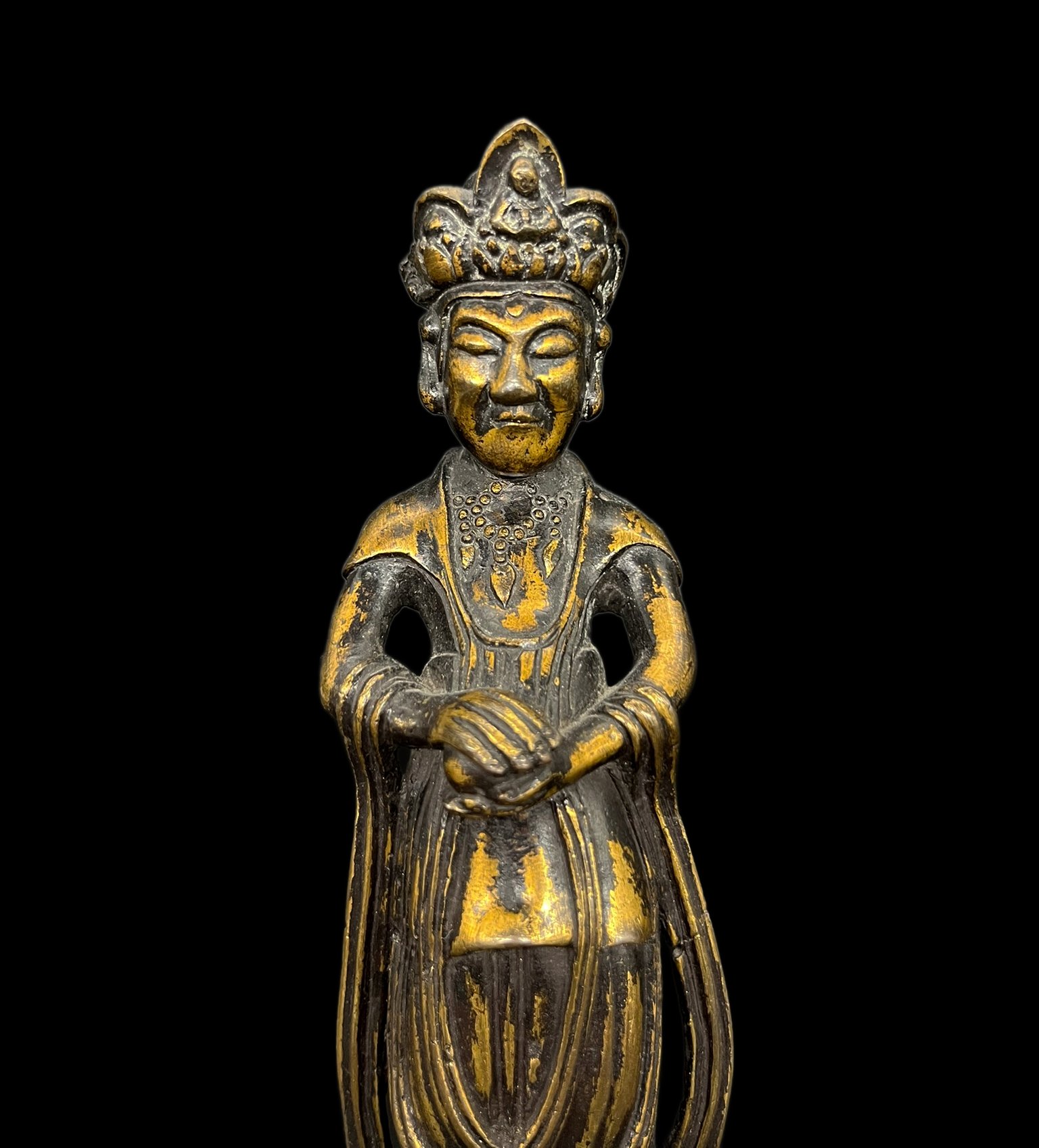
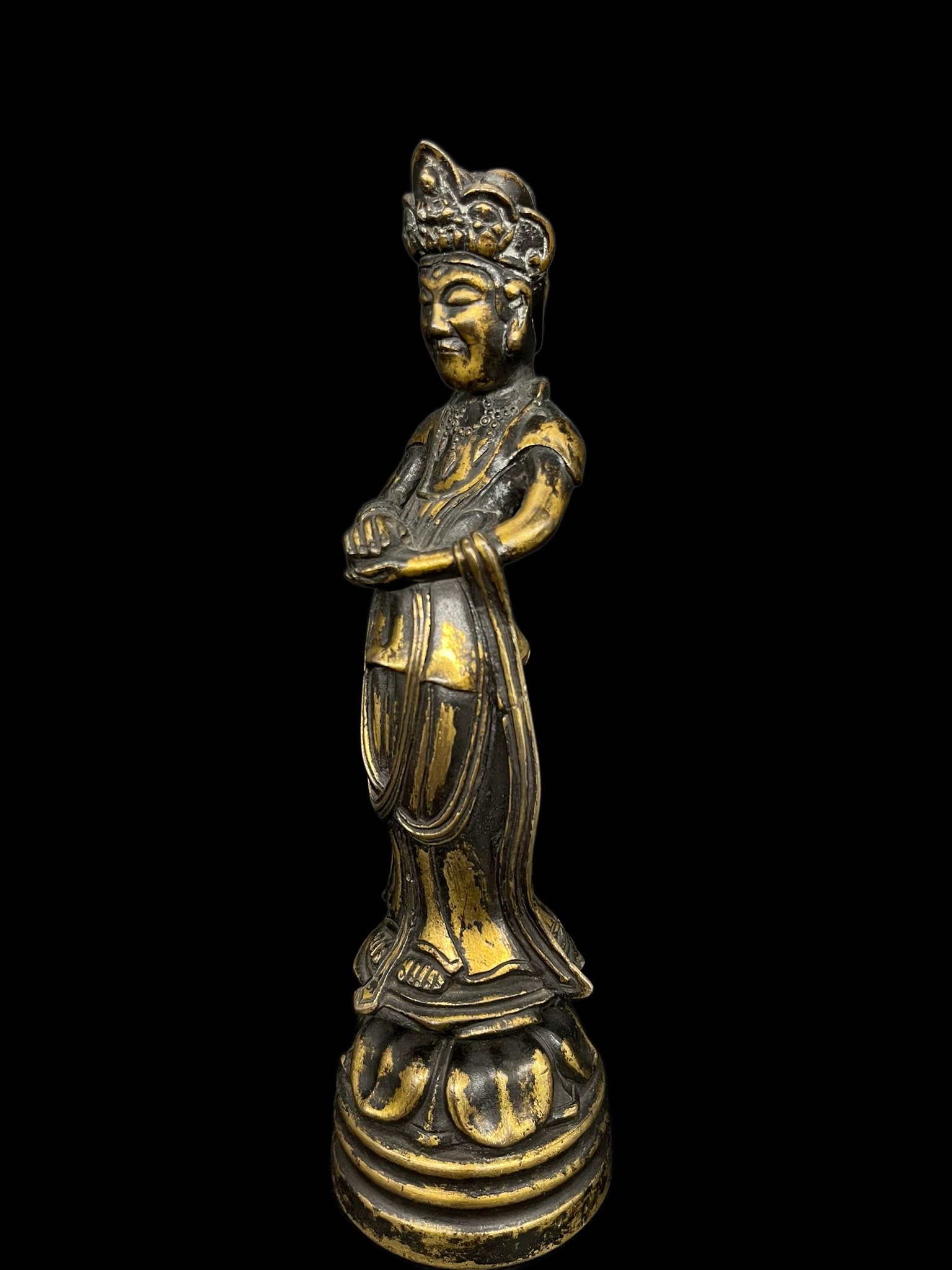
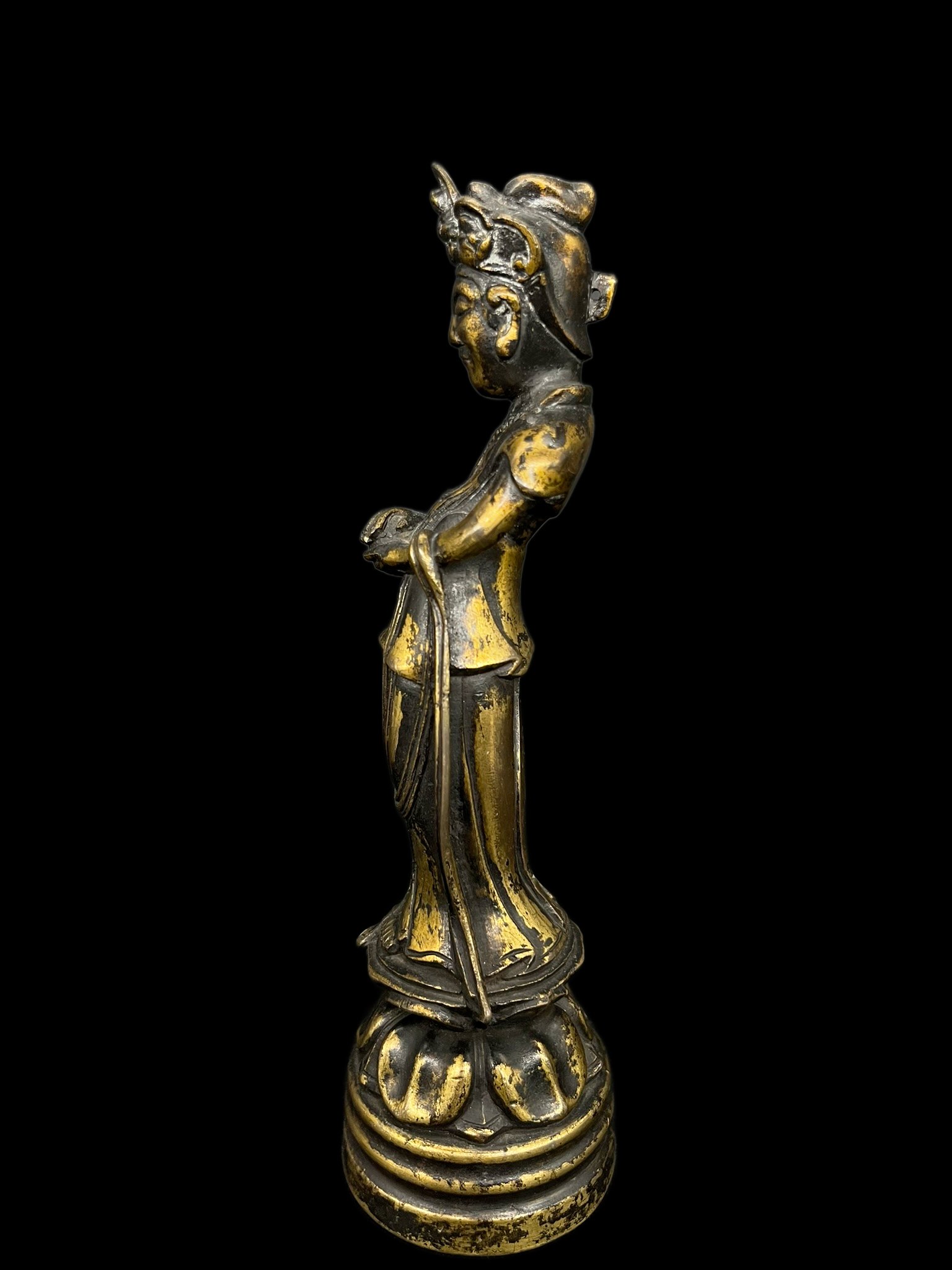
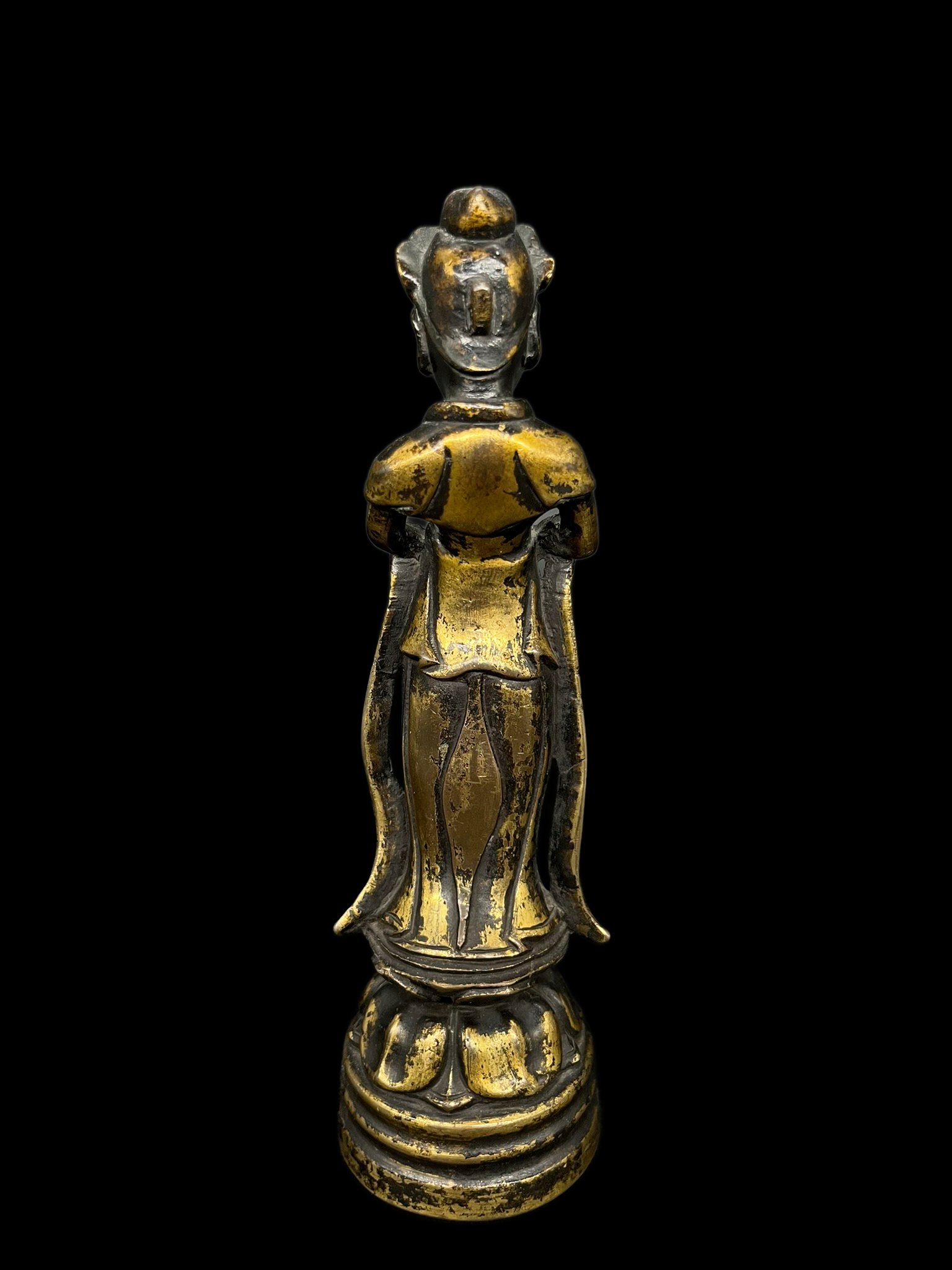
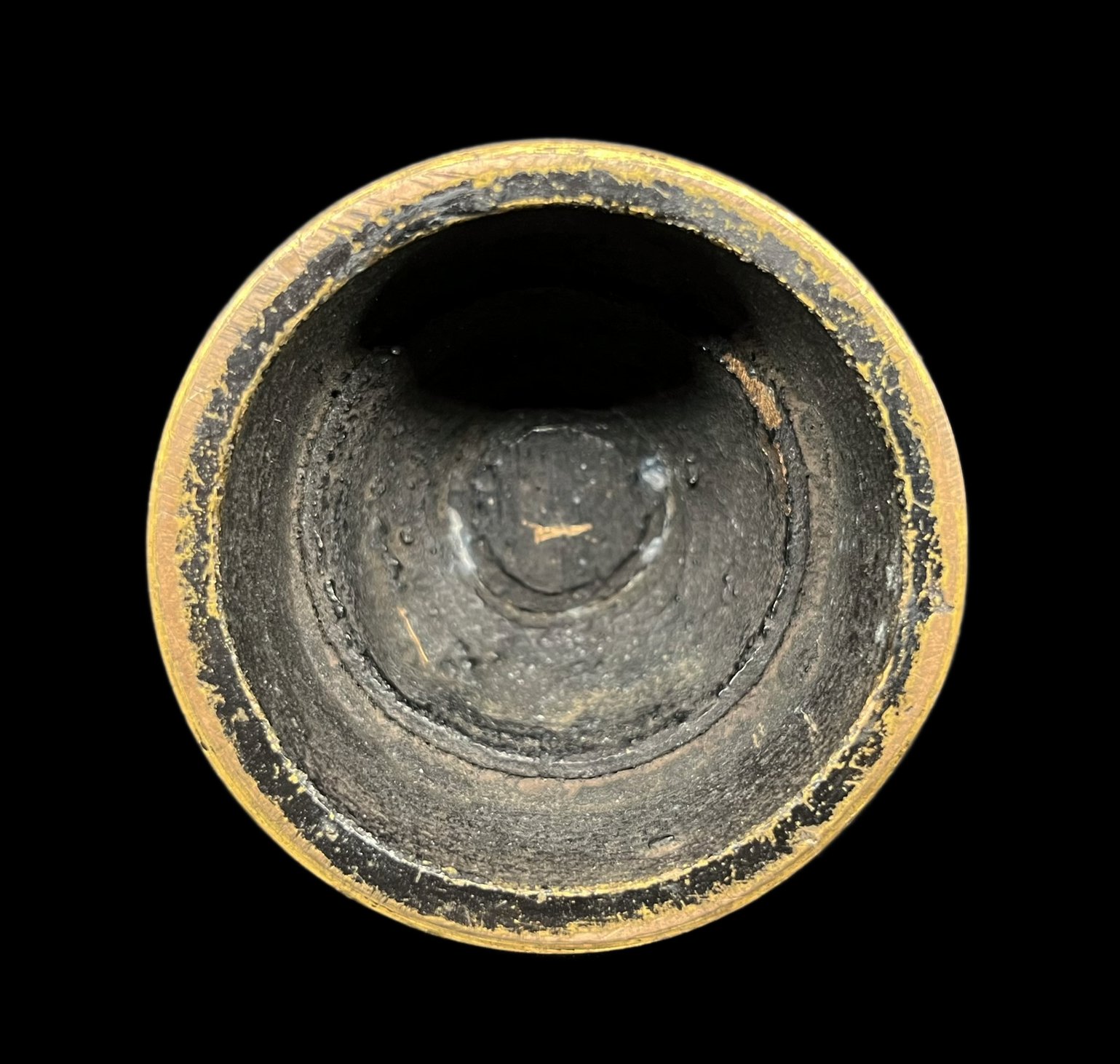
An Asuka-period gilded bronze statue of the ‘jewellery-keeper’ Kannon bosatsu standing barefoot on a pedestal decorated with lotus leaves. The lower half of his body is covered by a kun (layered skirt), and the tenne material crosses in front of the knee, starting at the shoulders and resting on the two forearms. On the top of his head, the hair is tied up in two bunches and he wears a kebutsu (crown decorated with Buddha), which is the hallmark of the Kannon Bodhisattvas. His ears have large dangling earrings and his neck is decorated with a beaded necklace. There is also a byakugō (“white curling hair”) on the forehead, usually in the form of a dot or stone, which expresses his greatness. In his hand he holds a sacred gemstone, also known as a hōju, which symbolizes the redemptive power of the Kannon. Seen from the front, the sculptor has strove for symmetry, a characteristic of Buddhist statues from the Asuka period.
The Kannons, the Bosatsus (or Bodhisattvas) who preach compassion, are one of the most popular and most commonly depicted deities in Japanese Buddhism. The Kannon grants salvation to all who call upon him.
The Asuka period
The Asuka period is a crucial period in Japanese history because Buddhism, thanks to the Soga clan, began to spread throughout the country. In addition to promoting Buddhism, the clan advocated the introduction of the Chinese Confucianist model in both politics and culture. However, not all the power groups accepted the Soga clan’s aspirations; the Nakatomi family, who were important figures in Shinto religious rituals, and the Mononobe military clan fought against the new trends for over a century.
Thanks to this whole historical event, the culture of the Asuka era was completely permeated by China, making Japanese Buddhist sculpture follow the style of Chinese dynasties, such as this Kannon Bosatsu.