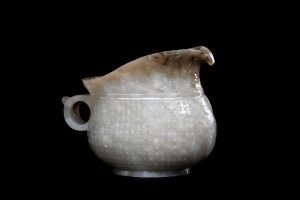
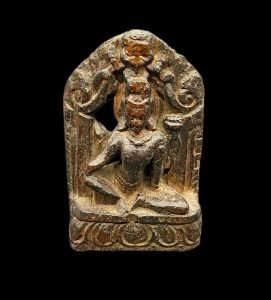
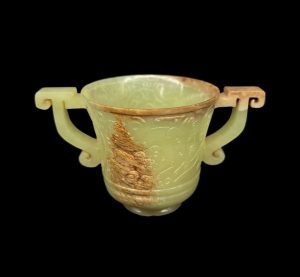
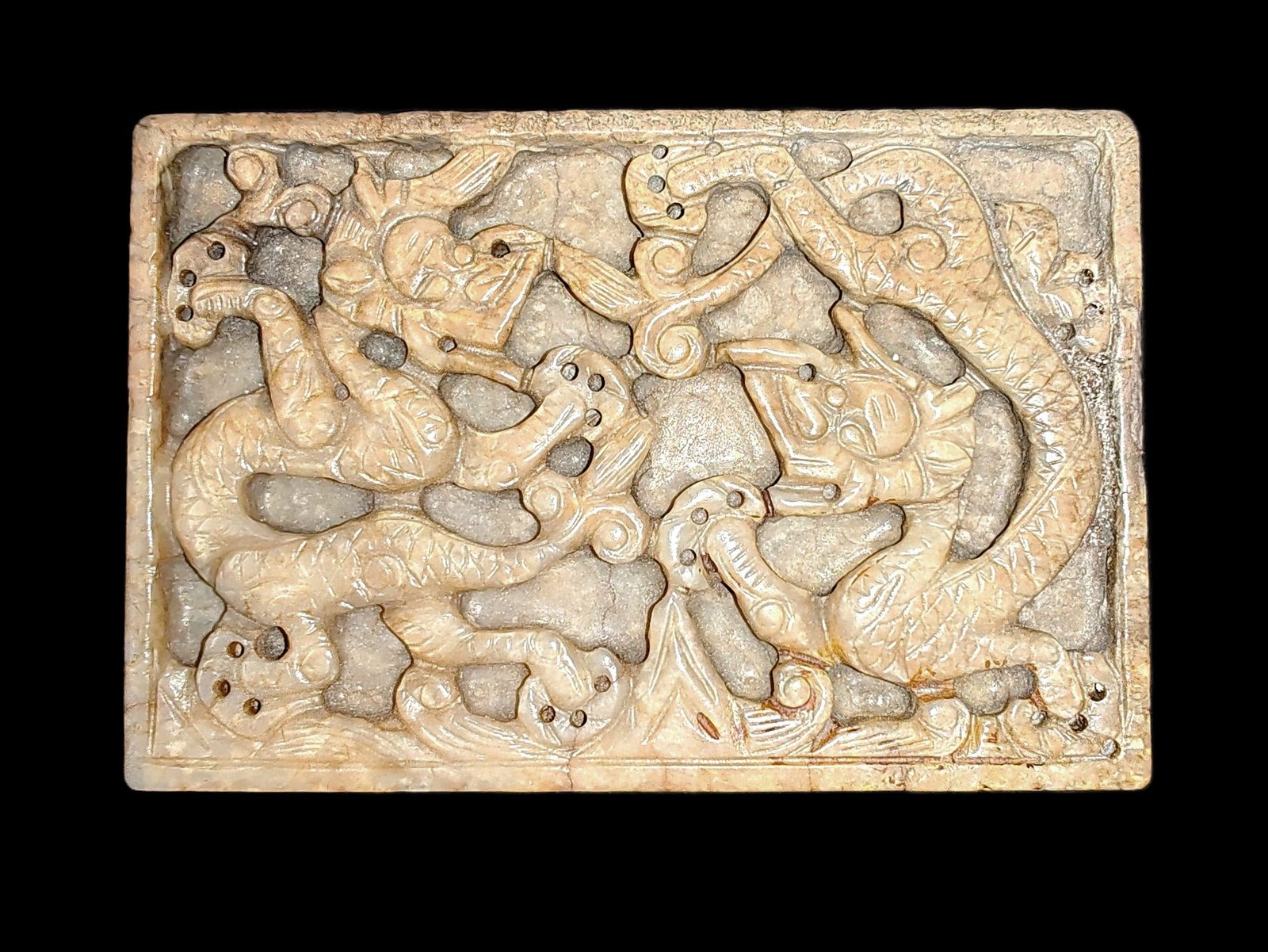
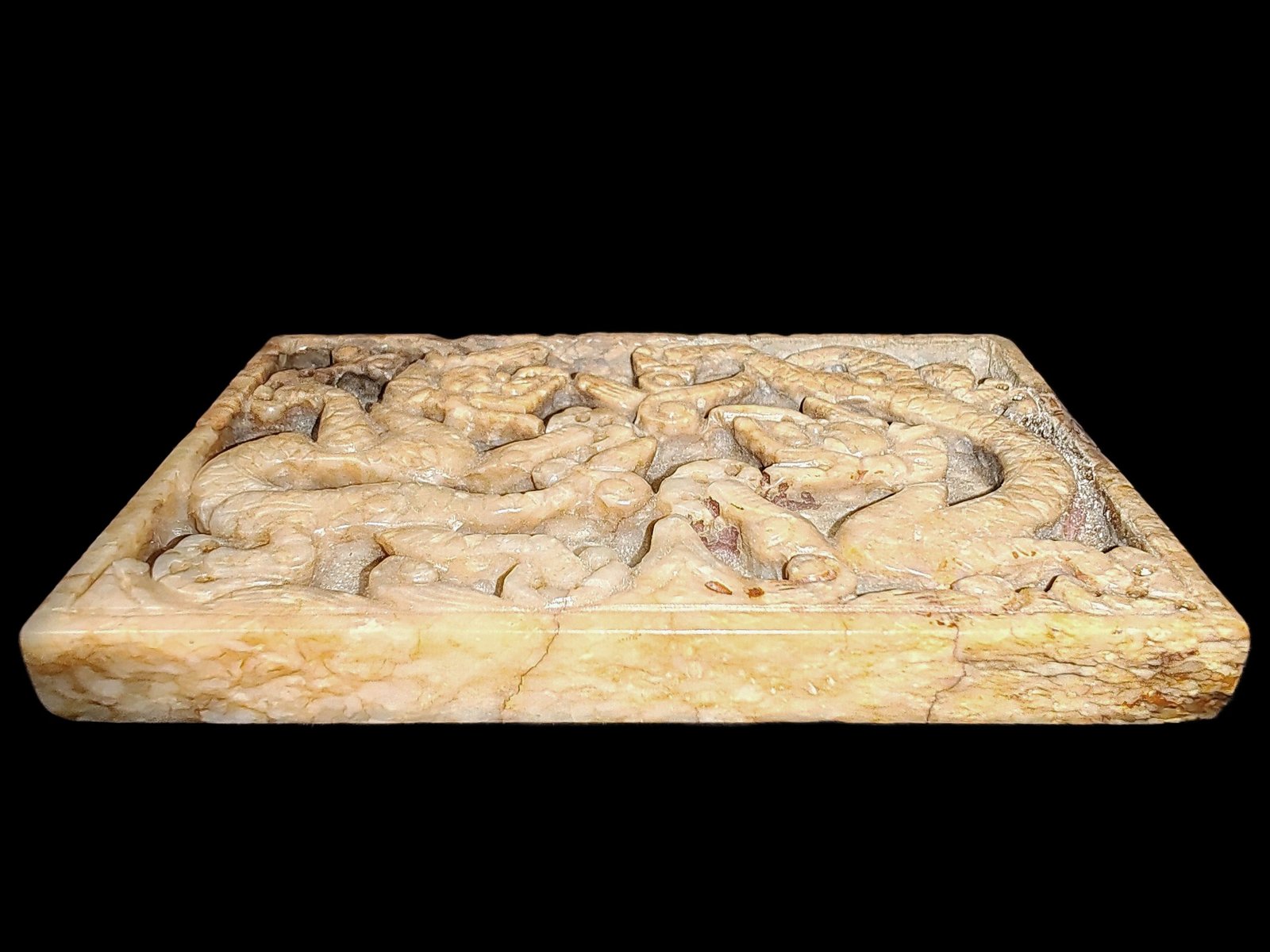
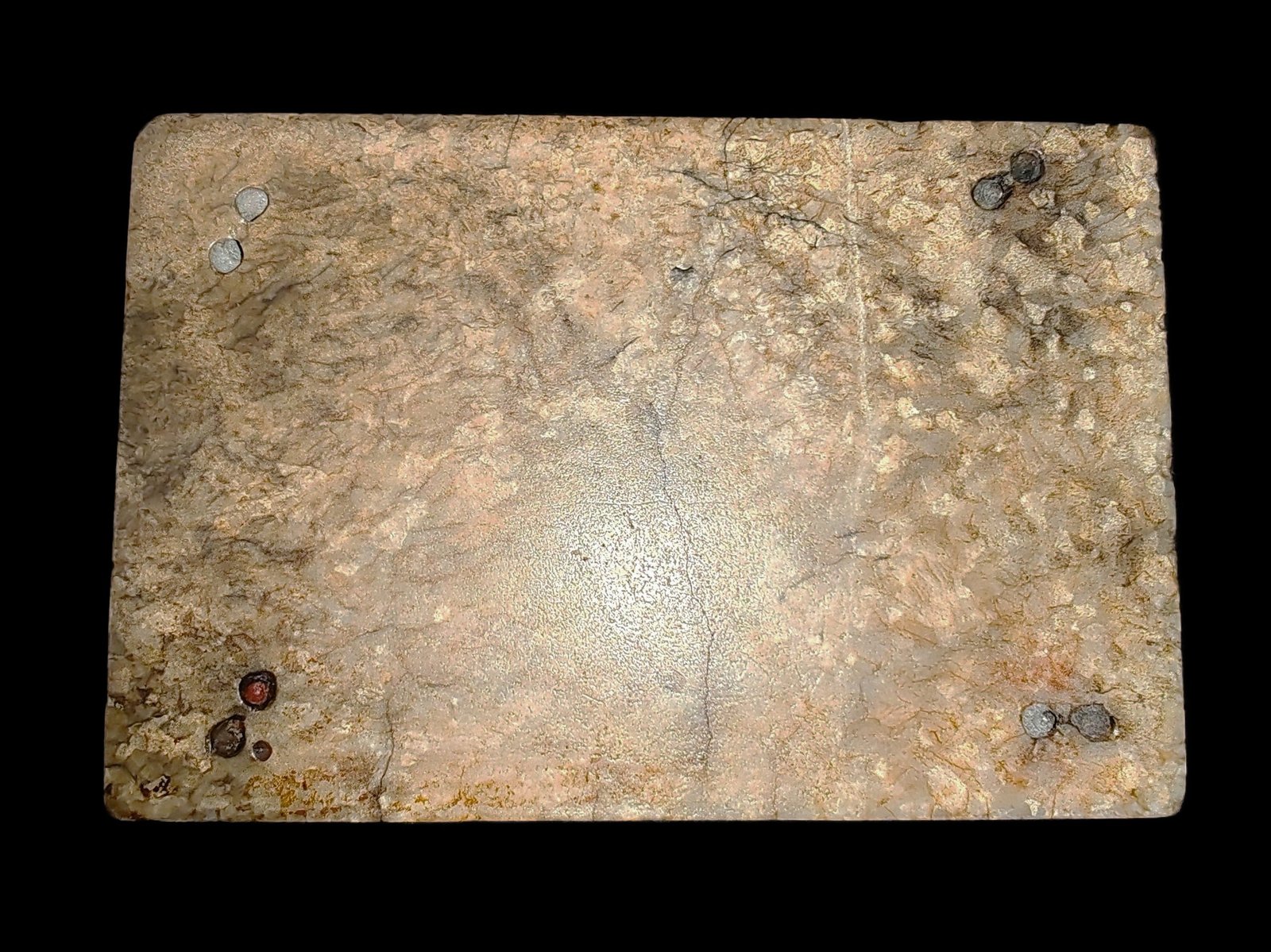
Jade plaque from Ming Dynasty, China The front of the plaque shows detailed carving interspersed with dragon motifs. ‘Chicken bone’ jade as a choice of material is not far from Chinese carvers, who, in addition to stones, also made carvings of ivory, rhinoceros and other hornbeams and bamboo. Jade is made to look like chicken bone, or ivory, by calcification. The dragon plays a significant role in Chinese culture, symbolising luck, protection, intelligence and masculine traits. It is usually depicted in a serpentine form with 4 legs, which features are also visible on the plaque. The dragon was also used as a symbol of imperial power and strength, for example during the Ming dynasty.
According to European folklore, the dragon is a fire-breathing monster that is not only powerful and fearsome, but also aggressive, terrifying the living.
The Chinese dragon, on the other hand, is seen in a completely different light. The Chinese dragon has been a spiritual and cultural symbol for centuries, emphasising luck, power and harmony. It is an important character in mythology, where, unlike in Europe, only positive stories are associated with it. Liu Bang, the founder of the Han dynasty, for example, claimed that just before his conception, his mother had a dream about a dragon. In subsequent dynasties, the dragon motif also served as a status symbol: in the Yuan dynasty, a two-horned, five-clawed dragon was only allowed to be worn by the ruler, and a four-clawed dragon only by princes and the nobility; in the Ming and Qing dynasties, the emperor was excluded from wearing the mythological creature on his robes. According to many stories and point of views, the dragon is a powerful mover of water, as well as good luck, and thus storms, seas and waterfalls are all attributed to it.