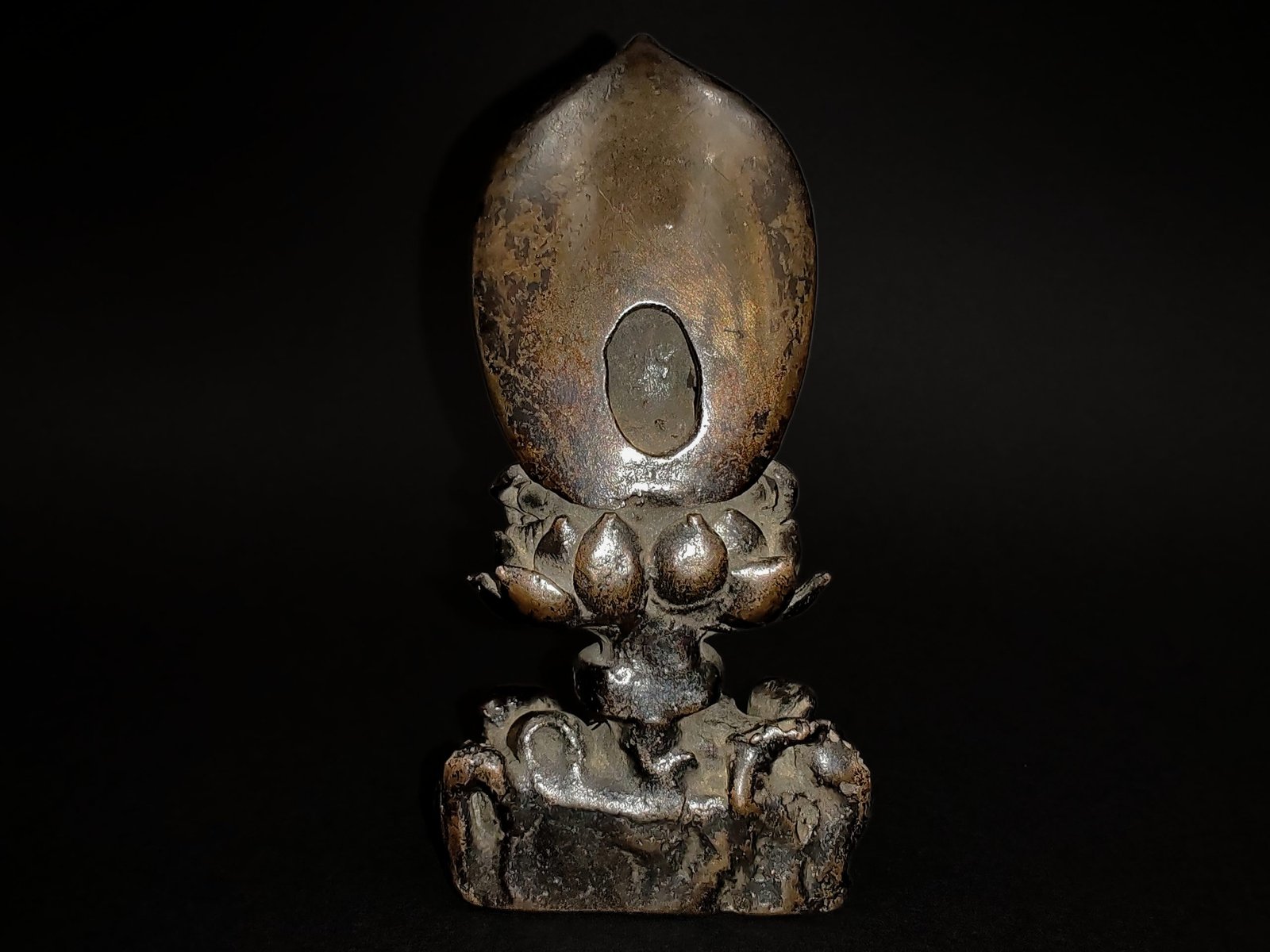
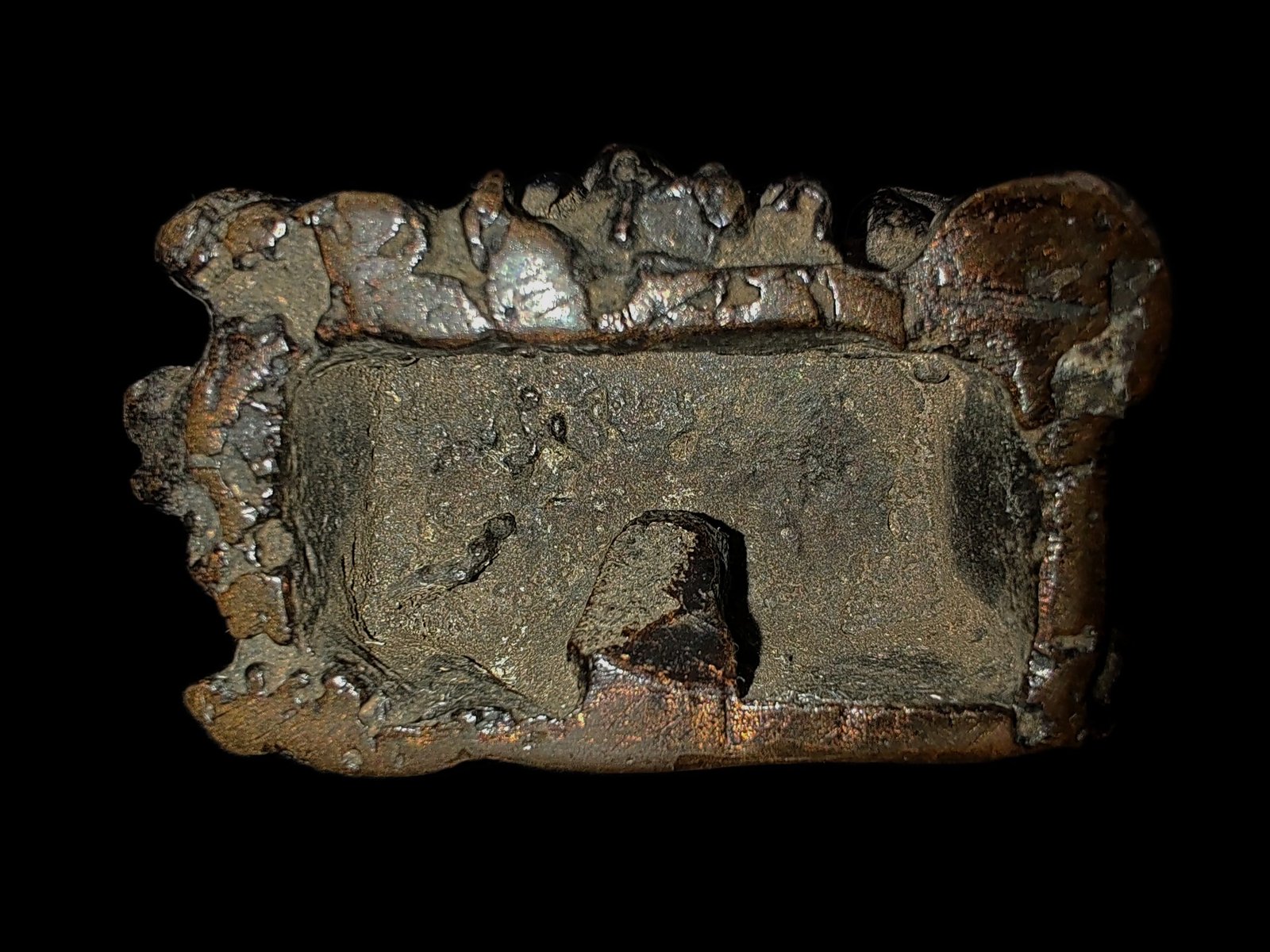
Japan, Kamakura – Muromachi period, 13 – 16th century
Dimensions: 8.8 cm
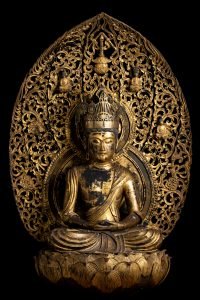
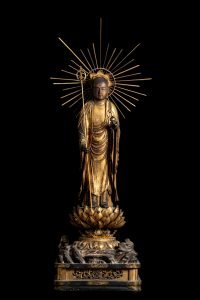
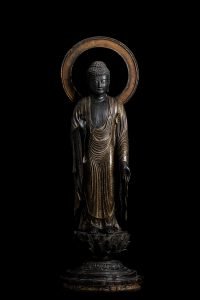
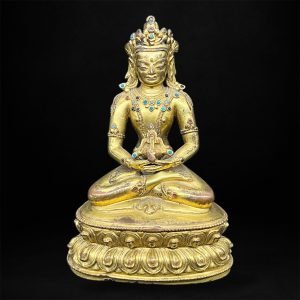
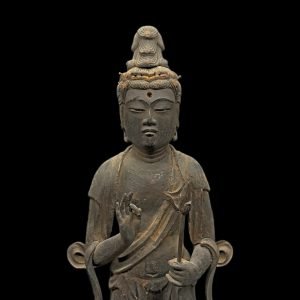
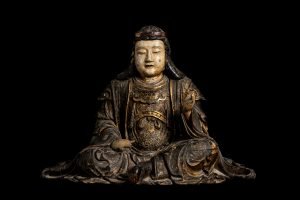
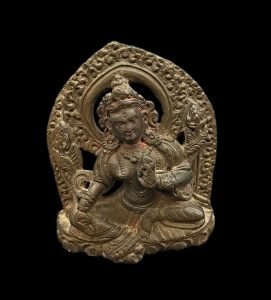
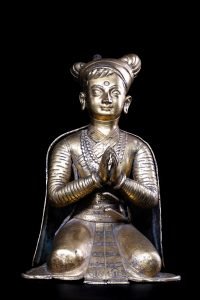
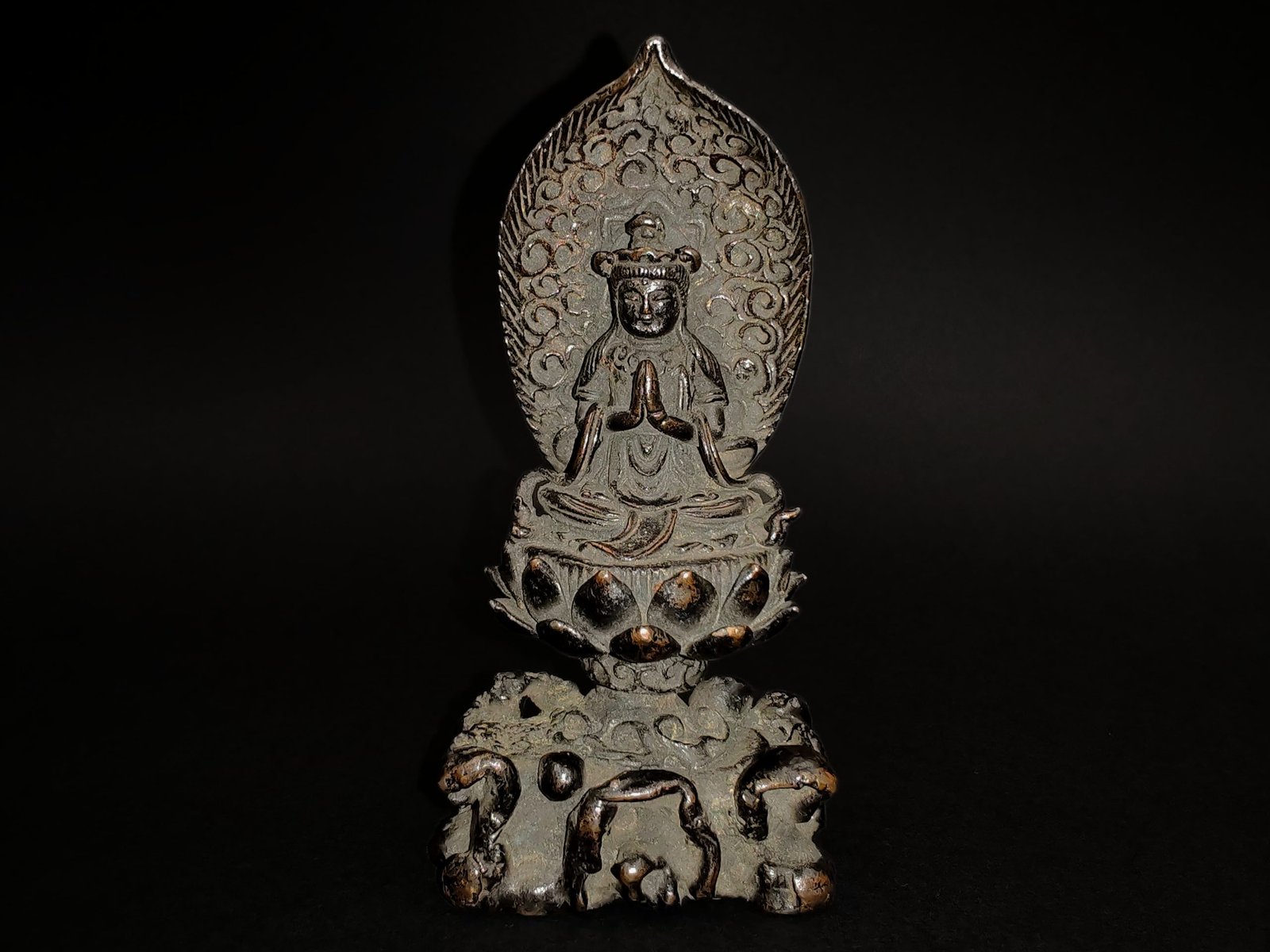
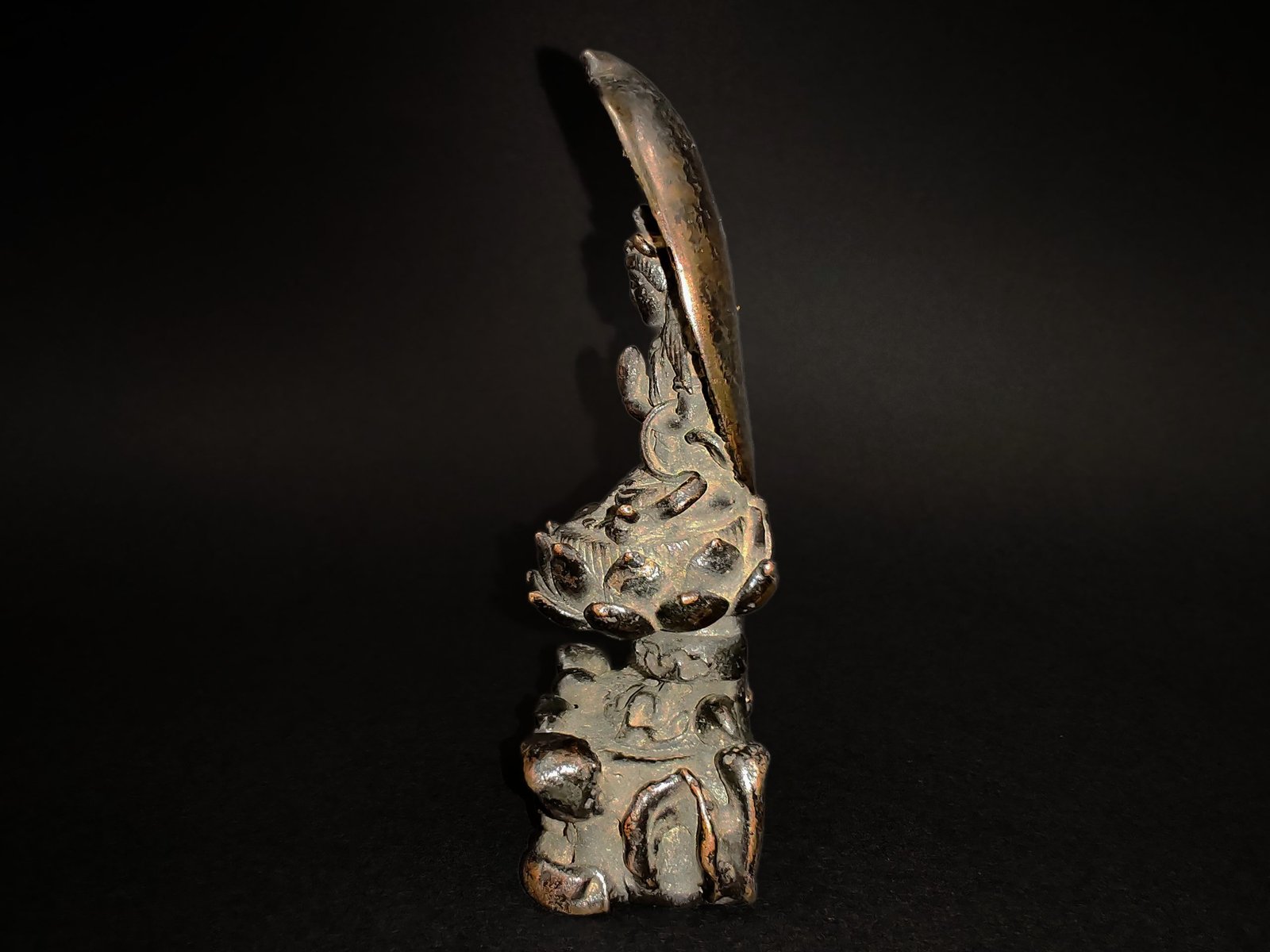
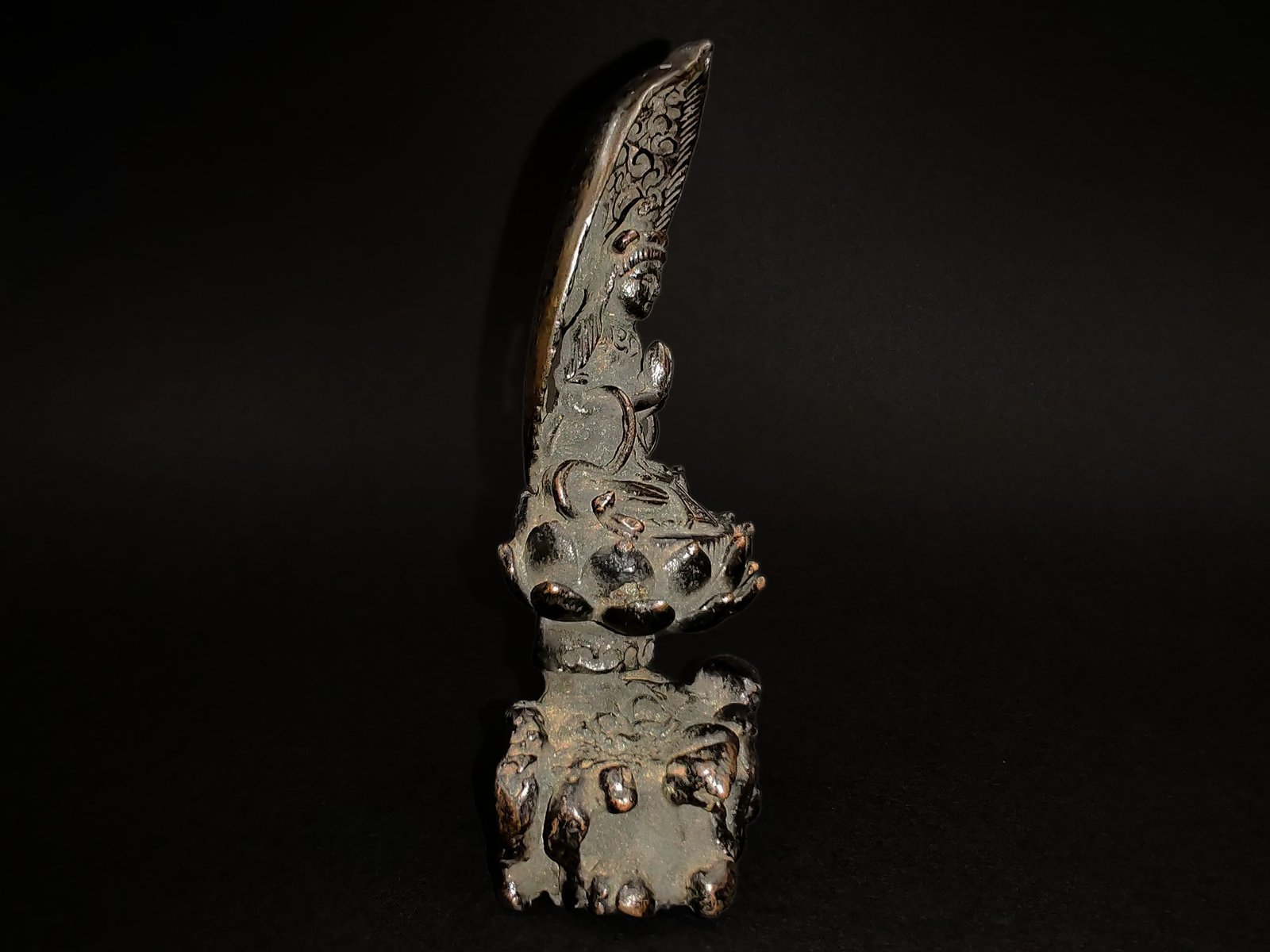
Bronze Japanese Bosatsu statue from around the 13th-16th century
Bosatsu, also known as Bodhisattva, is shown seated on a double lotus pedestal attached to another pedestal at the bottom. Bosatsu is in a meditation posture, i.e. kekka fuza, with the legs crossed, both feet facing upwards and resting on the thighs. The hands are in a gassho (prayer) position in front of the chest. He wears many layers of clothes, the material right under his hands is arranged in small waves, which phenomenon is also called honpashiki. The head, neck and arms are adorned with jewellery: crowns, necklaces, bangles. Two lotus flowers are interlaced around the right and left arms. Behind her back is an elaborately decorated mandorla that looks like a lotus petal, like the back of a throne chair.
The meaning of Bosatsu or Bodhisattva is an enlightened being who has gone through each stage of the bodhisattva path in order to attain buddhahood. Initially, only those who vowed to become Buddhas and received blessings from a previous Buddha could become bodhisattvas. According to popular belief, the person of the bodhisattva is seen as a divine being of boundless compassion who helps those in distress.
Kamakura and Muromachi periods:
The Muromachi and Kamakura periods alternated during the 13th-16th centuries. During the Kamakura era, the first shogunate was established, the role of the samurai increased, feudalism was introduced and new Buddhist schools such as Honen, Eisai and Shinran opened their doors, which brought changes to the older Tendai and Shingon Buddhist schools. In addition to the nobility, the institutions allowed both military and political leaders into their circle of supporters.
Thereafter, during the Muromachi period, Zen Buddhism became increasingly dominant in the culture, with more and more adherents. At the same time, there was a renewed interest in the Japanese religion of Shinto. This religious dichotomy is exemplified in the design of Japanese households of the period, where 2 altars were present at the same time.