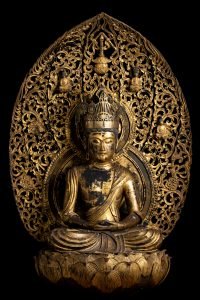
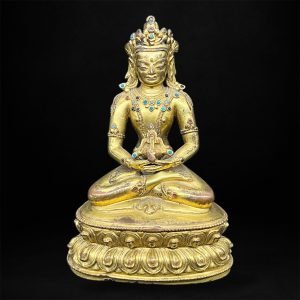
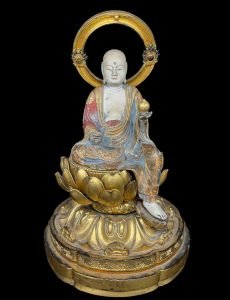
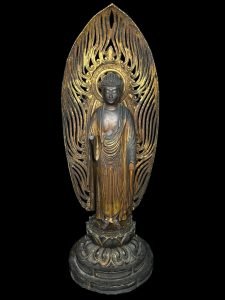
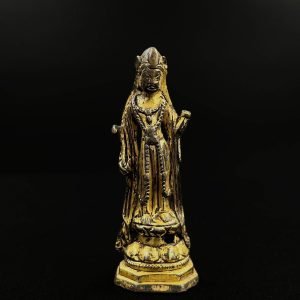
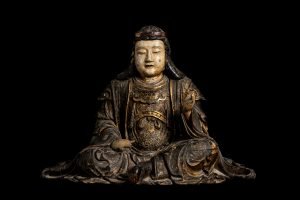
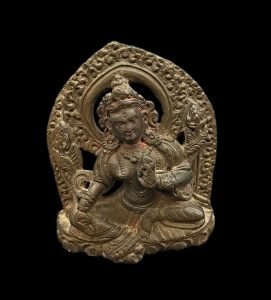
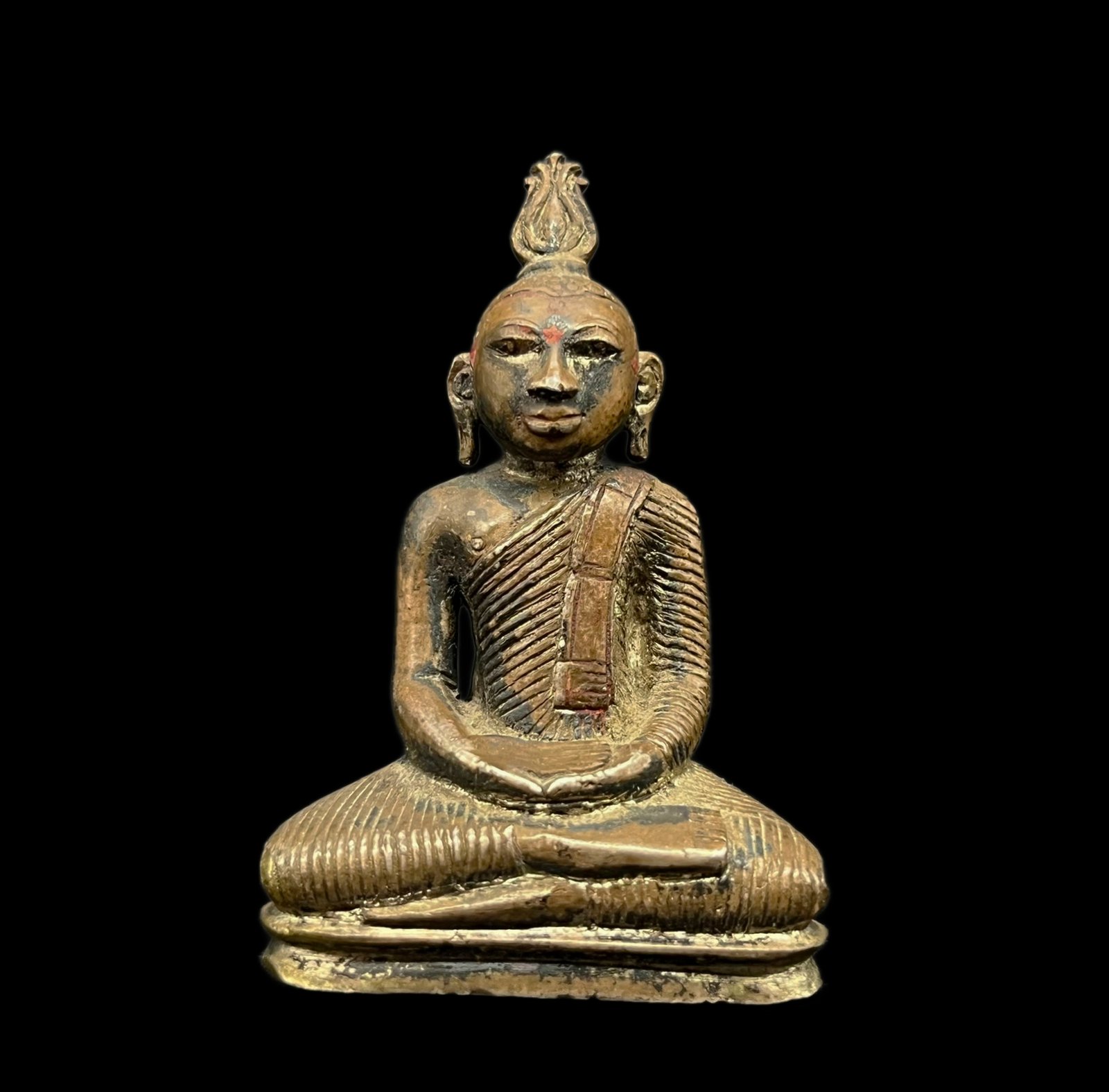
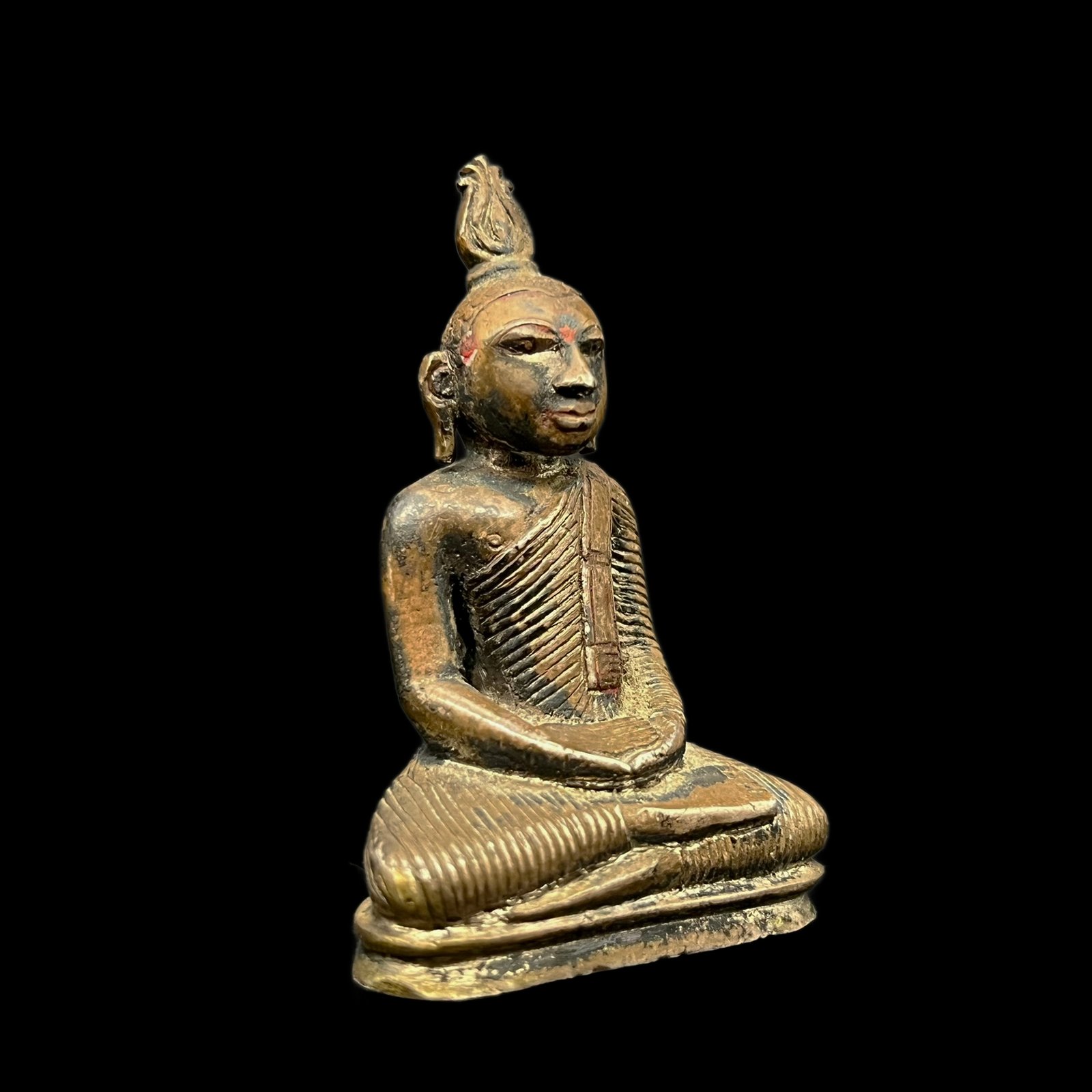
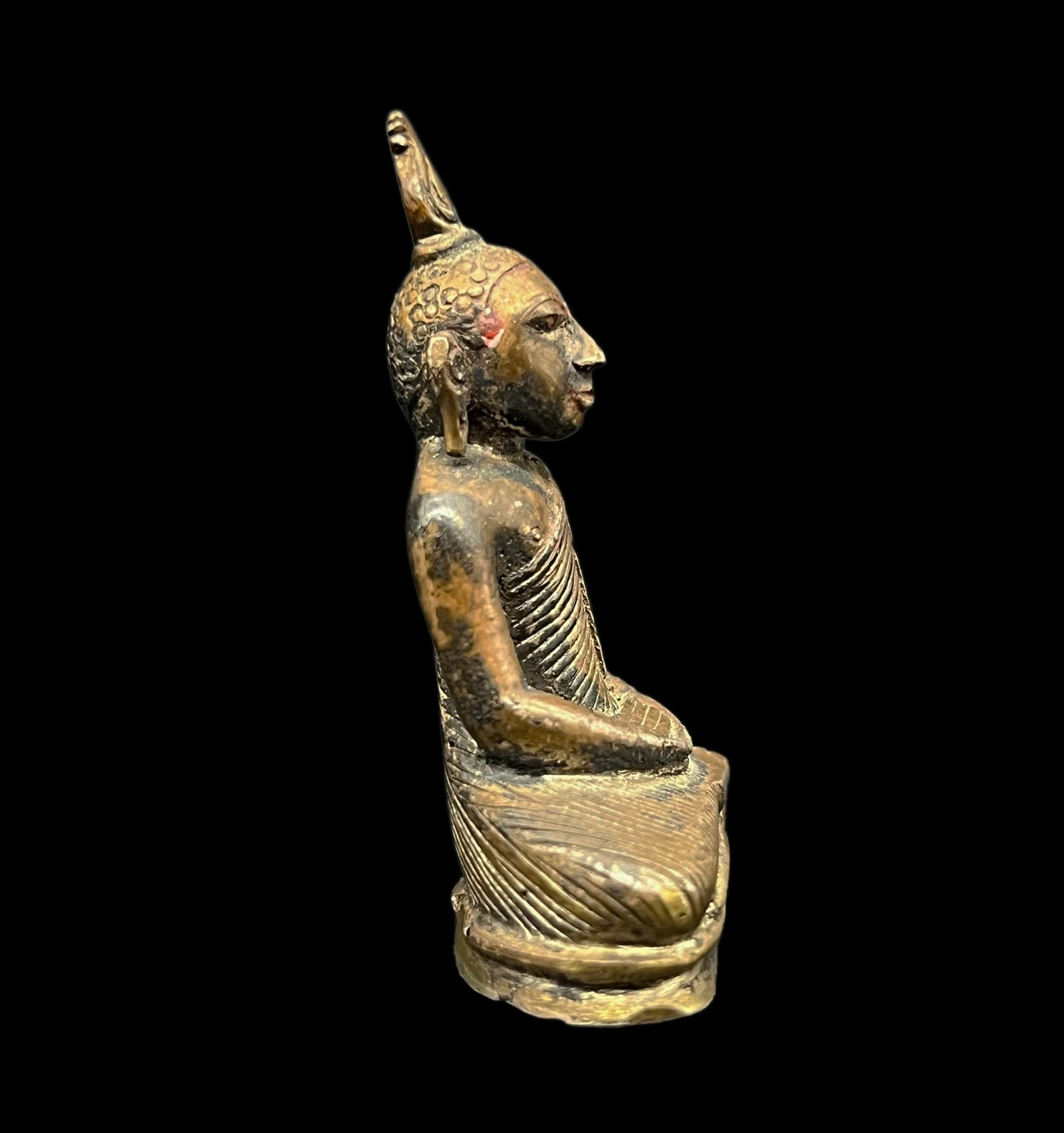
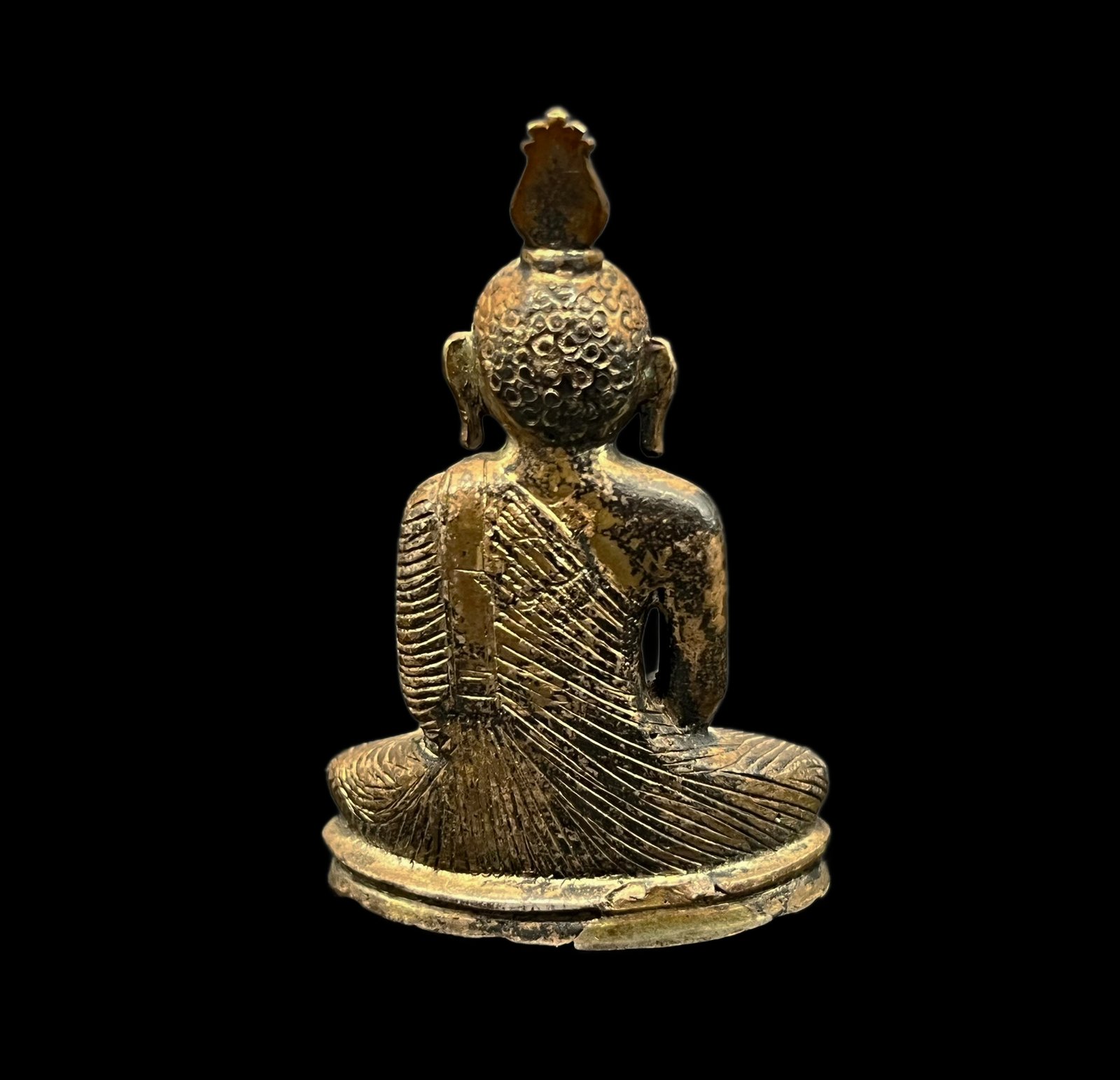
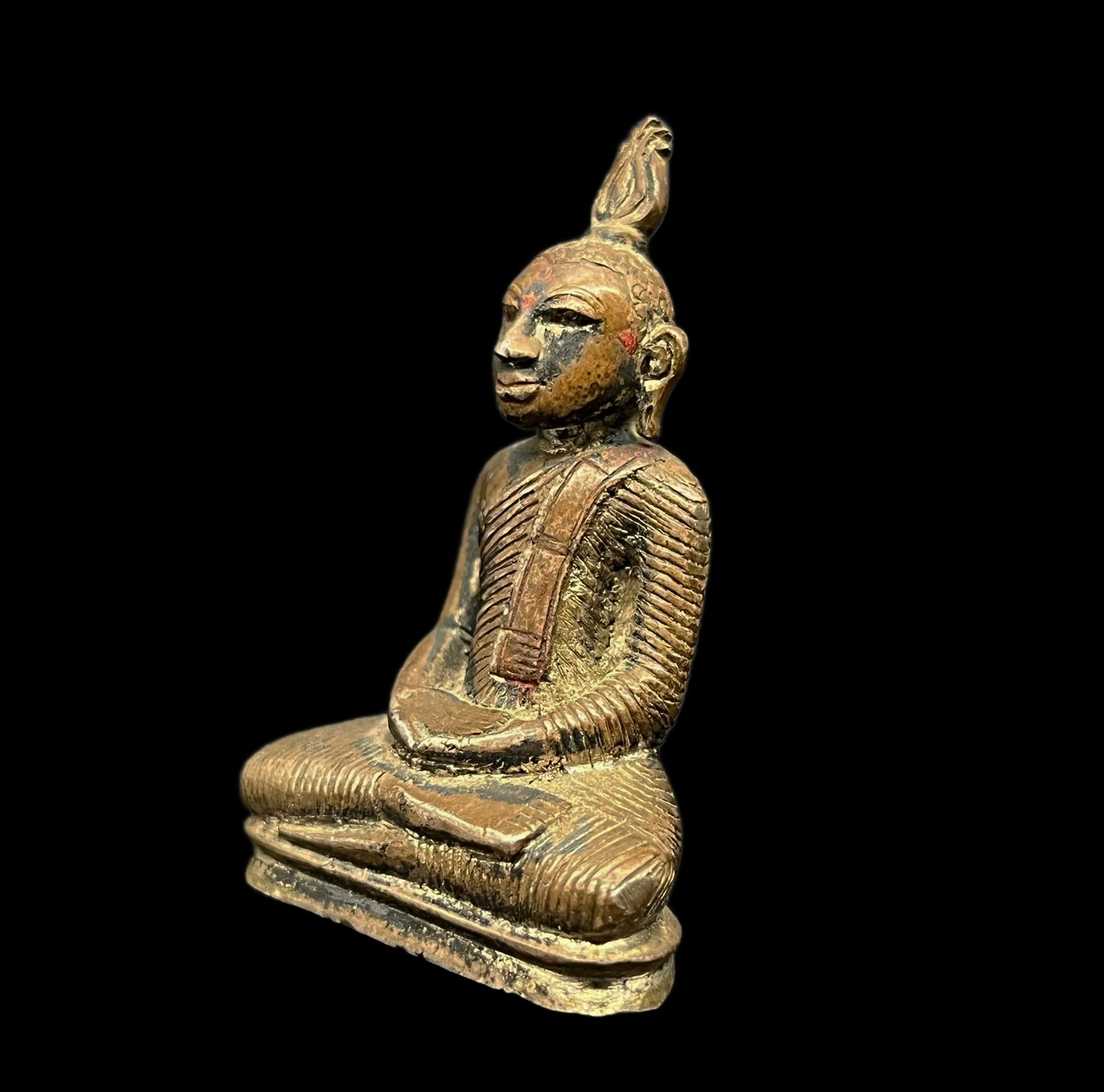
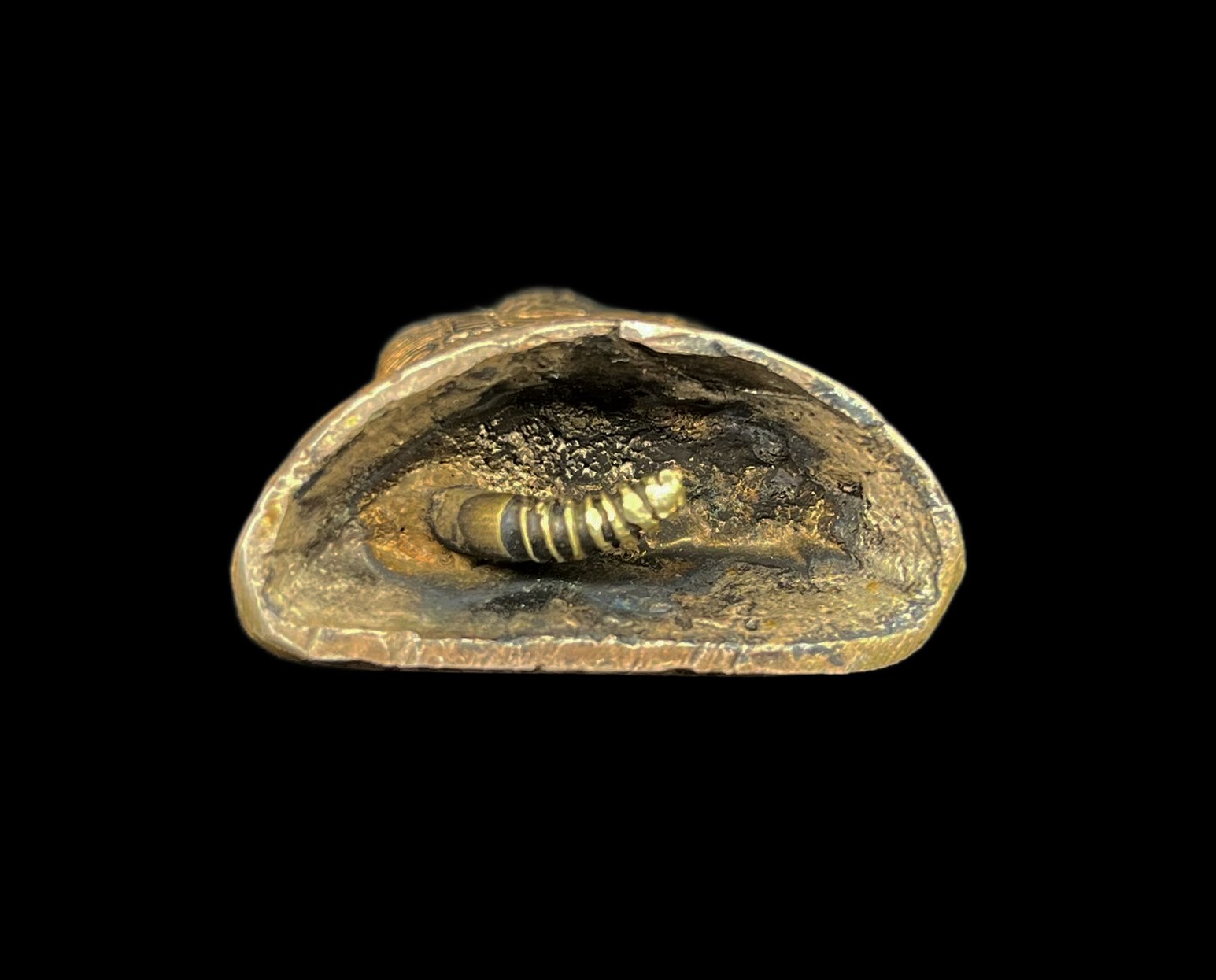
Bronze miniature Buddha statue from the Kandyan period in Ceylon (Sri Lanka). On a lower pedestal, the Buddha is seated in padmasana (meditation) posture, his feet resting on his thighs while his hands rest in dhyana mudra (meditation) posture in his lap. According to legend, the one who was supposed to be the Buddha himself assumed just such a posture sitting under the sacred fig tree just before he became enlightened. In addition to his posture, the Buddha’s face reflects serenity and peace, with a small dot between the eyes, or byakugō (literally translated as “white curling hair”), one of the Buddha’s beauty marks. His body is covered with a simple fabric from one of his shoulders to his ankles, the striation of the fabric is an early representation of honpashiki – the fabric is arranged in many tiny folds and waves. On his head he wears a pointed headdress/crown.
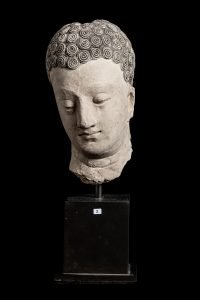
Many statues depict the Buddha with small curly locks clinging tightly to his scalp. However, the Buddha, like other monks, had his head shaved bald, as hair was often considered the “root of ignorance”, so that by getting rid of it, the monks could concentrate on learning and enlightenment. So why are they depicted with tiny dots and curls? According to stories, when the Buddha was meditating under the aforementioned Sacred Fig Tree, it was such a hot day that the snails around him decided to climb on his head and protect him from the heat with their slime, so that he would not be disturbed in deep meditation. 108 snails crawled up on his bald head and covered him so that by the end of the day the Buddha had attained enlightenment, and the many small snails were petrified by the heat on his scalp and died a martyr’s death. Based on this story, many works of art depict the Buddha with exactly 108 petrified snails on his head.