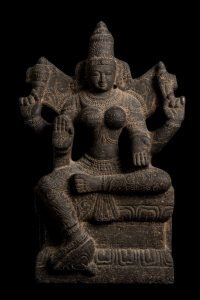
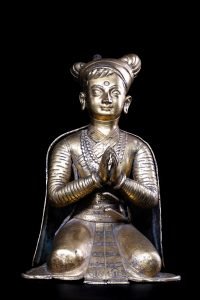
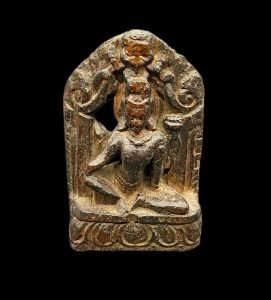
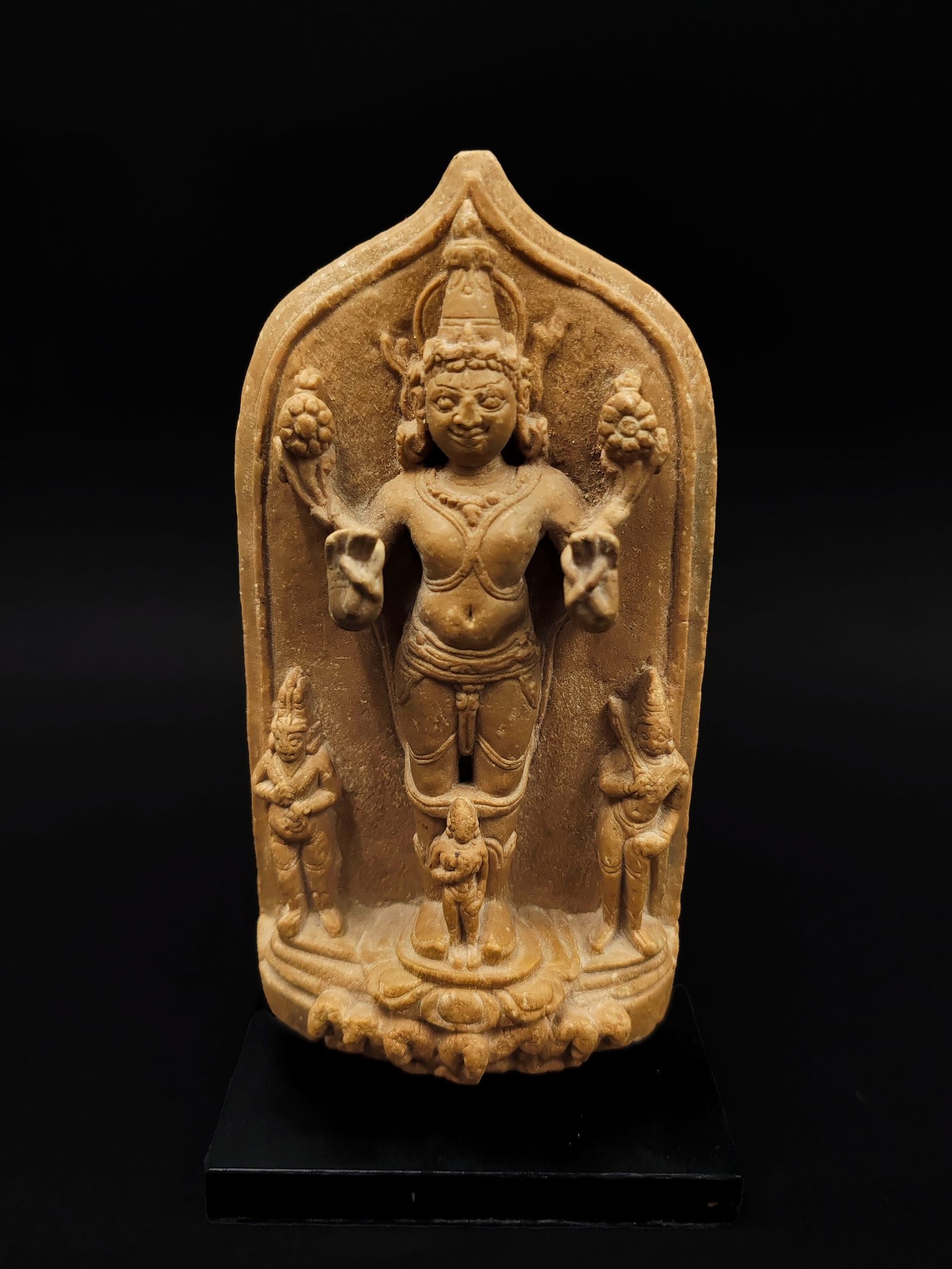
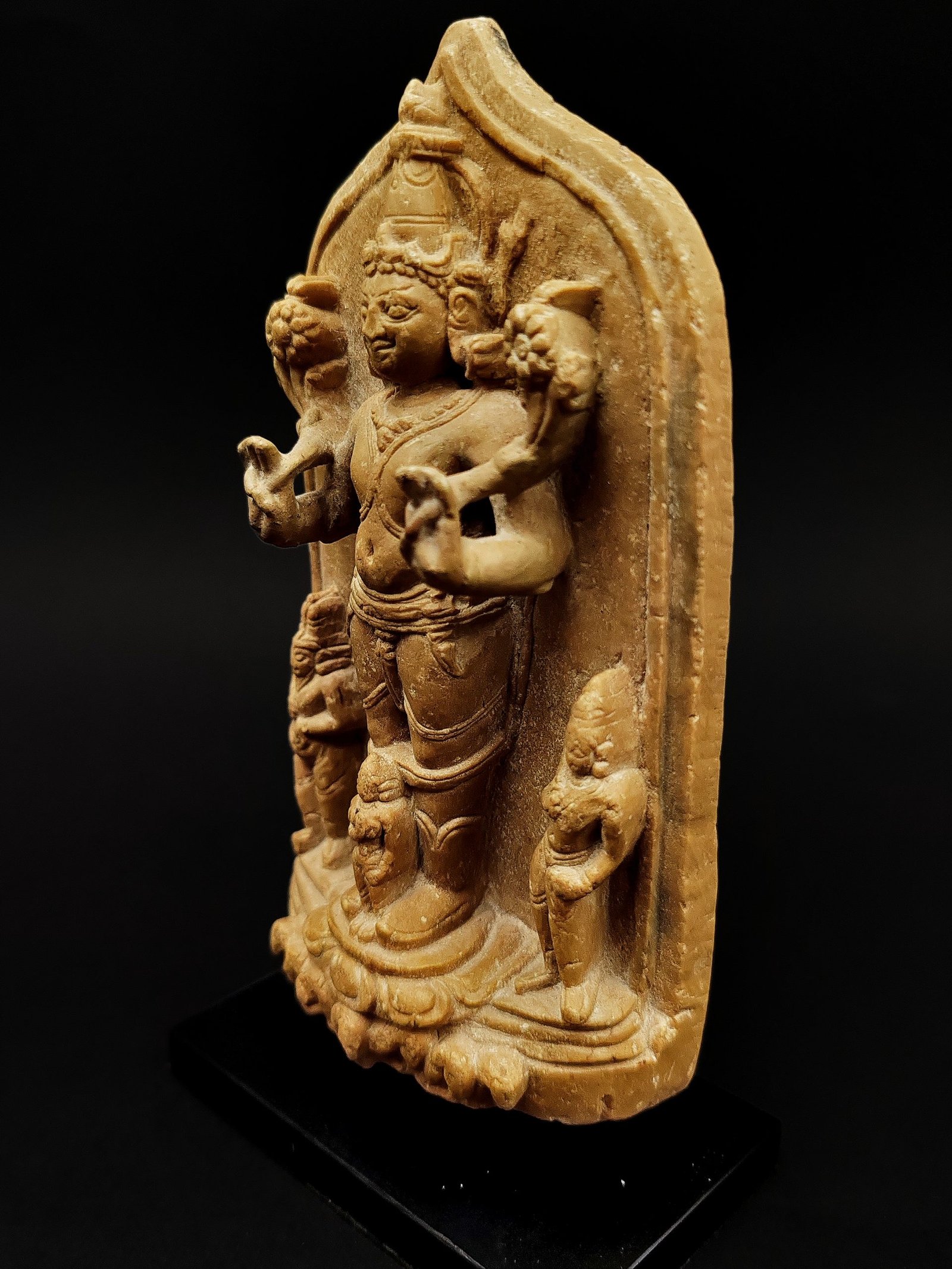
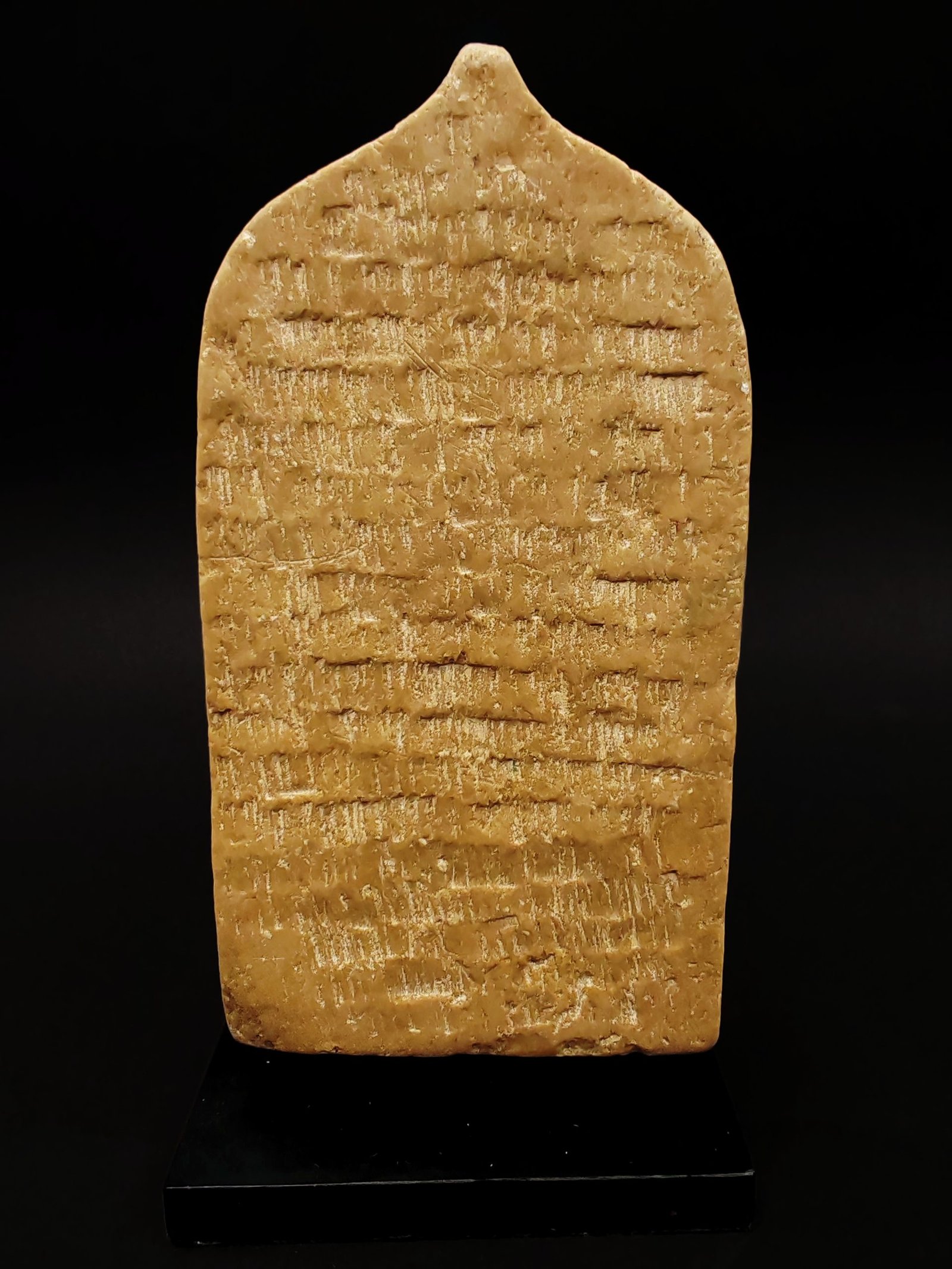
A stone carving of Surya from the Pala/Sena dynasty, India. Surya, according to Hinduism, is the sun god himself, the representative of knowledge and light, and one of the most important deities according to the wisdom of the Vedas. He holds lotus flowers in his hands, most of his body is uncovered, and he wears an ornate dhoti (traditional skirt), knee-high boots and cloth crossing his chest, as well as jewellery. On his head he wears a tall, tower-like crown, kiritamukuta, a characteristic attribute of the sun god. His face is serene, his lips set in a smile. Surya is standing on a lotus pedestal, with his confidants Pingala and Dandin at his feet, and a female figure directly in front of him. Beneath the lotus throne, the carving shows seven horses representing the seven days of the week and the seven colours of the rainbow, signifying Surya’s role as the bearer of time and life.
Surya, also known as Aditya, Arka, Bhanu, Vivasvan, is one of the most long-idolized Hindu gods, who even appears in Buddhist and Jain religious art and scripture. He is also referred to as the father of Sugriva and Karna in two of Hinduism’s greatest epics.