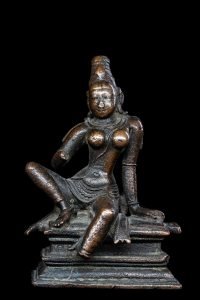
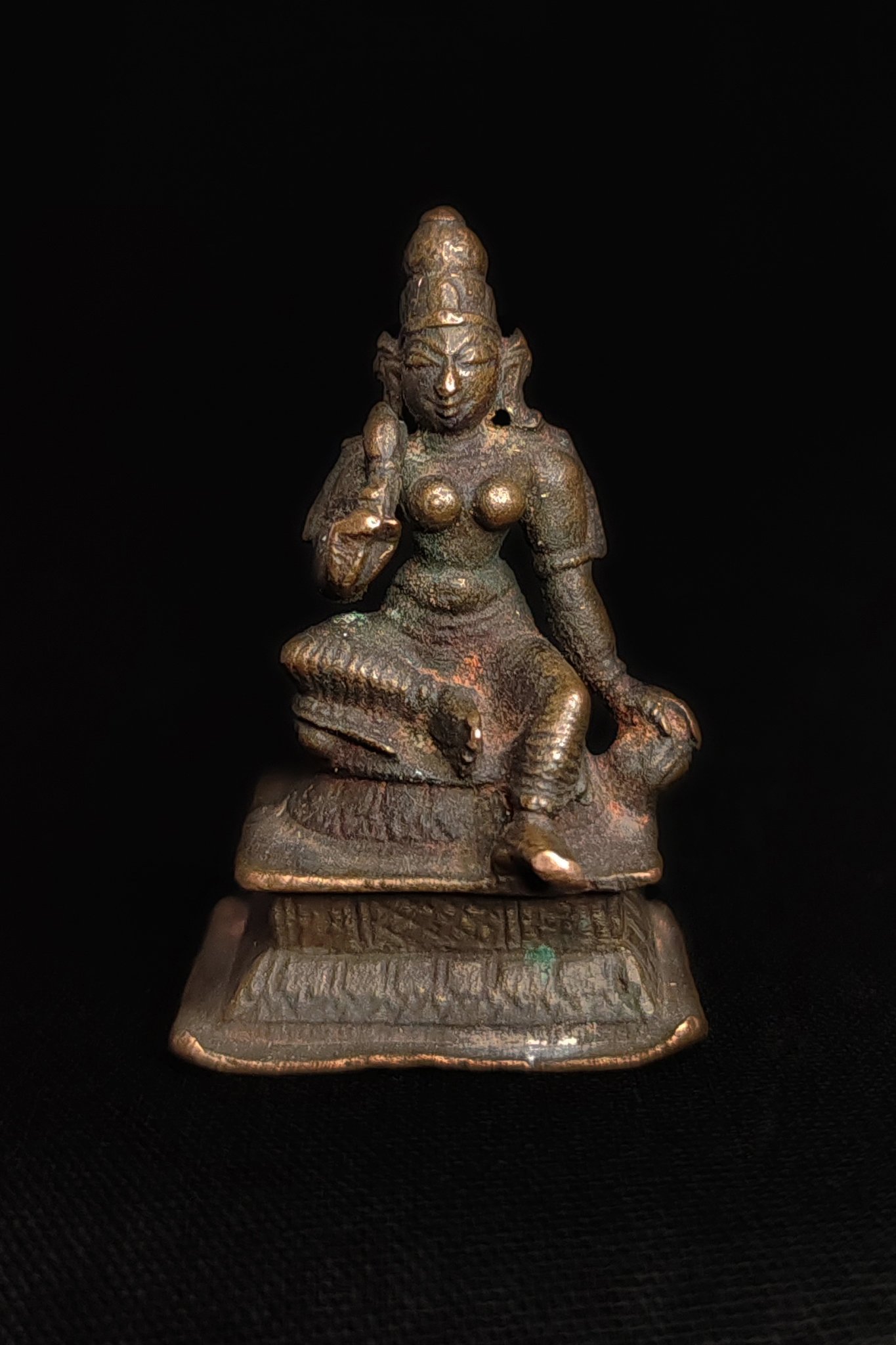
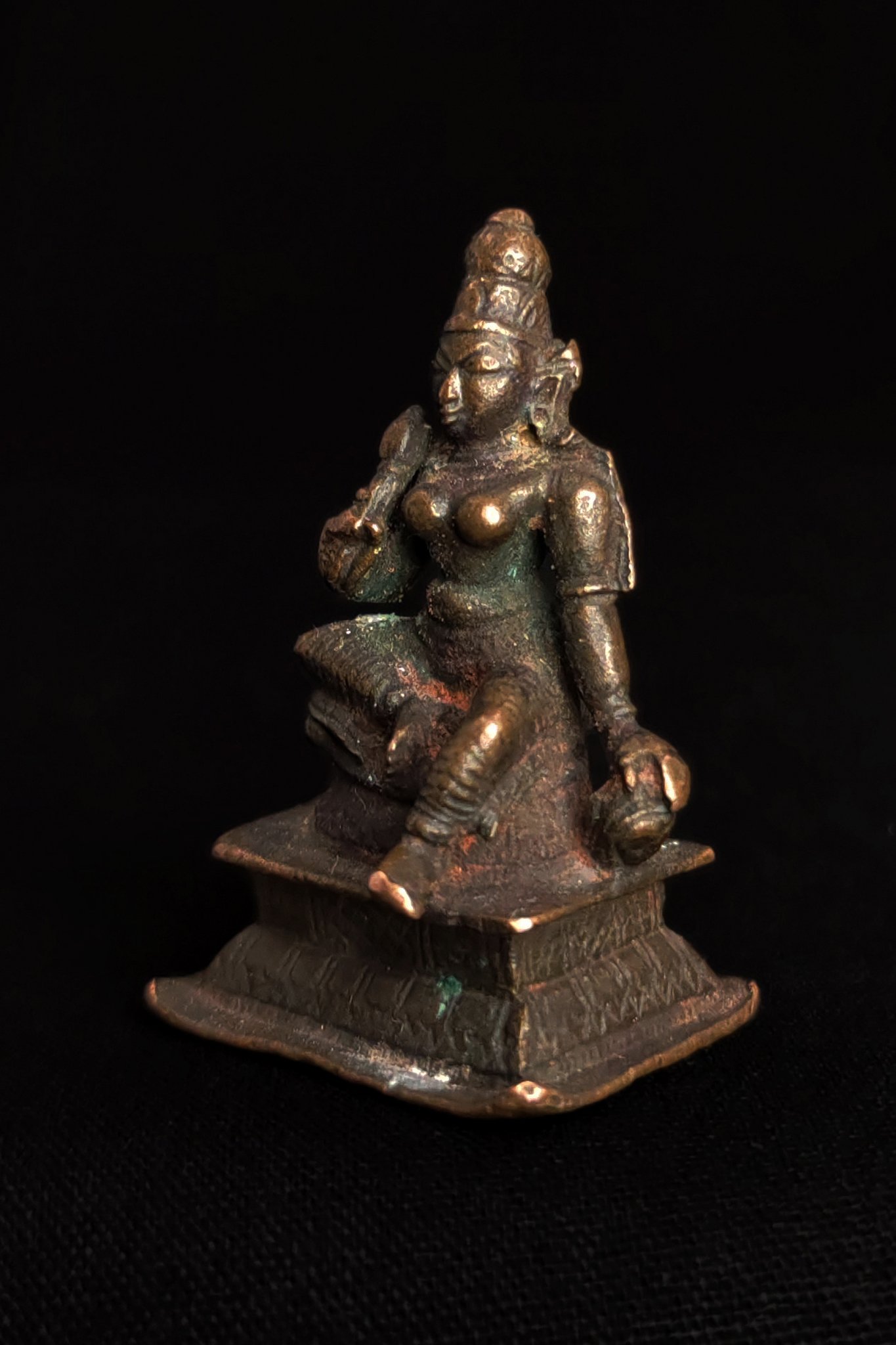
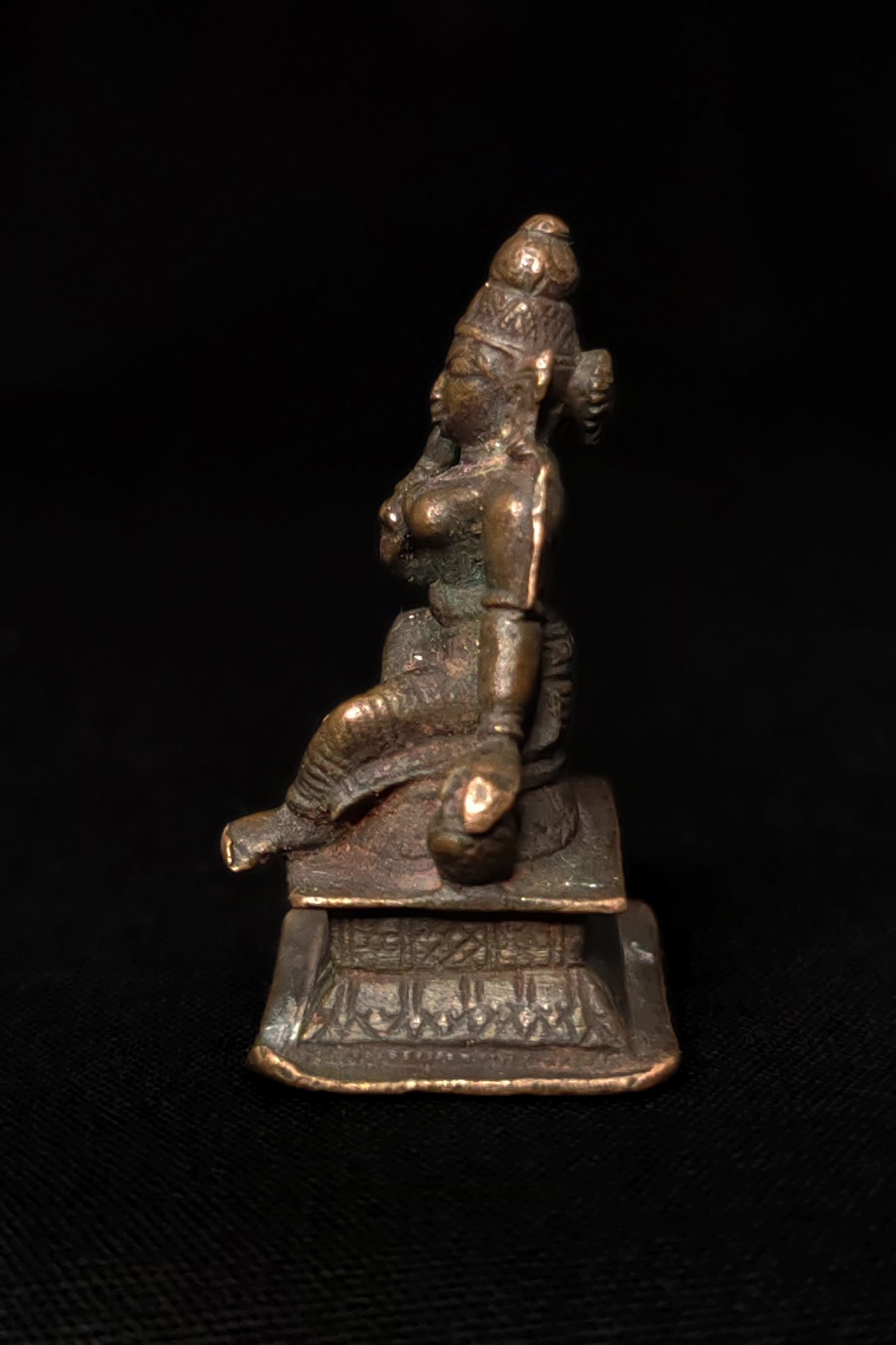
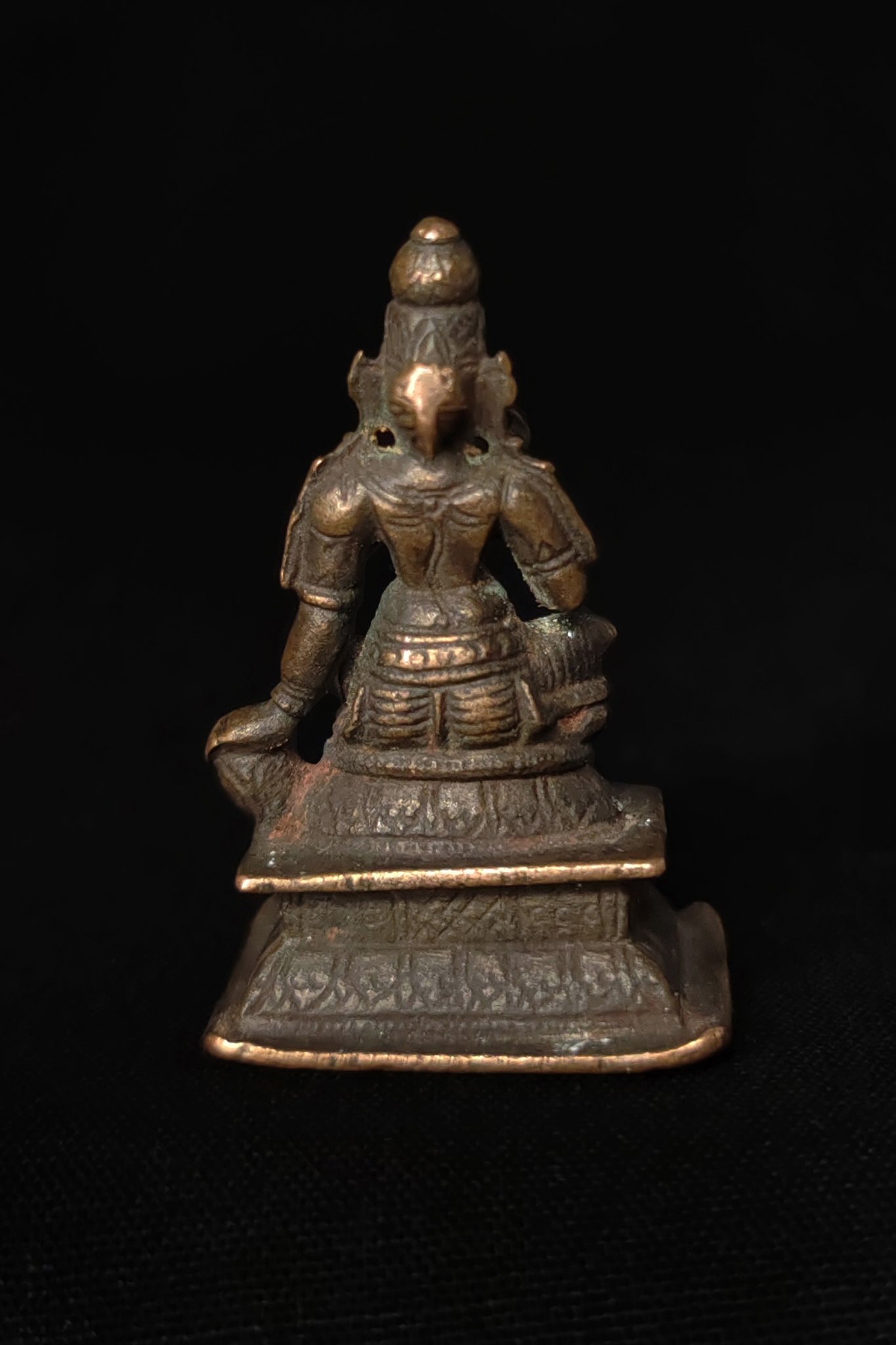
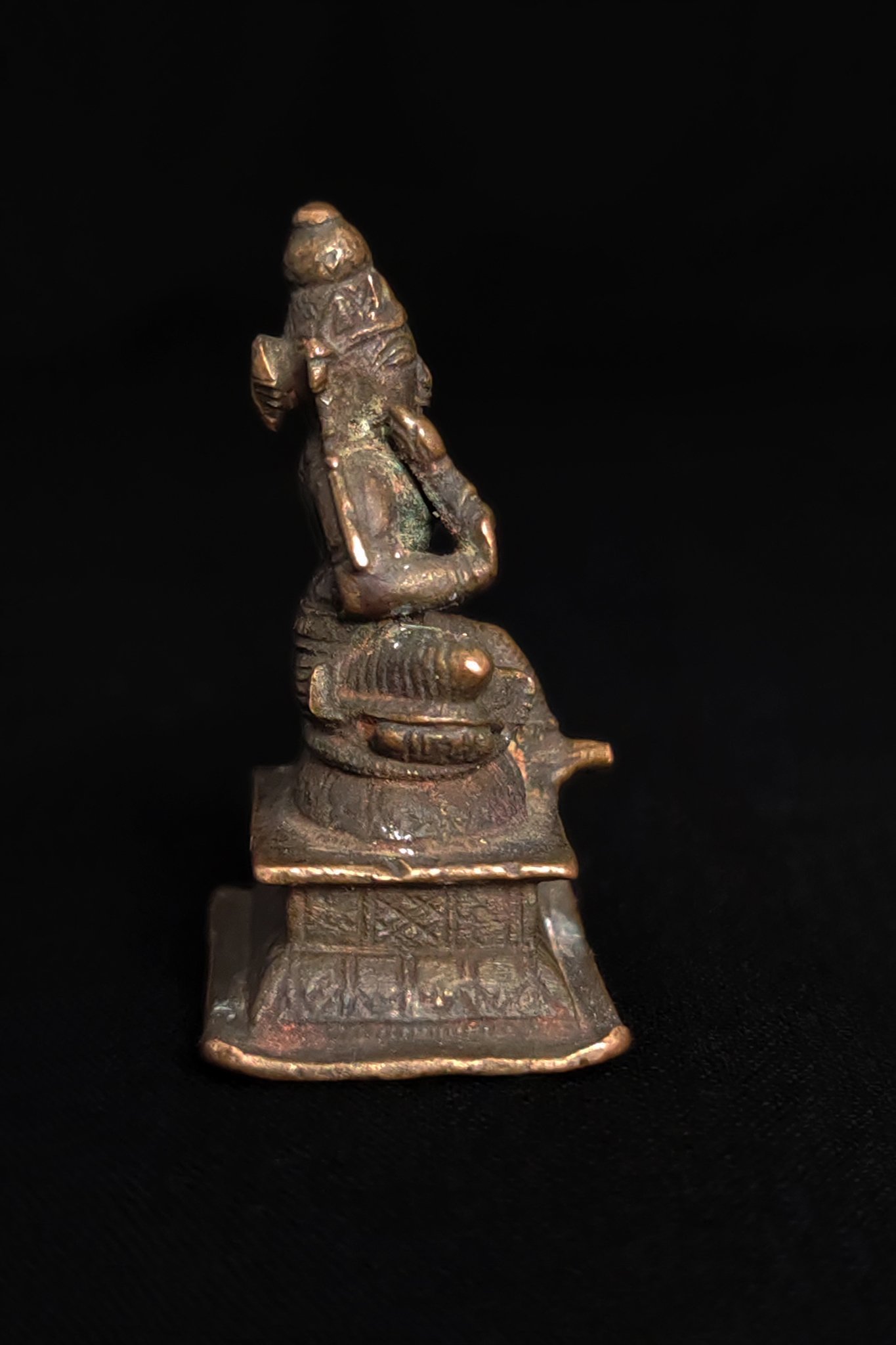
South India, Vijayanagar period (1336-1565) Dimensions: 4 cm
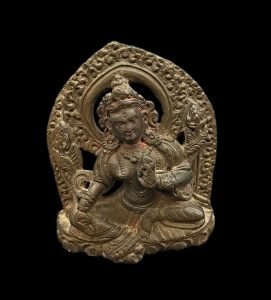
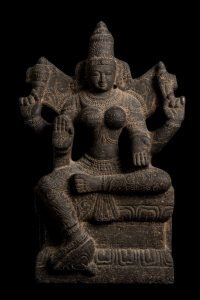
The bronze devotional sculpture of Uma Parvati was made between 1336 and 1565, dates back to Vijayanagara, the last great Hindu dynasty of South India. During this period the ornamentation of the bronze statues were more elaborate, but the postures became rigid. The facial features are typically idealised, as is the gracefulness of the body.
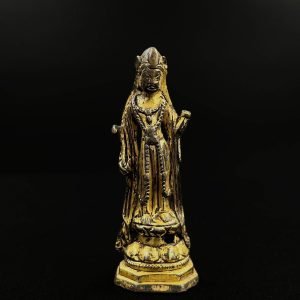
These features can also be observed in the miniature statue of Uma Parvati. Although modest in size, it depicts Parvati (also known as Uma or Gauri), a revered goddess in Hindu mythology. She is the wife of Siva the destructive arch-god, and she is the flowing energy and creative force, the conqueror of the most powerful demons, also the distributor of wealth and the embodiment of all Hindu goddesses. According to her life story, the name Uma was given to Parvati by her mother because after she had been initially rejected by Siva, went into penance. In her right hand she holds a lotus flower bud, while seated on a throne with one leg in utkutika posture and the other dangling down. The goddess wears a traditional dress that reveals the sensuality of the body enhanced by the shapely curves.
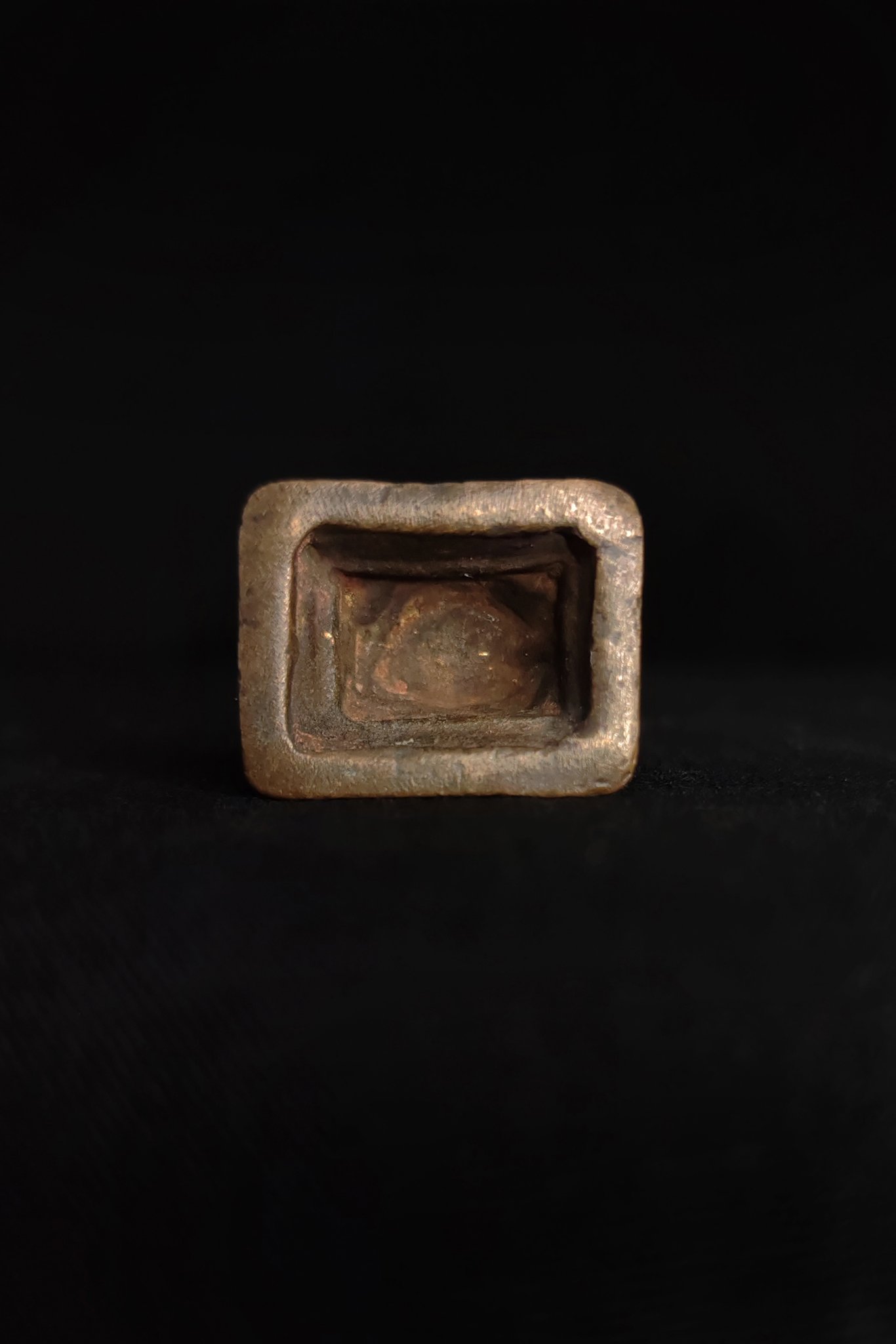
The statue is made of finely crafted bronze, a material that is ideally suited for making ritual objects as having a rich lustre but also being durable for immortalizing religious devotion. With its 4 cm height, it is easy to carry for private worship, which contributed to the dissemination of this style. It is a faithful example of the technique of South Indian artisans from the period.