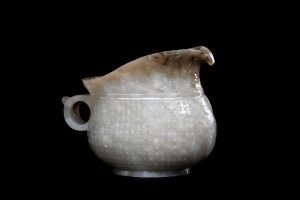
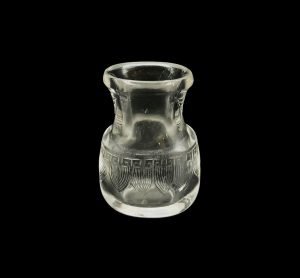
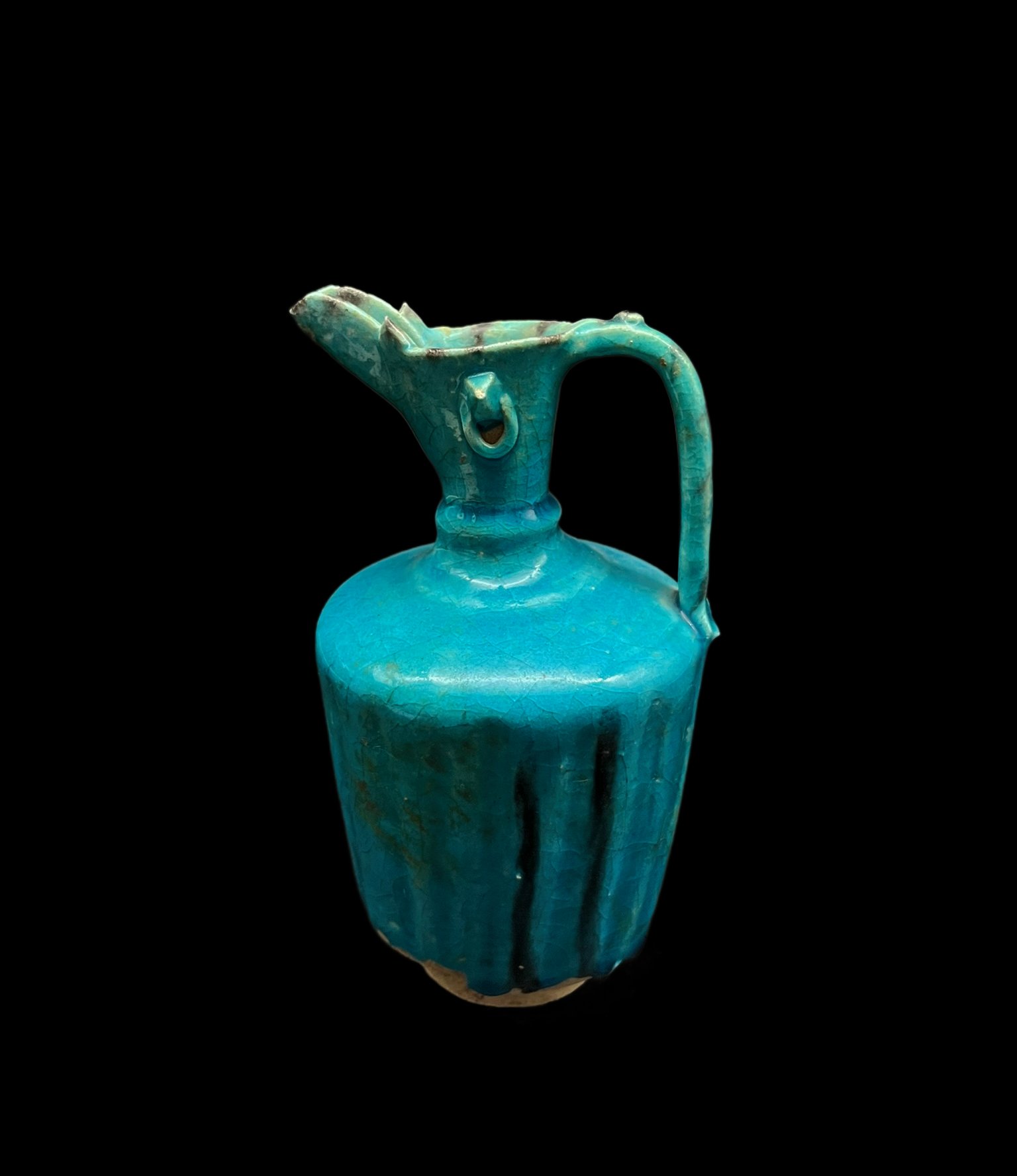
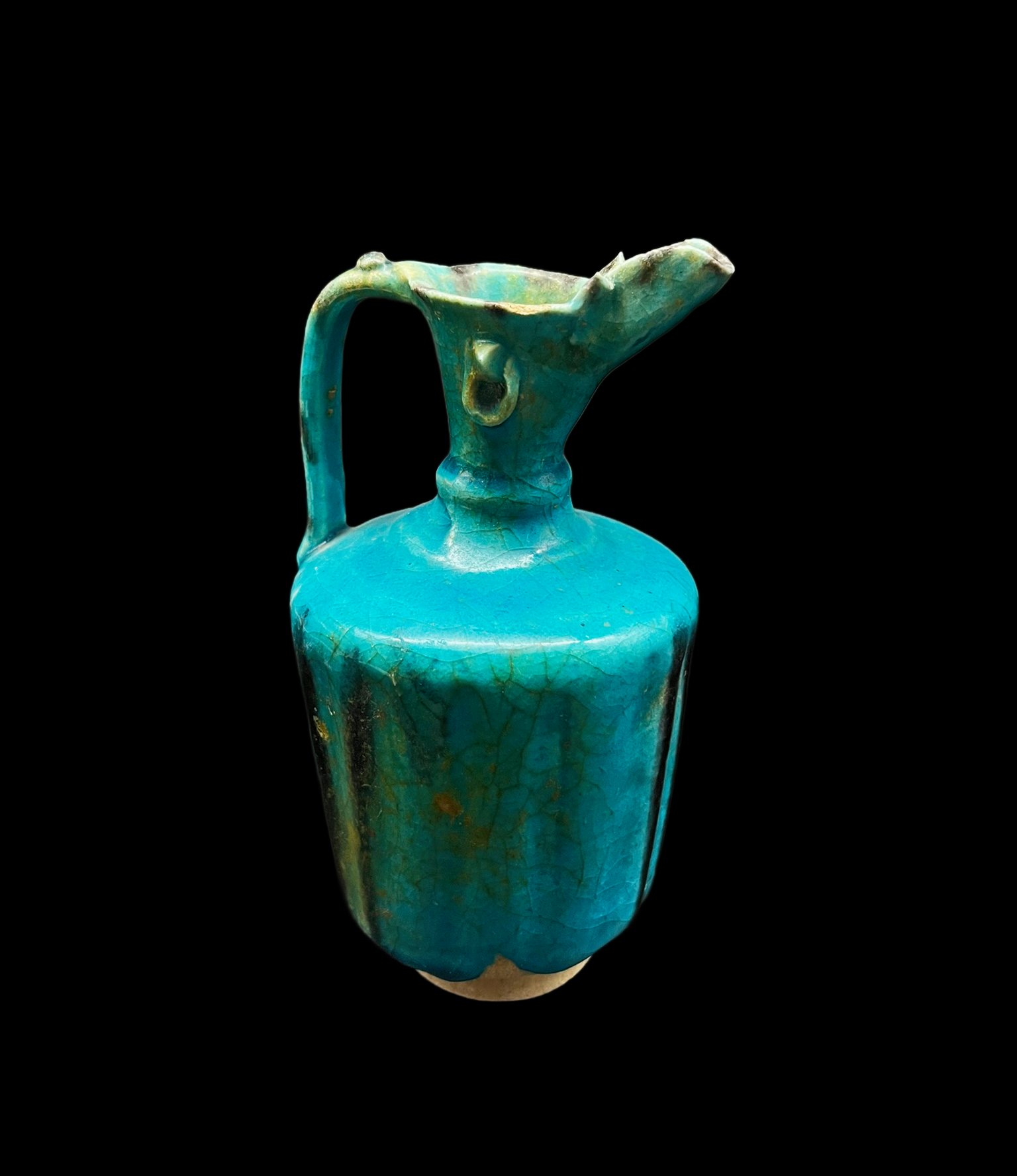
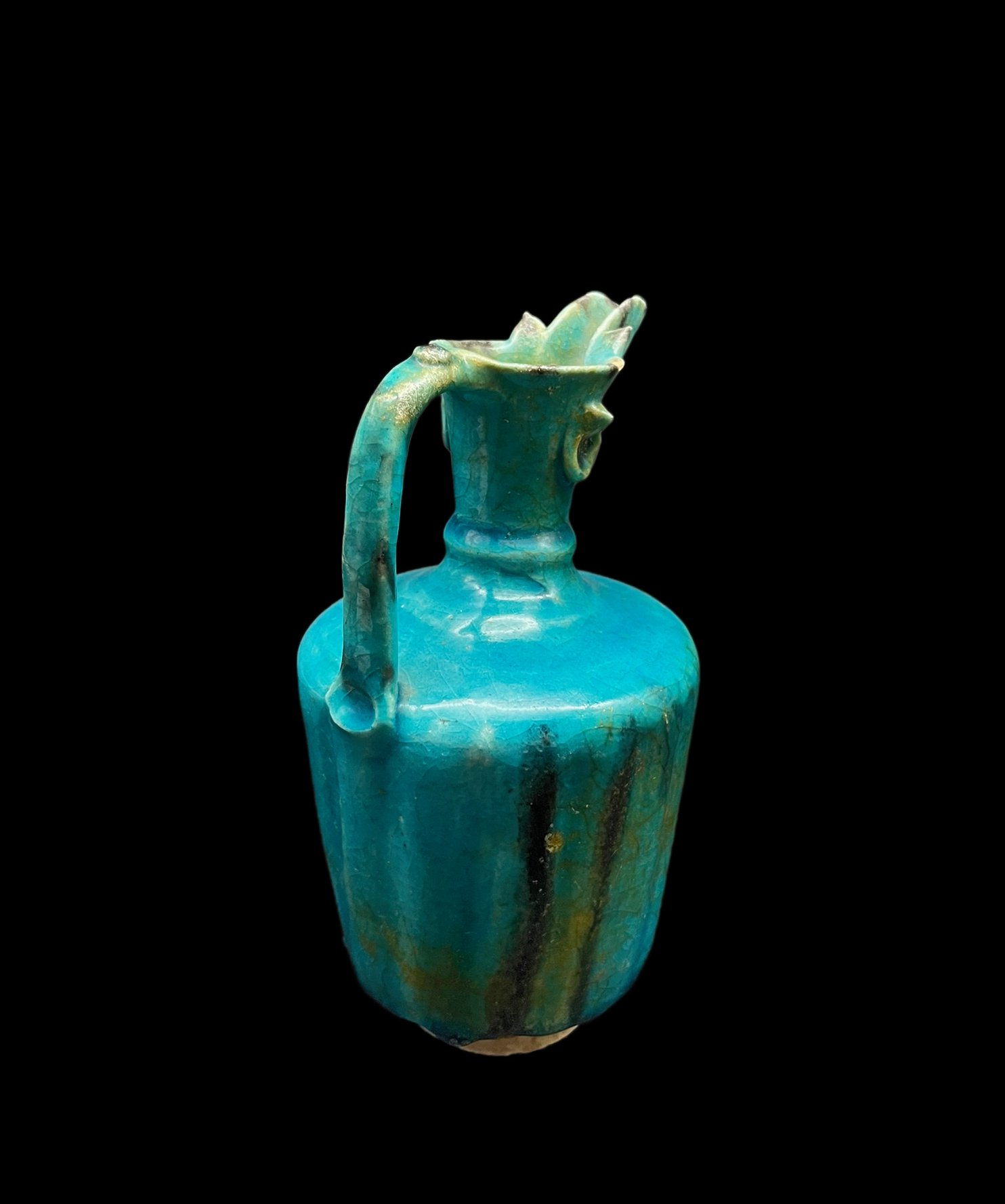
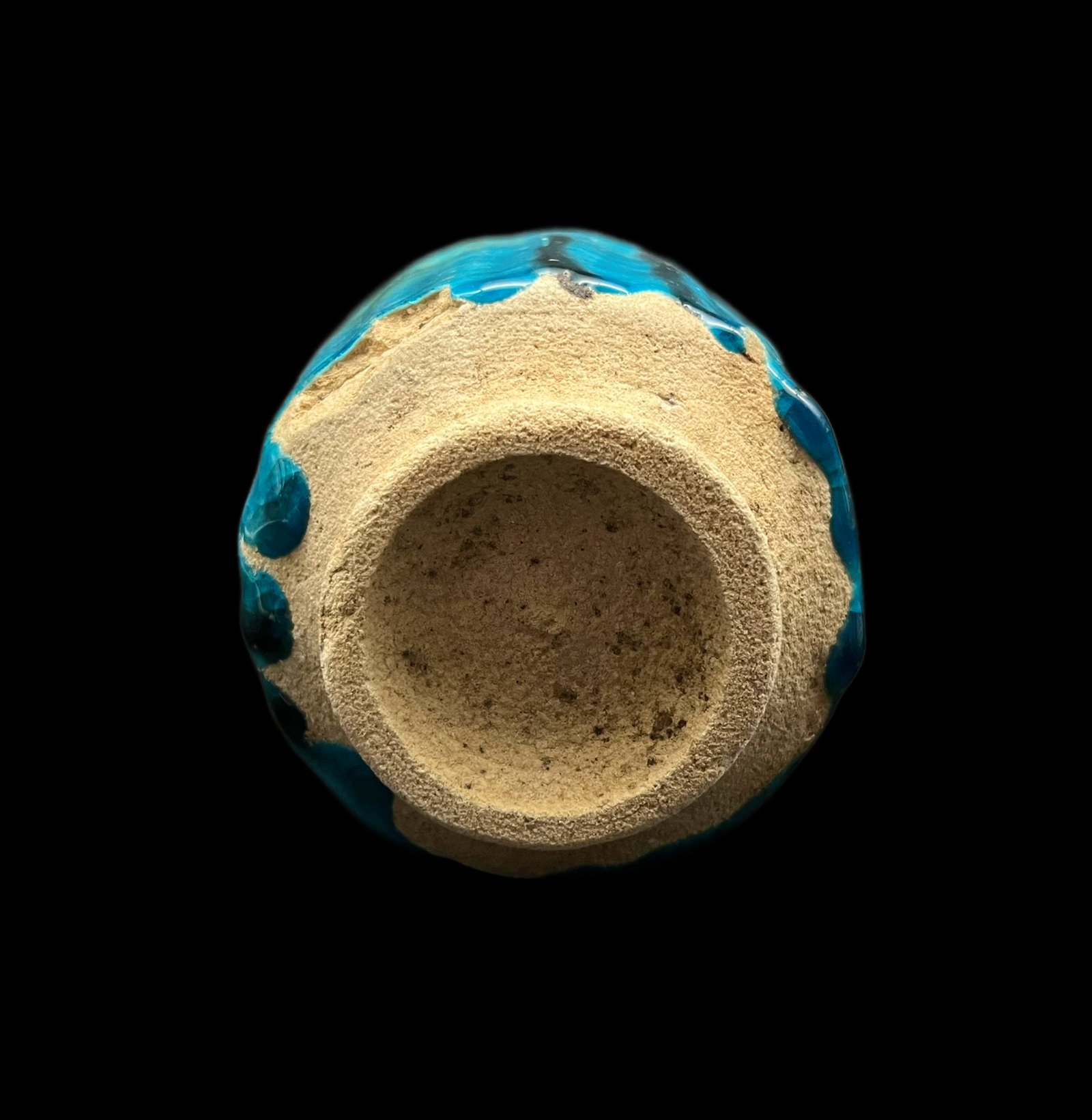
A 12th century pottery jug, covered with a blue glaze. Apart from the lower part, the entire body of the jug retains the iconic coloured glaze. The sides of the jug have simple, dark stripes, the neck is slender and thinning. Kashan pottery masters combined Chinese and Persian blueglaze techniques in a unique way, where they might have used ground quartz, borax gum, cobalt oxide or even sodium sulphate in the firing process to achieve an azure colour. This blue jug may date back to a later stage of Iranian glaze culture, as initially only temples, tombs and palaces were allowed to have blue glazed art or architectural materials. When this rule was relaxed, the production of blue-glazed ceramics, tiles and vessels boomed.
It is said that the ancient rulers often used blue glazed pots and ceramics in their meals, because if the food was poisoned with something, it would be seen on the blue glaze and they would be saved from their fatal end.
Kashan:
Most of the records say that the Three Wise Men known from the Bible were from the city of Kashan and from there they went to look for Baby Jesus, following the star of Bethlehem.