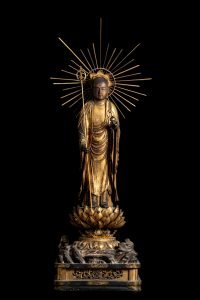
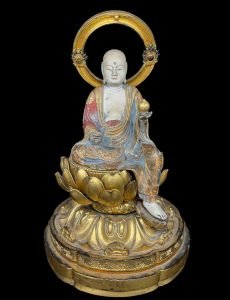
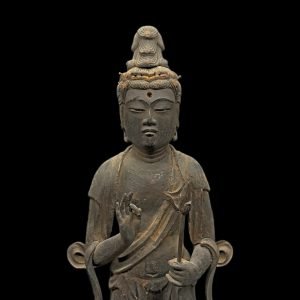
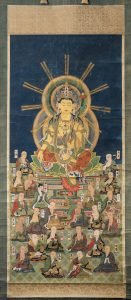
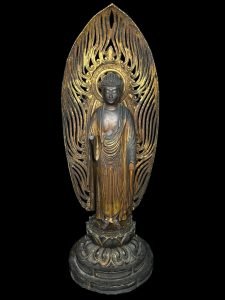
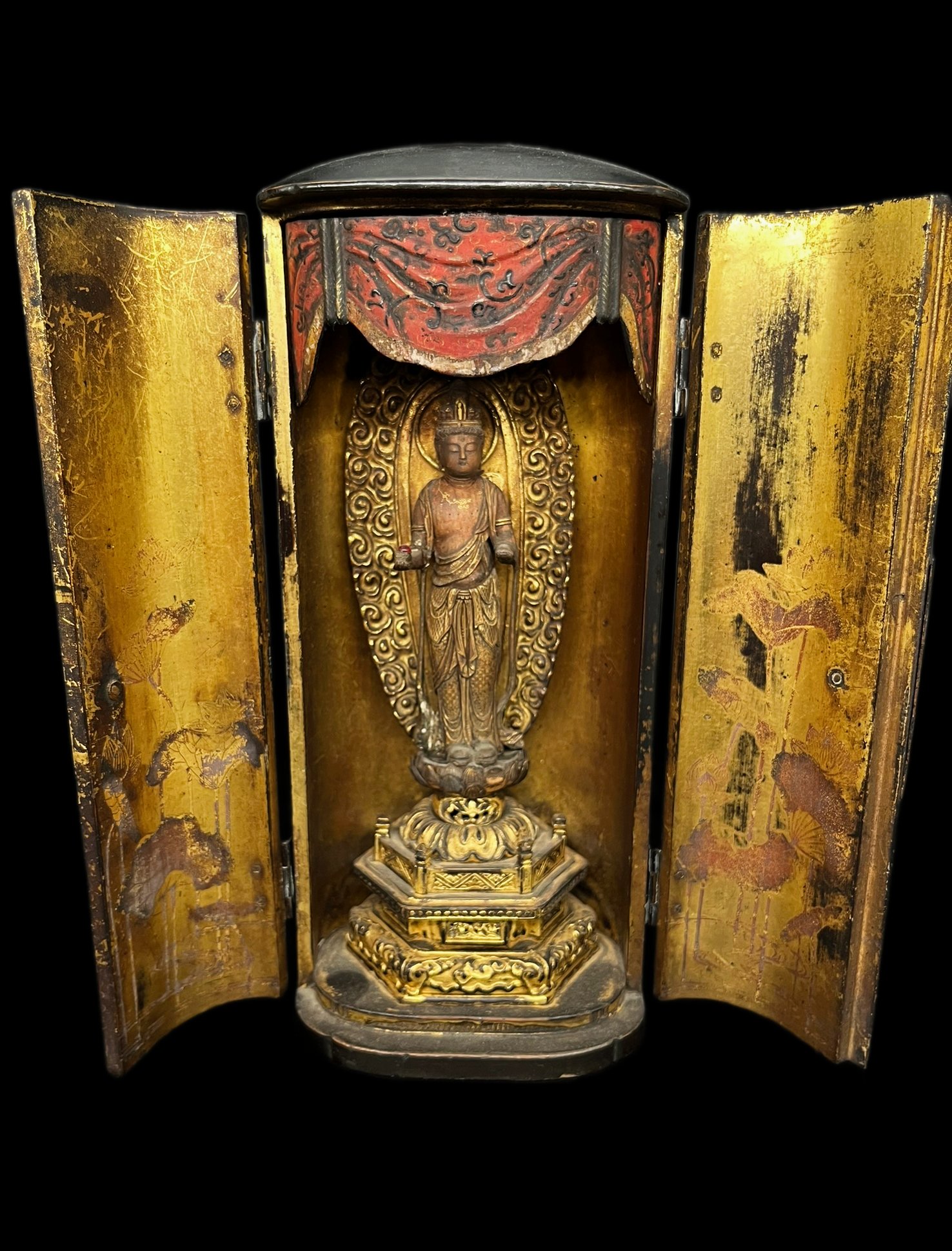
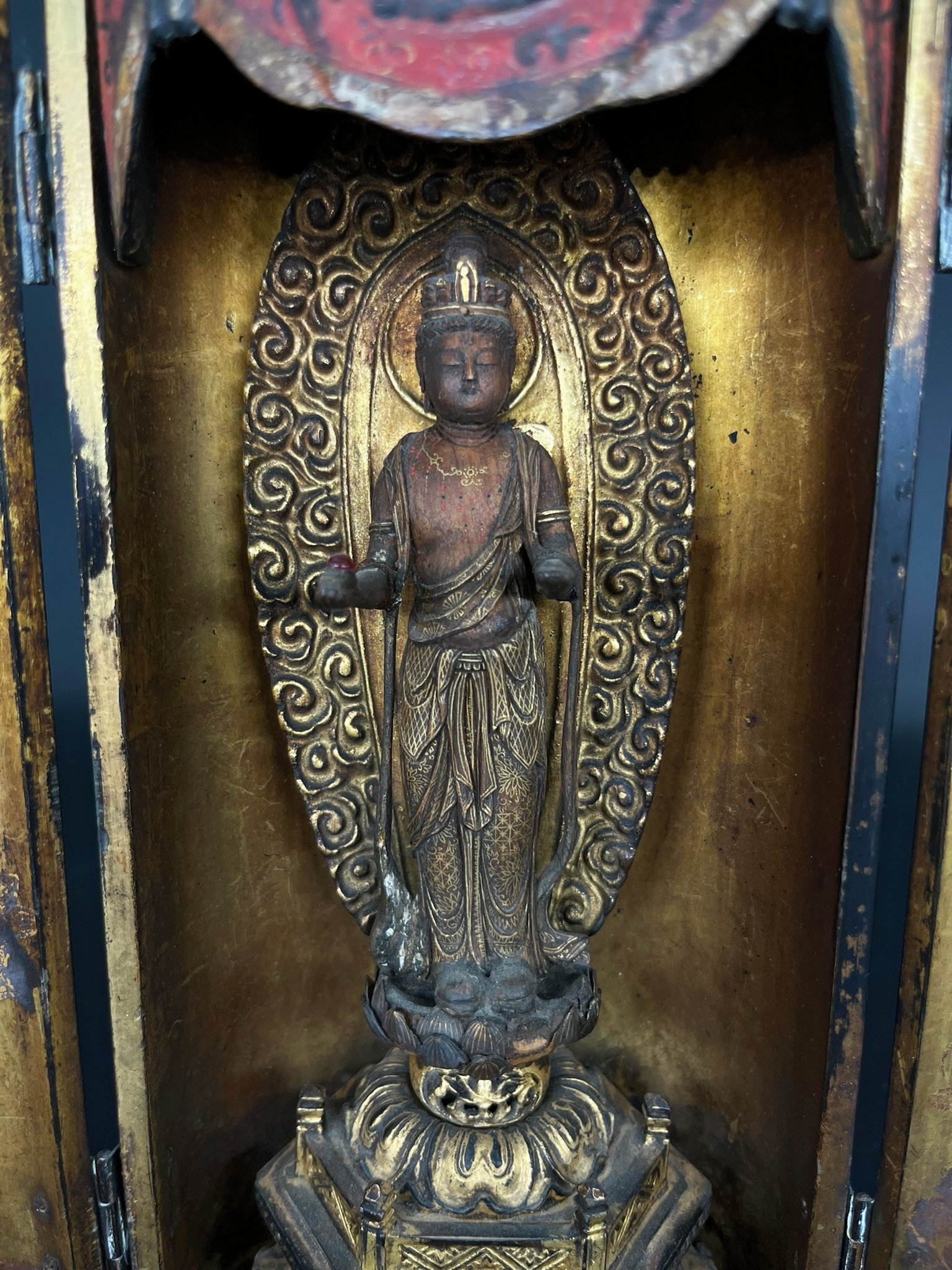
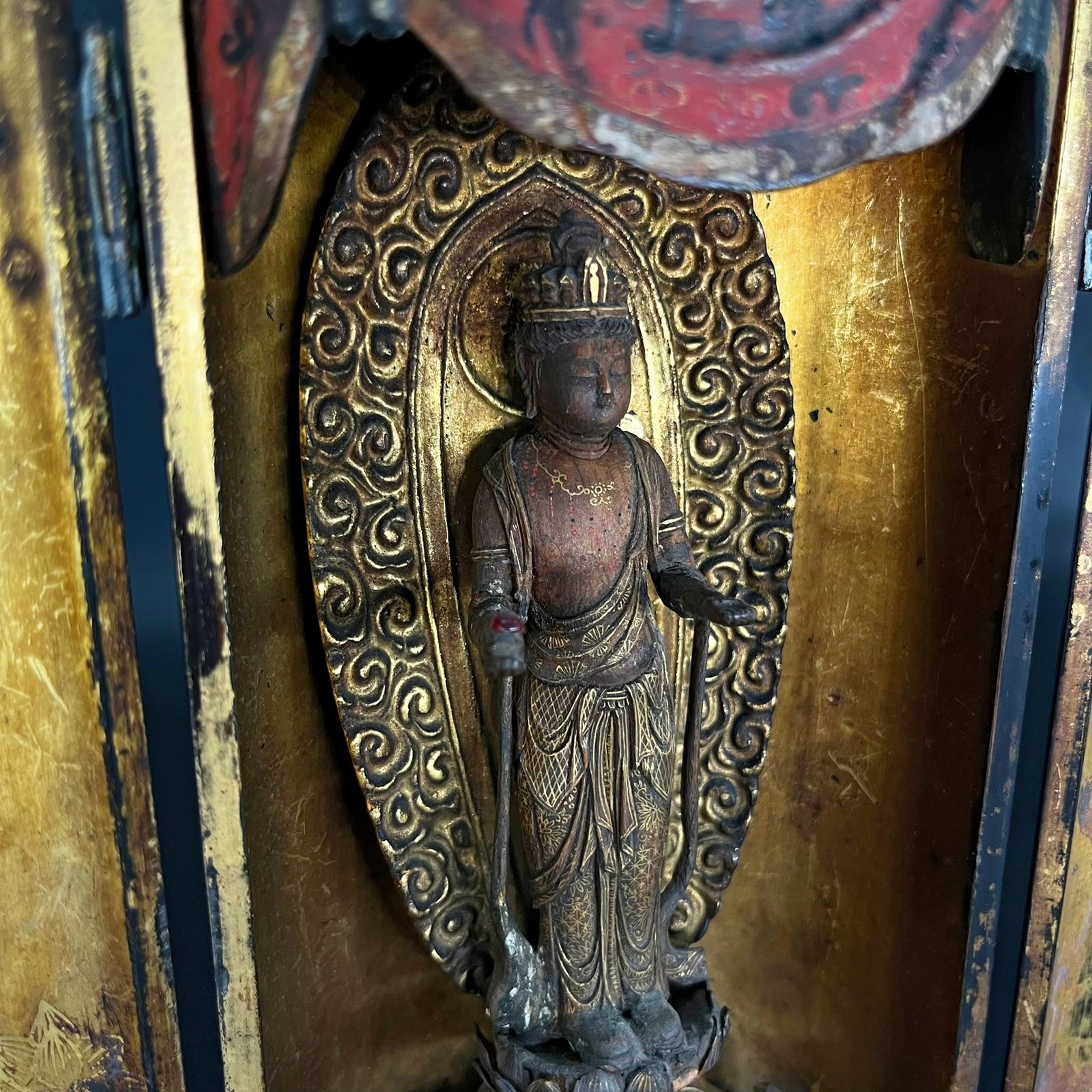
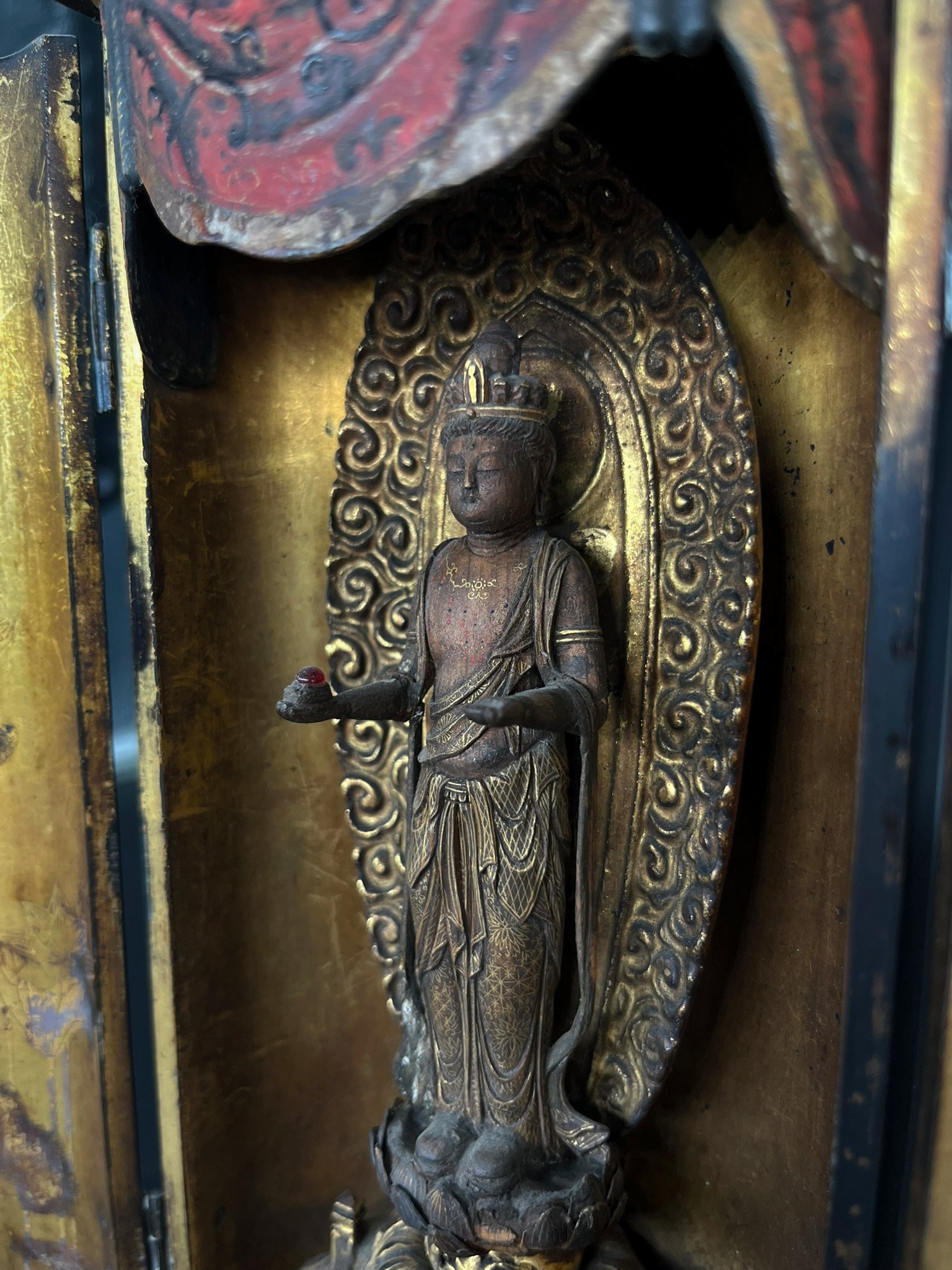
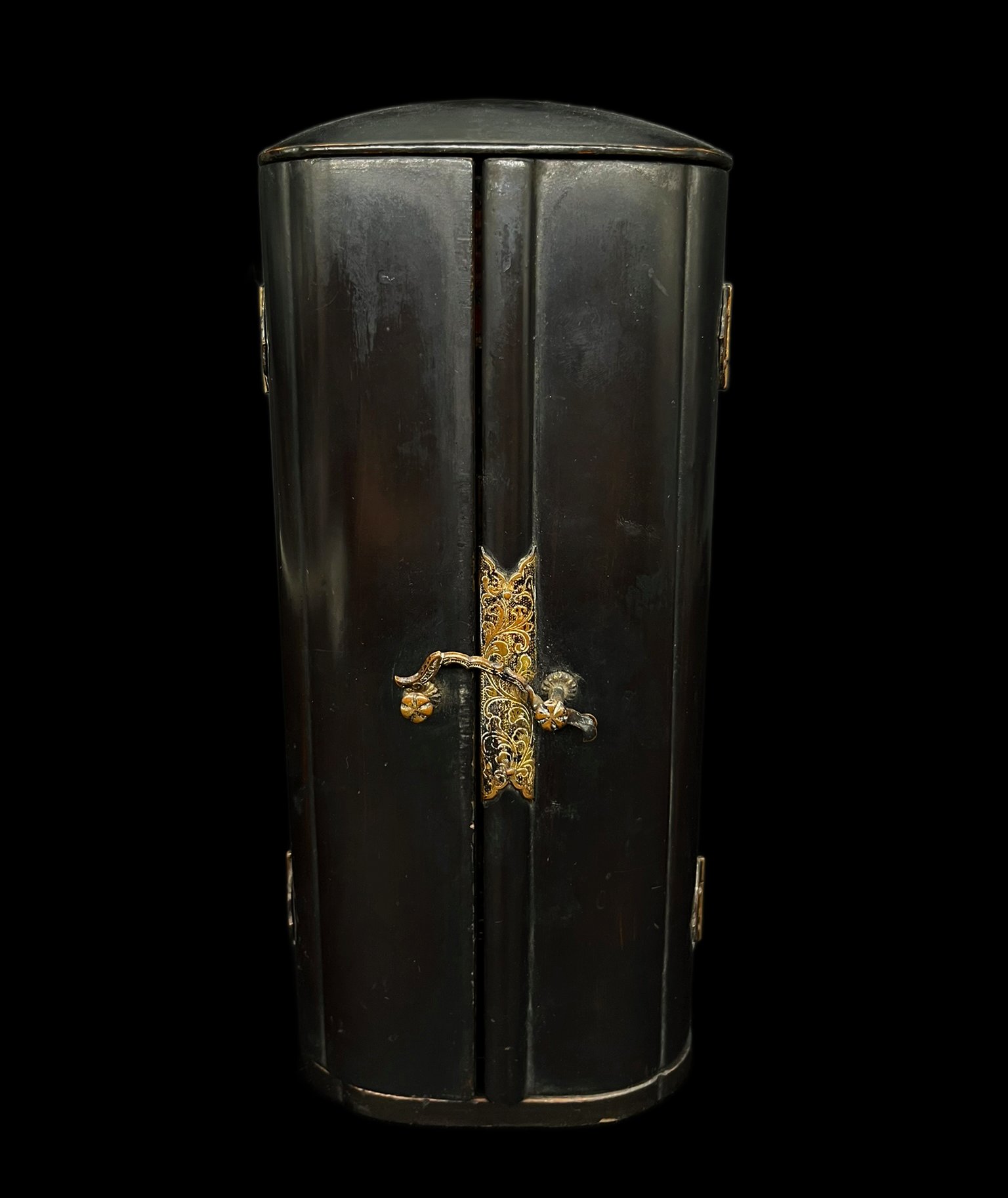
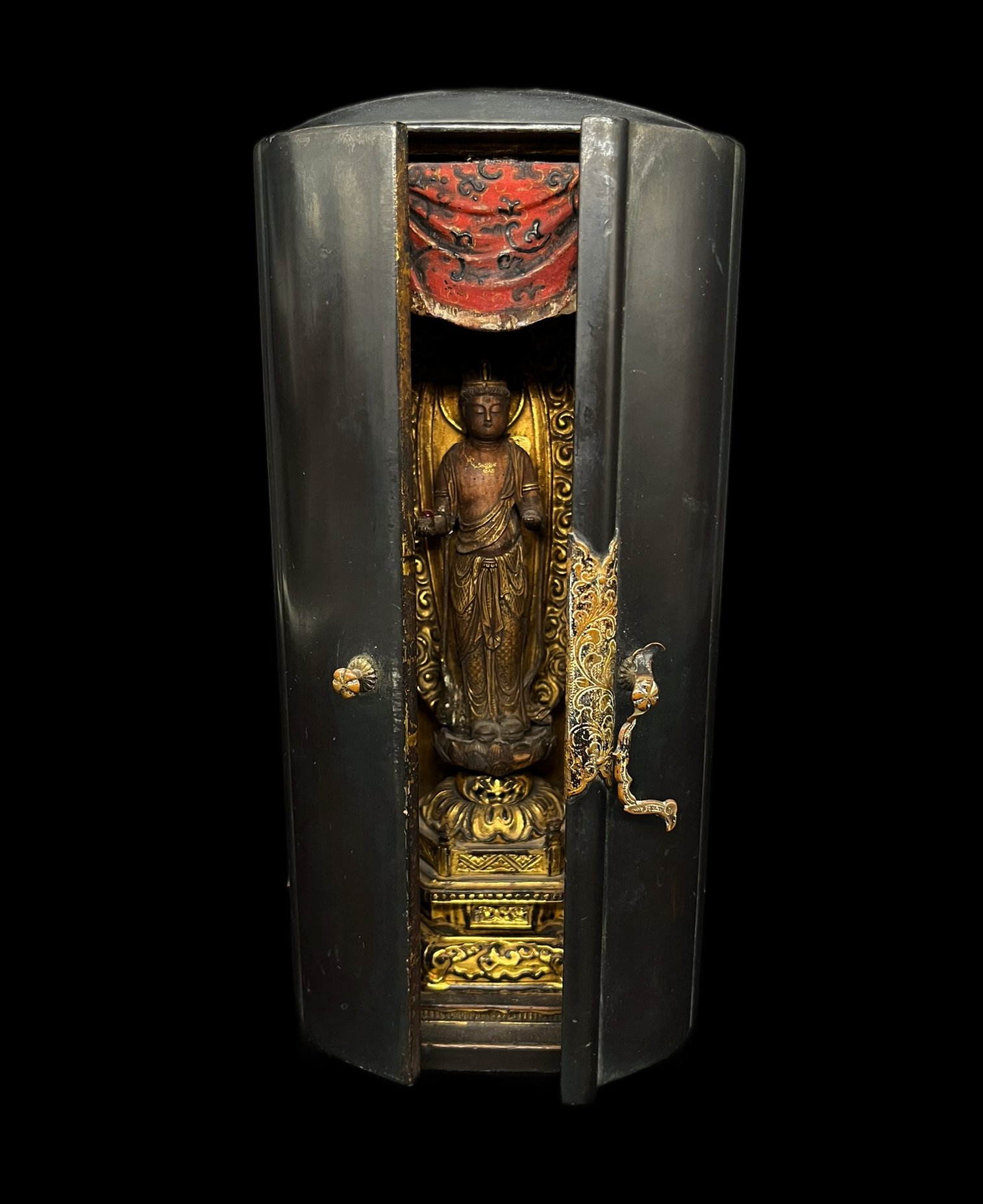
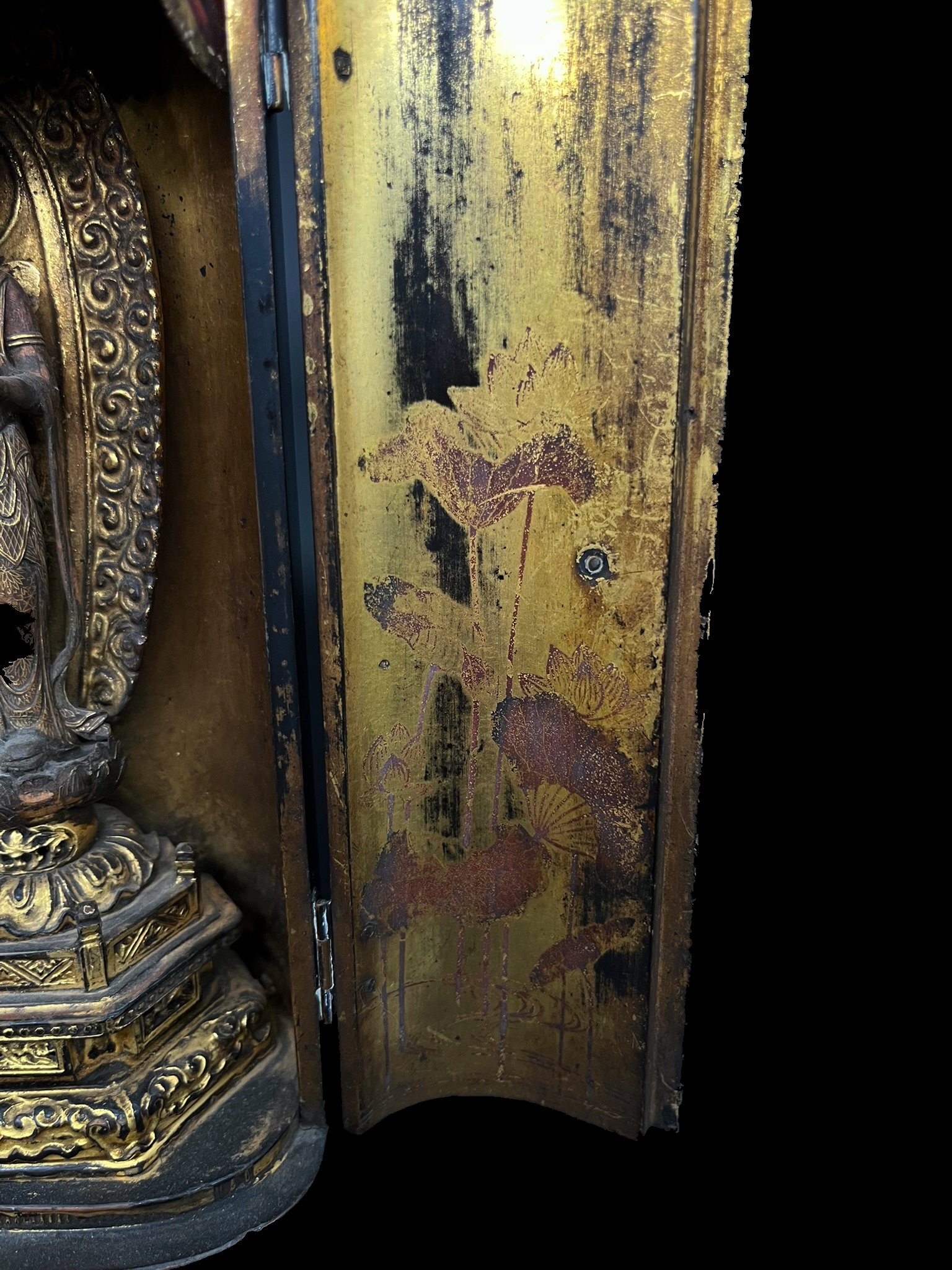
A Japanese zushi (portable shrine) from the 17th century Edo period, designed to house the Kannon, the bodhisattva of compassion revered in Japanese Buddhism. The double-leaf door is lacquered on the outside and decorated with gold lotus flowers on the inside. The Kannon stands on an ornate double lotus pedestal, raised several times, holding a hoju (sacred gemstone) with a ruby on top in his right hand, his left hand empty but as if holding something. Behind his body is a leaf-shaped mandorla with tendrils. He wears a high crown on his head and a byakugō on his forehead. His dress is densely decorated with geometric and floral patterns; he wears a long, layered skirt and a cloth that half covers his upper body. Jewellery on the neck and arms.
With the spread of Buddhism, the interiors of Japanese homes were transformed, as the former Shinto altar, kamidana, was joined by the butsudan, Buddhist altar, thus honoring two shrines. While the kamidana was made of much simpler wooden elements, often replicating a real Shinto shrine, the butsudan was more like a cupboard, with a lacquered exterior.
Zushi or Butsudan:
The two are roughly the same: butsudan meant Buddhist altar at home, while zushi, the portable, belt-mounted, smaller version, was more of an icon-holder. Both are/were important Buddhist religious objects.