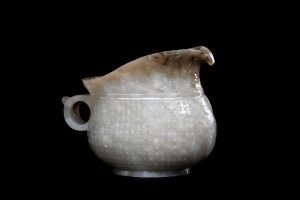
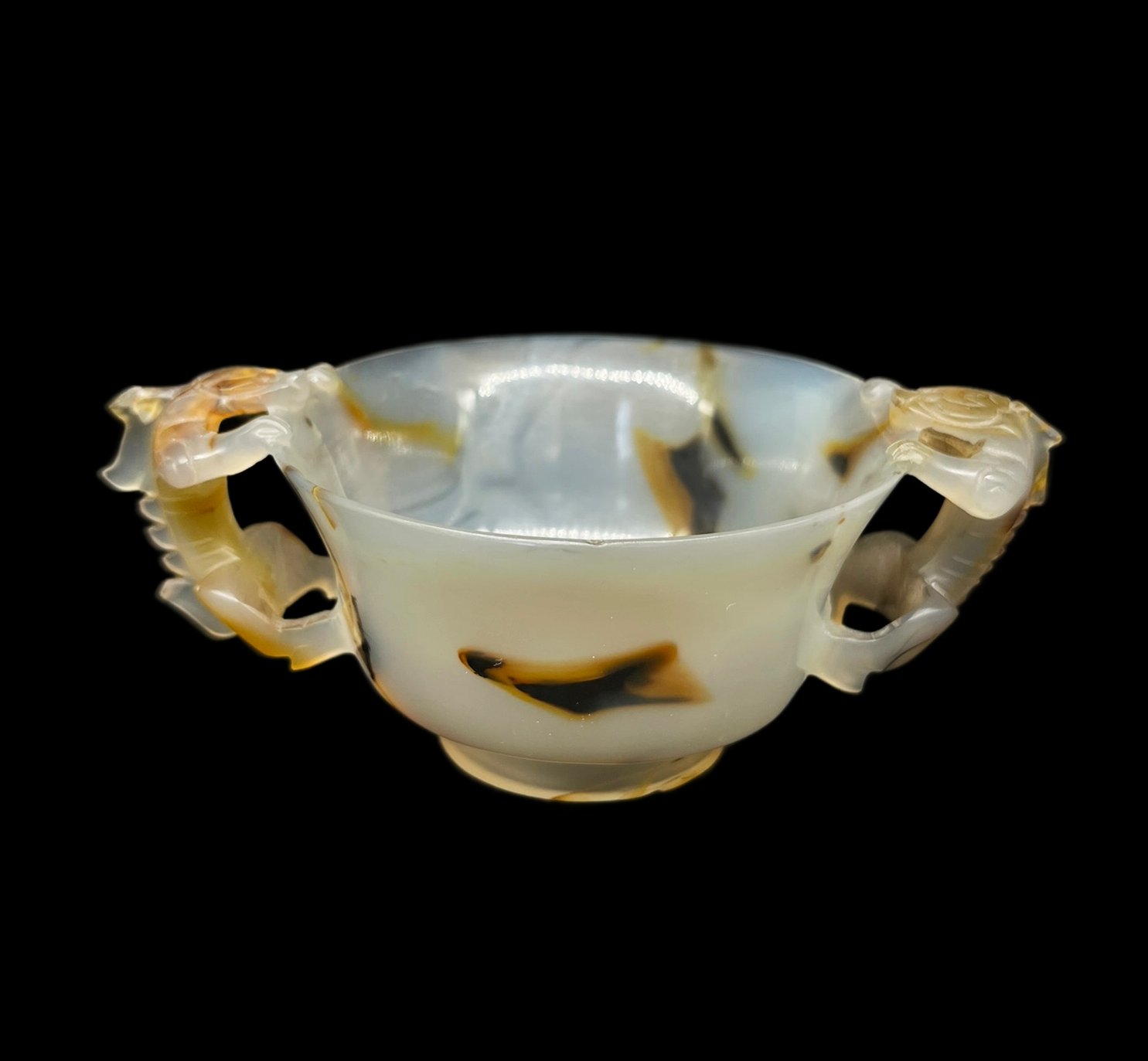
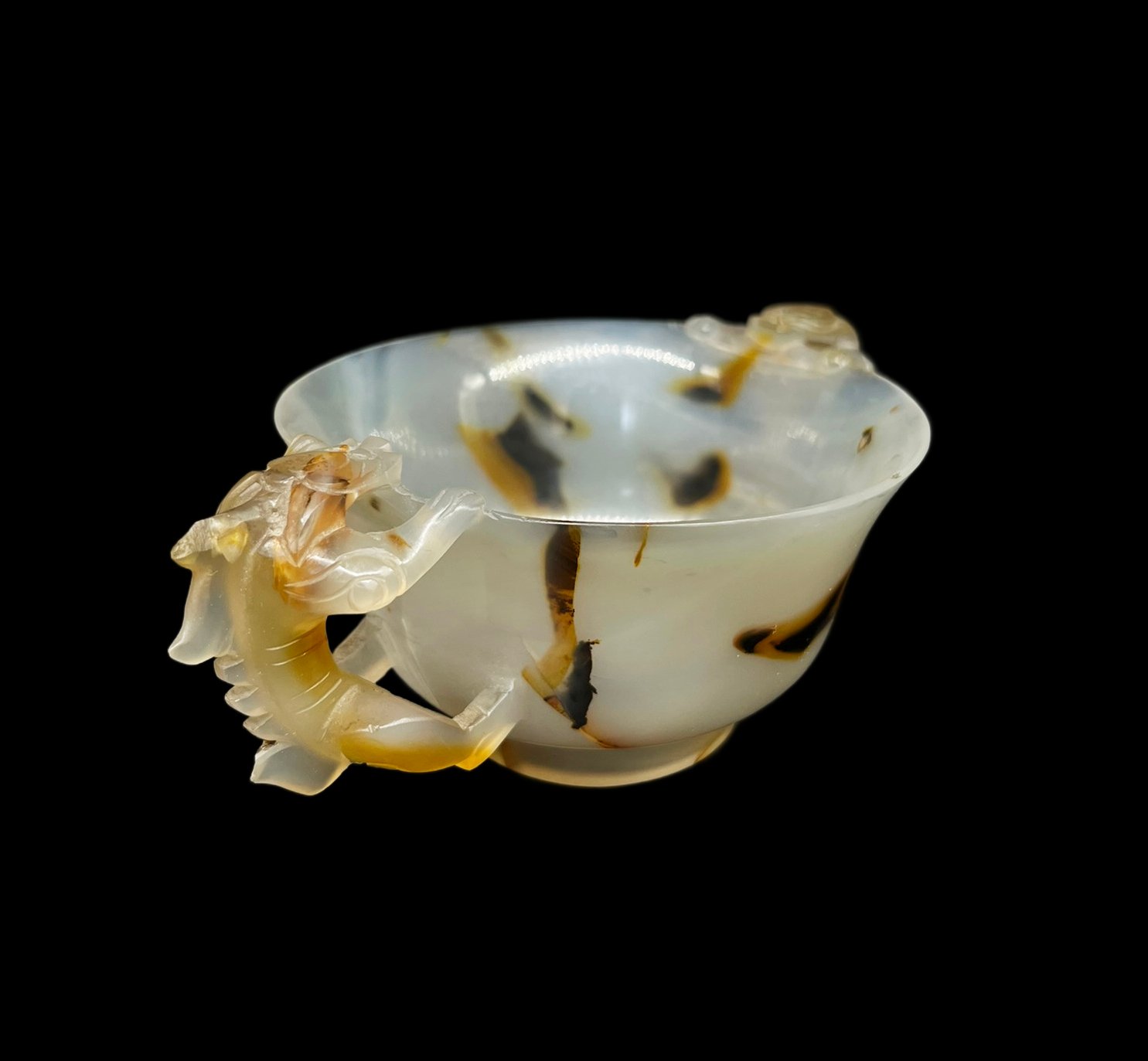
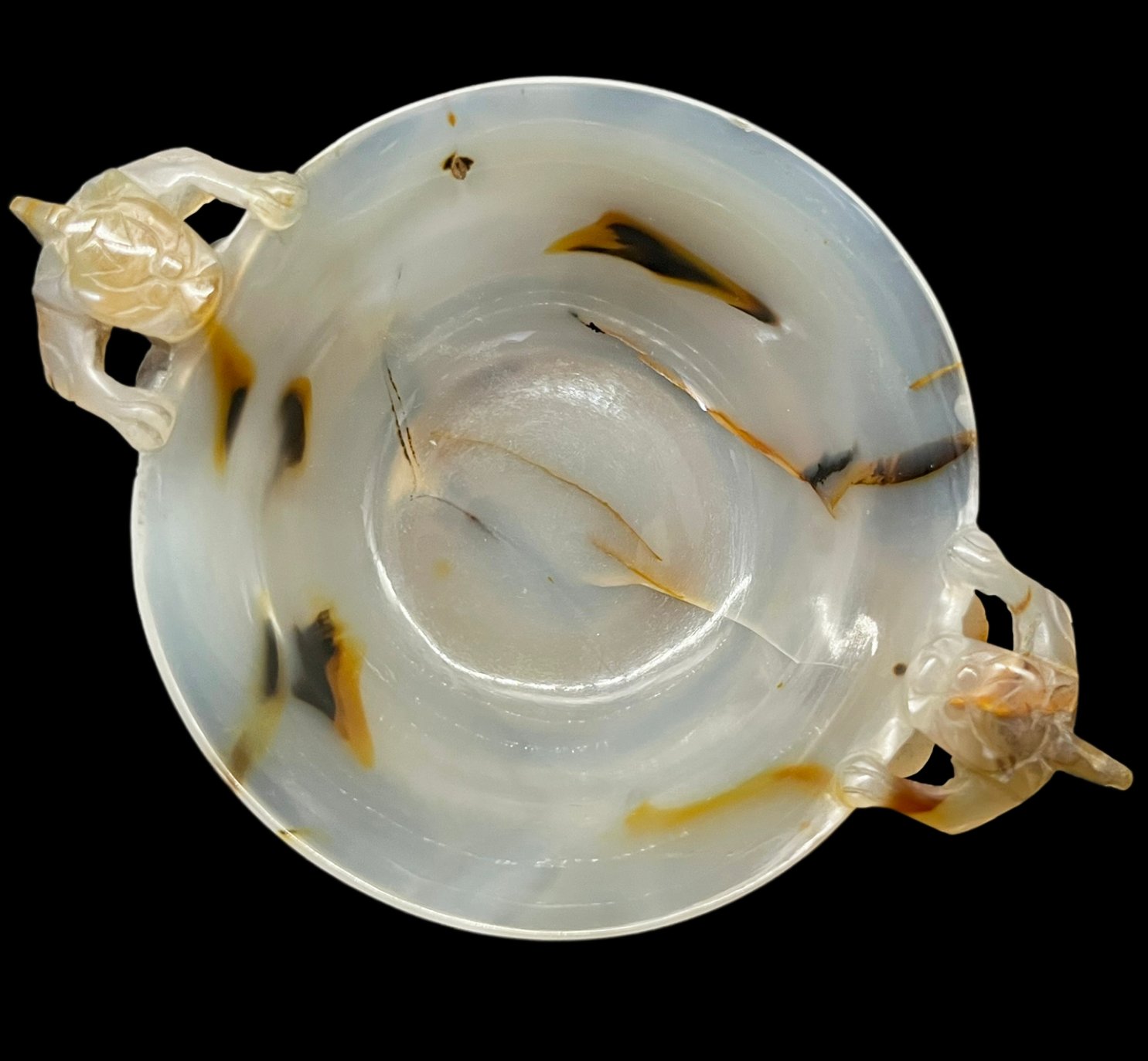
Dimensions: 5 cm (high), 14 cm (length with handles), 9.5 cm (length without handles)
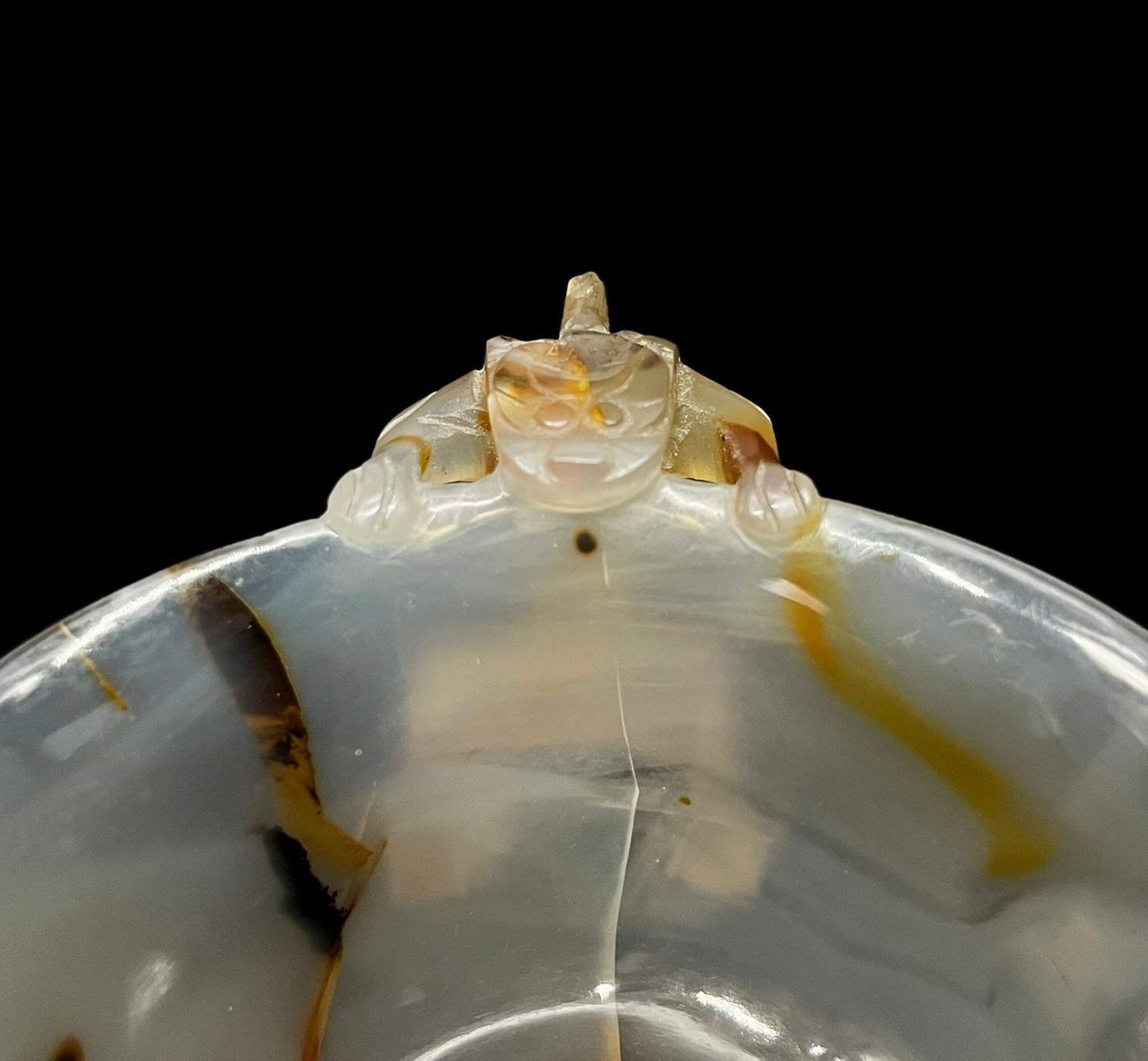
Agate cup with qilin dragon handles from the Song/Ming period, China. The darker and lighter spots of brown appear all over the cup’s body. The two dragons look very identical, and also show the colour variety of the agate. With a round base.
The Chinese dragon has been a spiritual and cultural symbol for centuries, emphasising luck, power and harmony. It is an important character in mythology, where, unlike in Europe, only positive stories are associated with it. Liu Bang, the founder of the Han dynasty, for example, claimed that just before his conception, his mother had a dream about a dragon. In subsequent dynasties, the dragon motif also served as a status symbol: in the Yuan dynasty, a two-horned, five-clawed dragon was only allowed to be worn by the ruler, and a four-clawed dragon only by princes and the nobility; in the Ming and Qing dynasties, the emperor was excluded from wearing the mythological creature on his robes. According to many stories and point of views, the dragon is a powerful mover of water, as well as good luck, and thus storms, seas and waterfalls are all attributed to it.