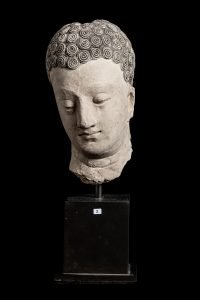
Kushan Empire/Gandhara, Central Asia, 2 – 3rd century
Dimensions: 11 cm
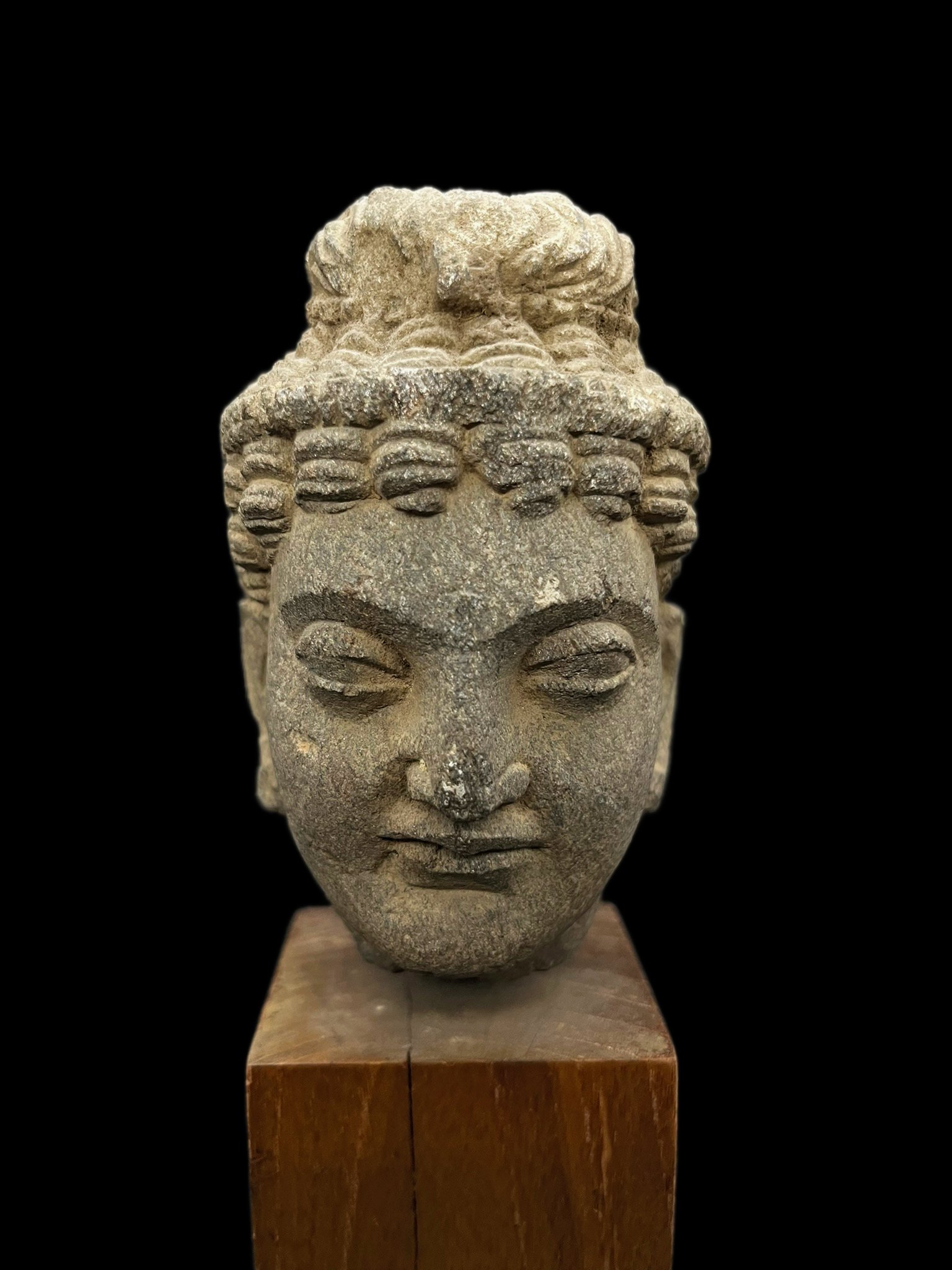
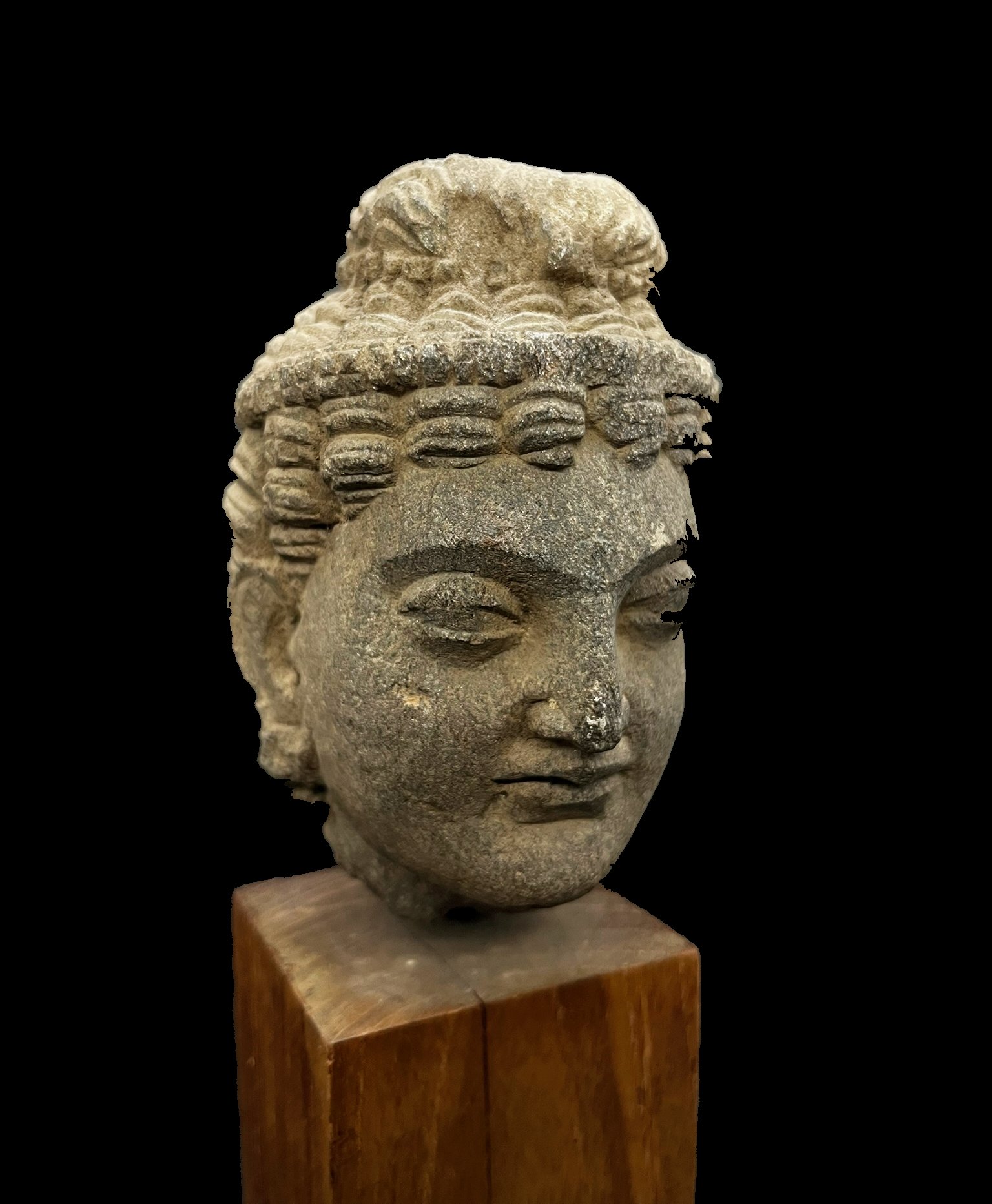
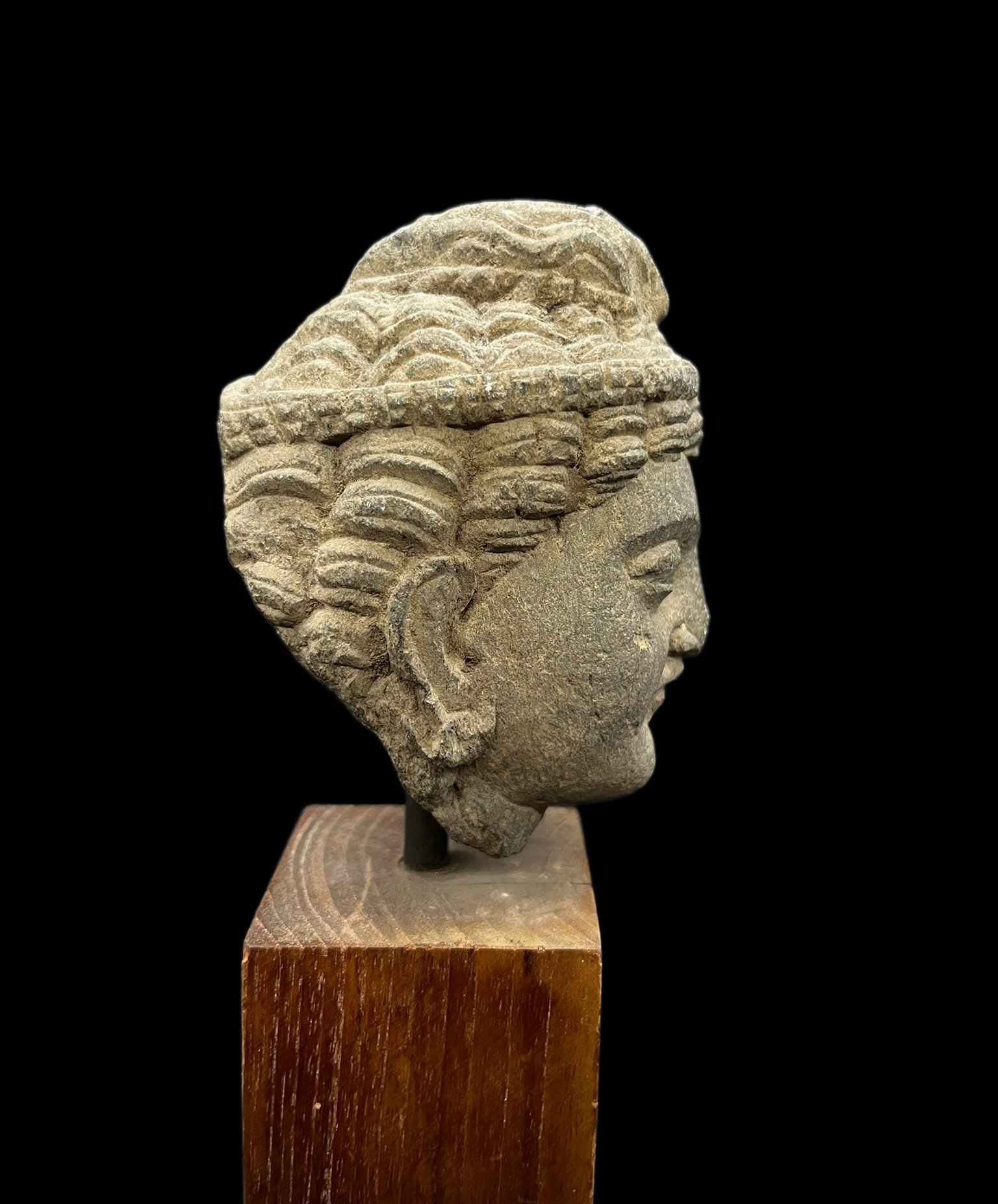
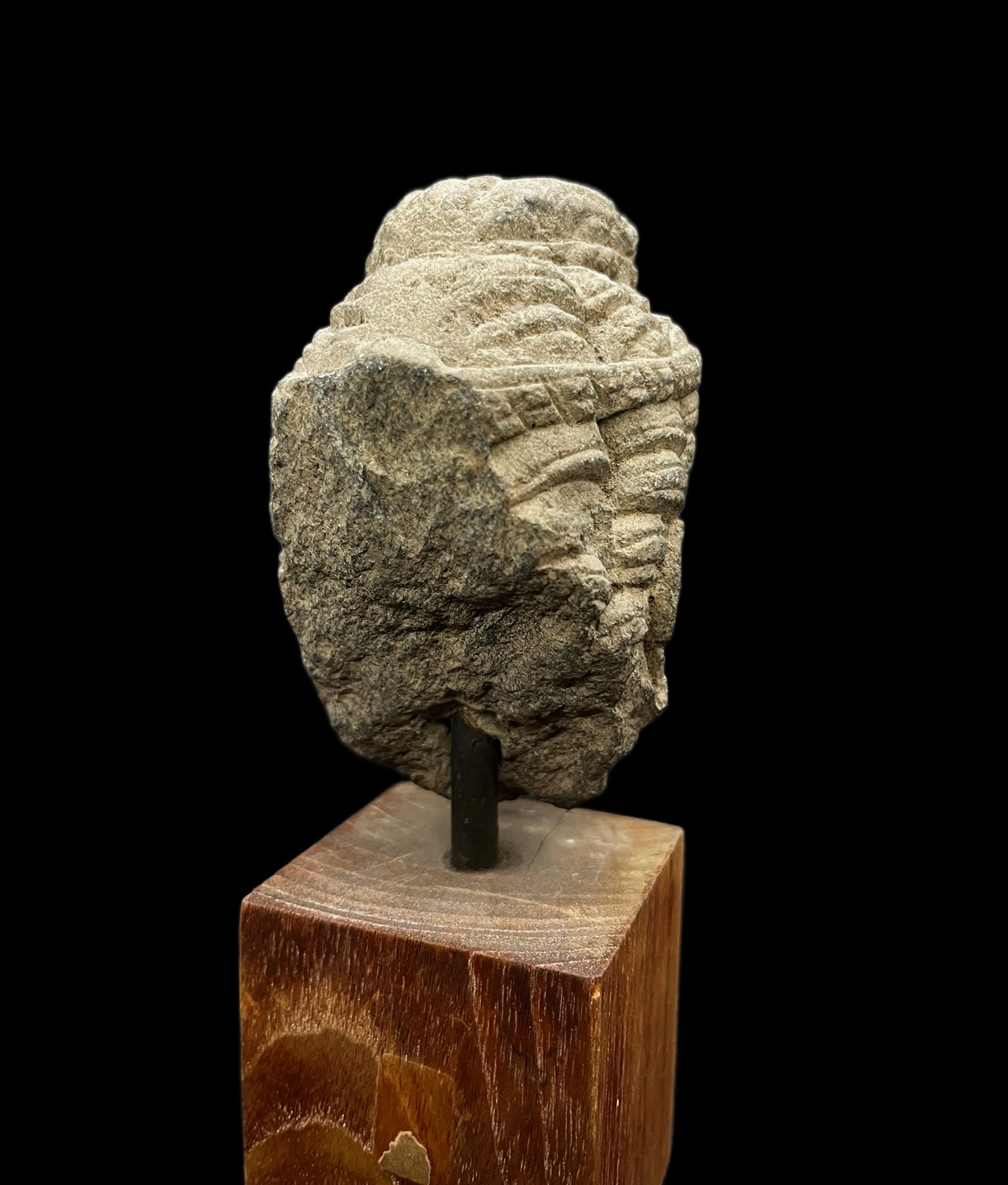
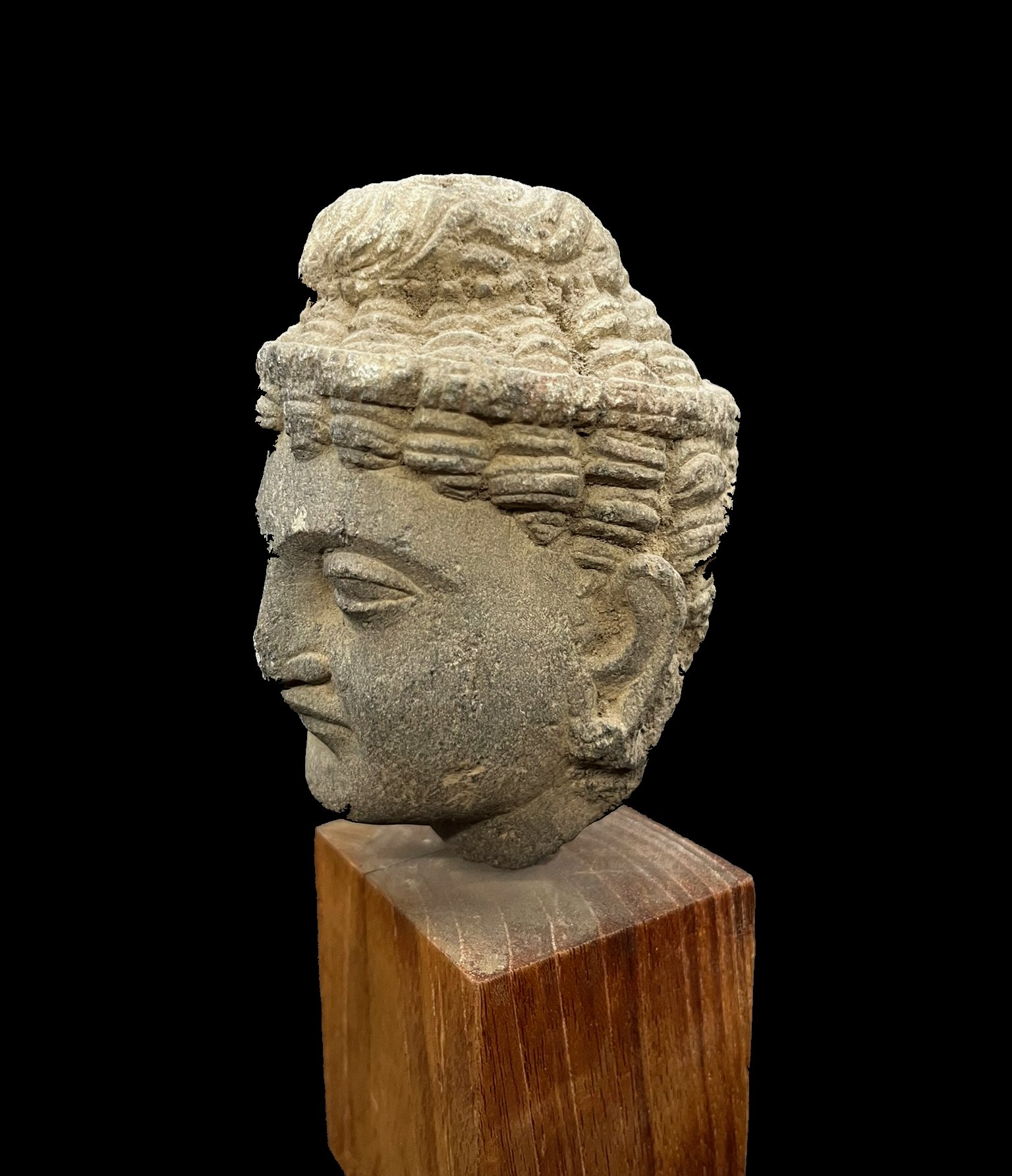
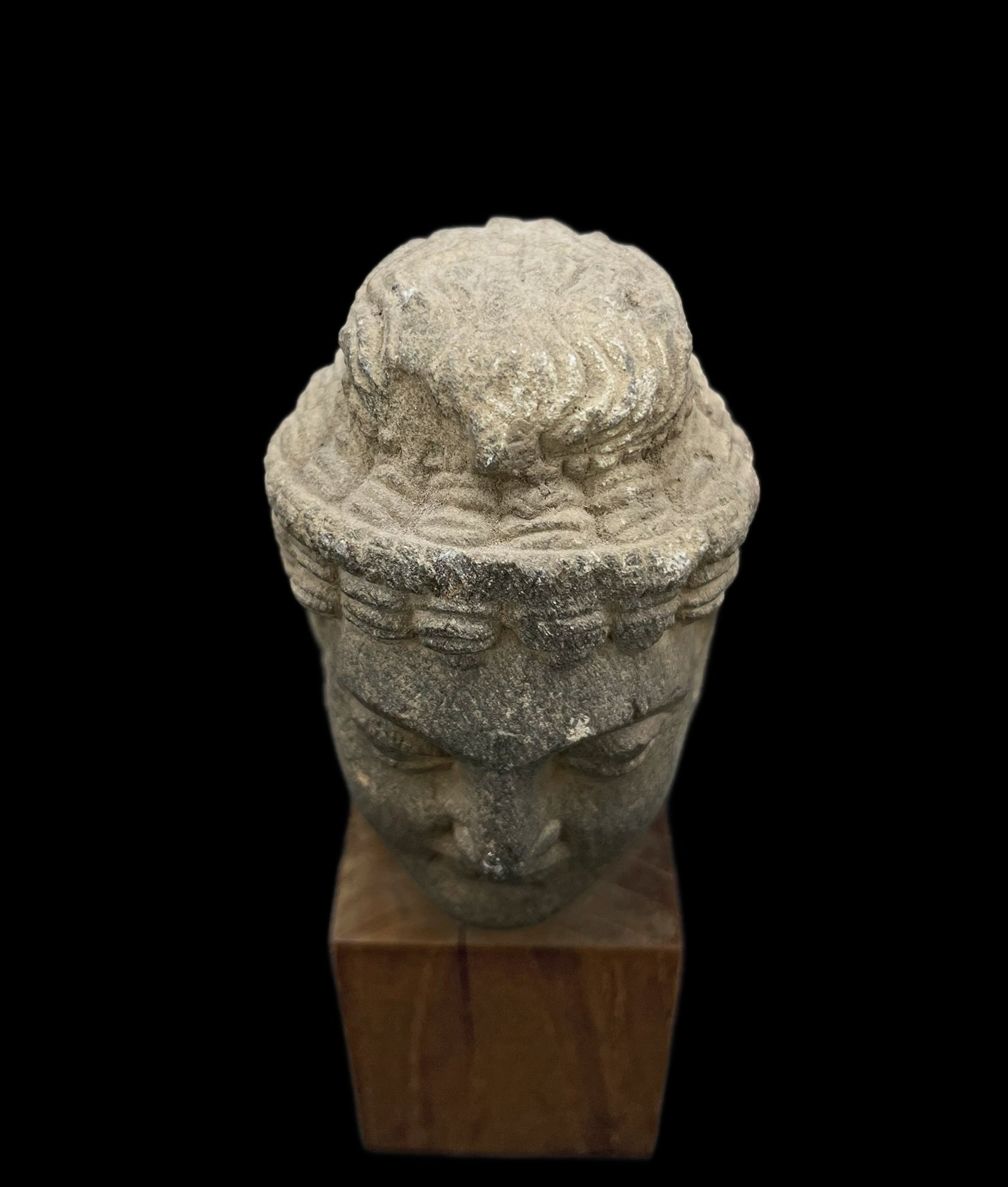
A grey schist bodhisattva head sculpture from the Kushan Dynasty. Although the sculpture has a Buddhist theme, it has Hellenistic stylistic features, which were a result of the conquests of Alexander the Great in the region. The bodhisattva is a person striving towards enlightenment. The head sculpture follows the highly lifelike, human style of Greco-Roman. Only the tip of the nose is broken off, the rest of the face is intact. The bobbed, curly hair of the bodhisattvas also appears here, although the bobbles are more like curly, hanging locks than short, berry-like ones. He is not wearing any earrings or crowns, he is depicted simply. The eyes look resolutely forward, the lips are full.
Gandhara existed from the 1st century BC to the 2nd century AD in the north-west of present-day Pakistan and the north-east of present-day Afghanistan. The area became famous for its central role in spreading Buddhism to Central and East Asia. The Gandhara art style also stood out as a transition between Greek antiquity and Buddhism. The blending of world views and stylistic features was due to Alexander the Great’s campaigns in the East in the 4th century BC. Gandhara’s heyday was under the Kushan Empire until the 1st-4th centuries.
Its art is characterized by the depiction of Buddhist themes with Greco-Roman/Hellenistic elements. The first human depiction of Gautama Buddha/Siddharta Buddha can also be traced to this period and style.