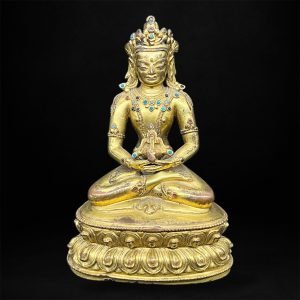
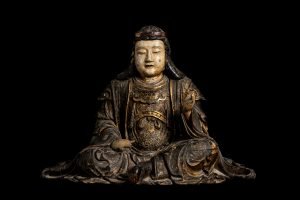
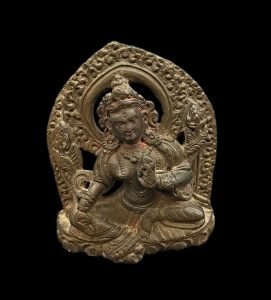
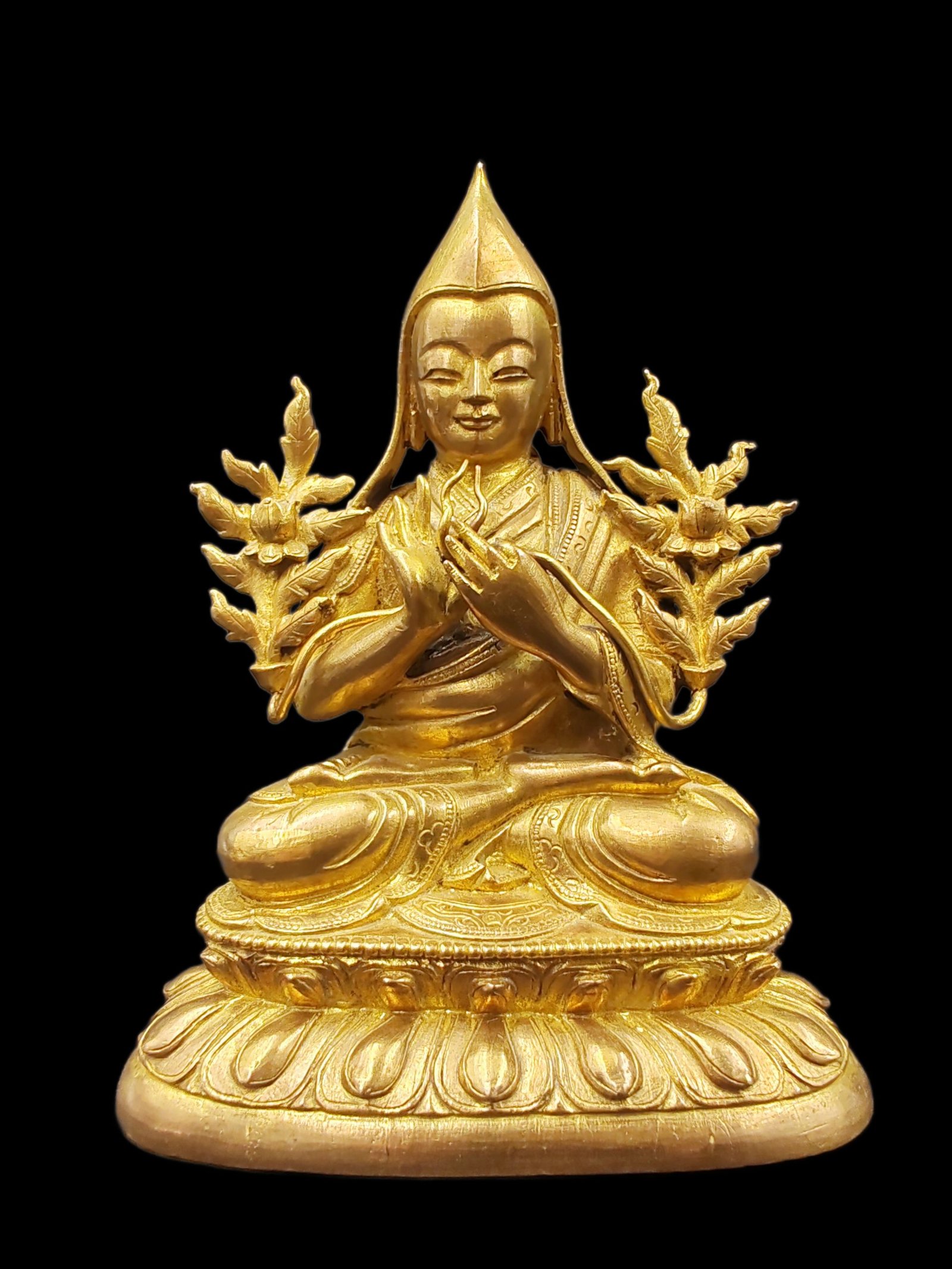
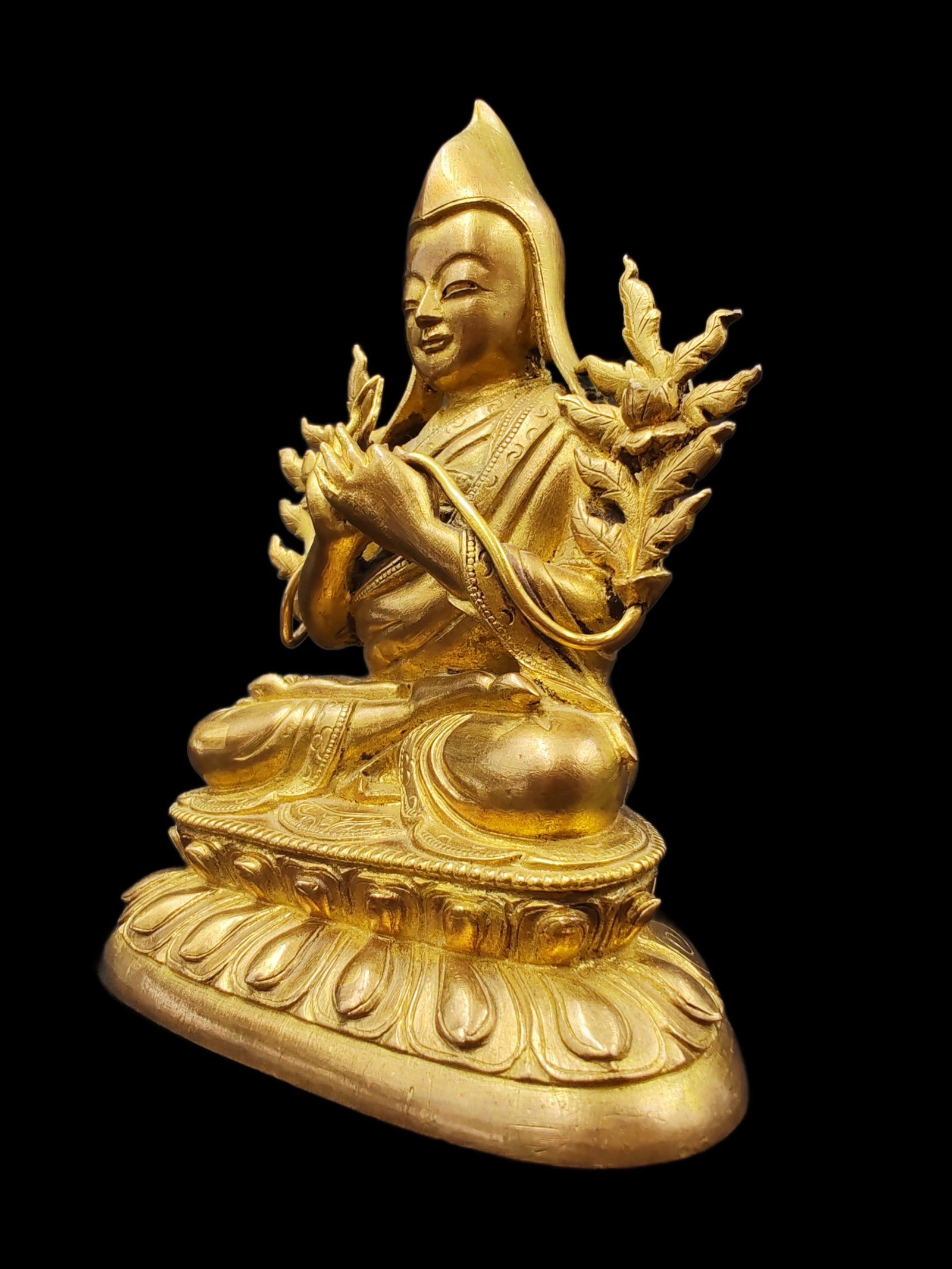
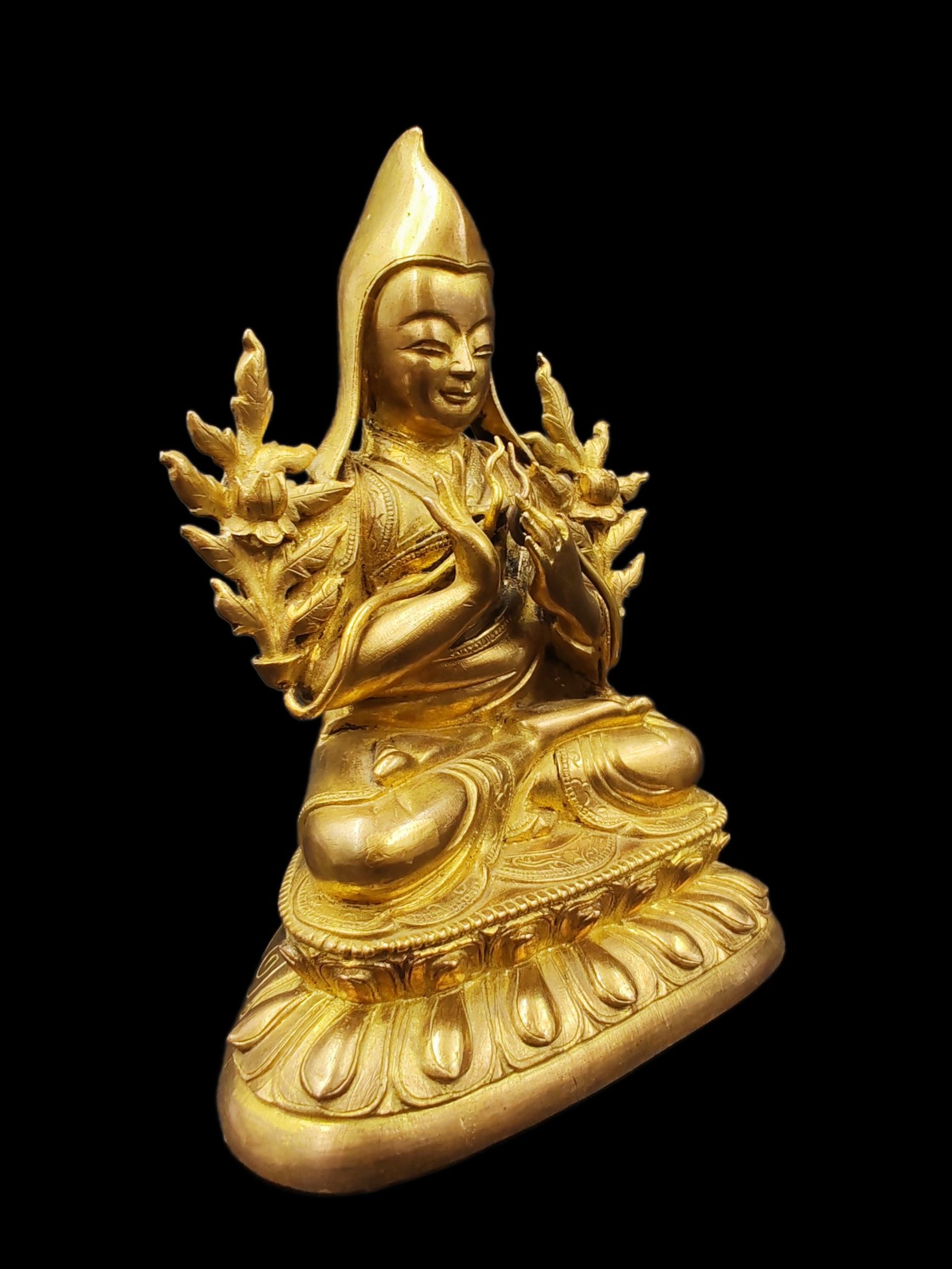
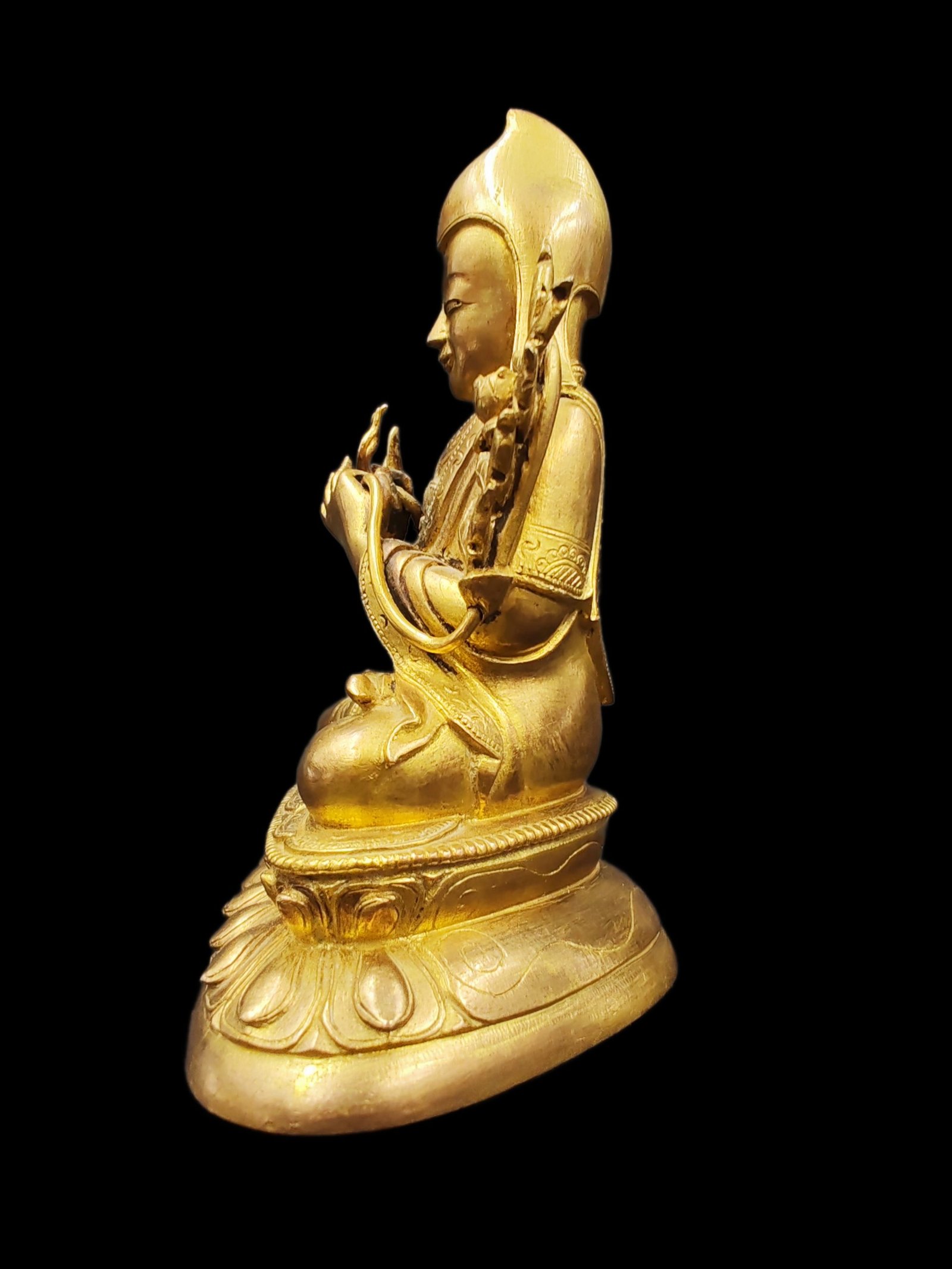
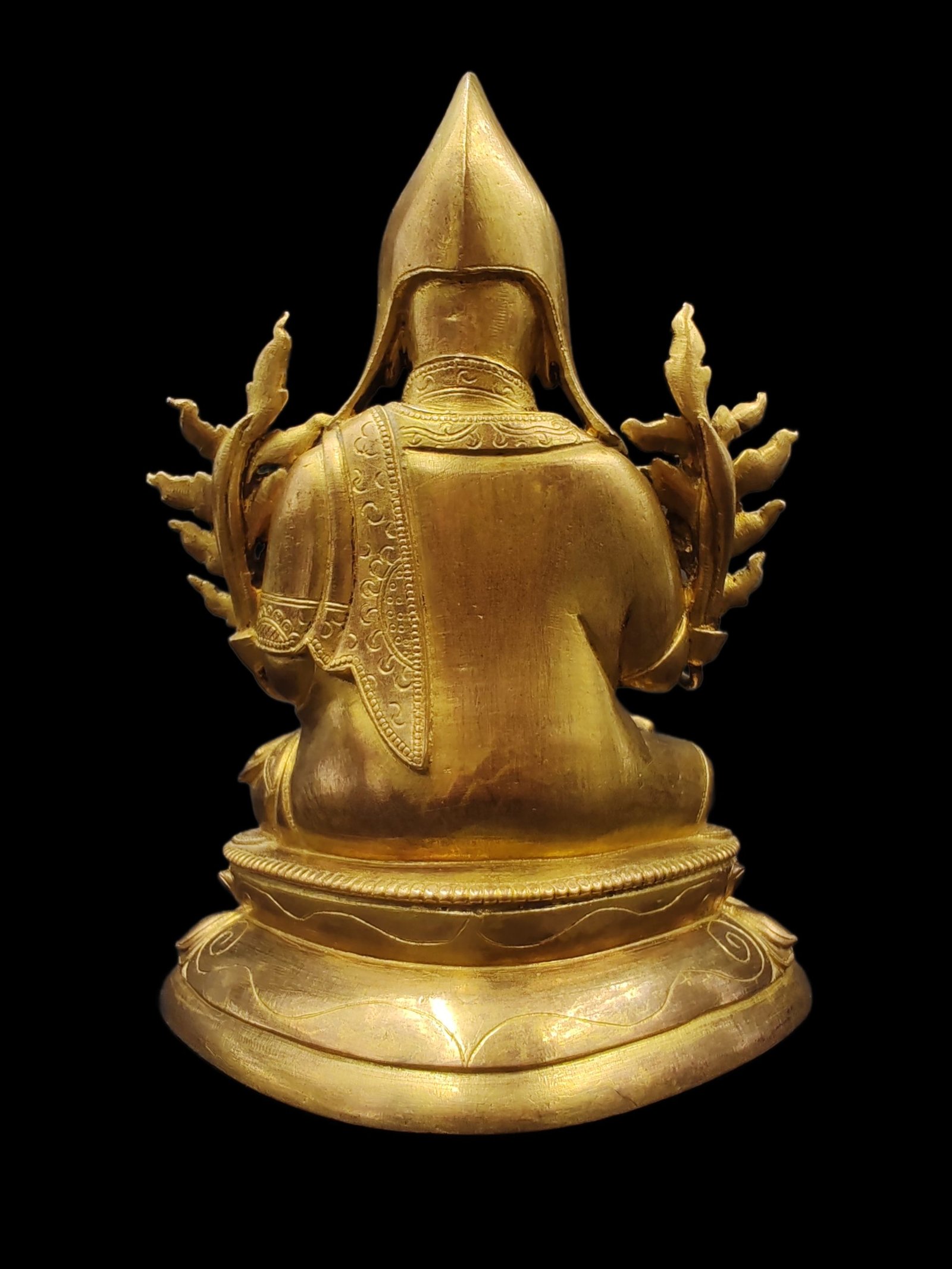
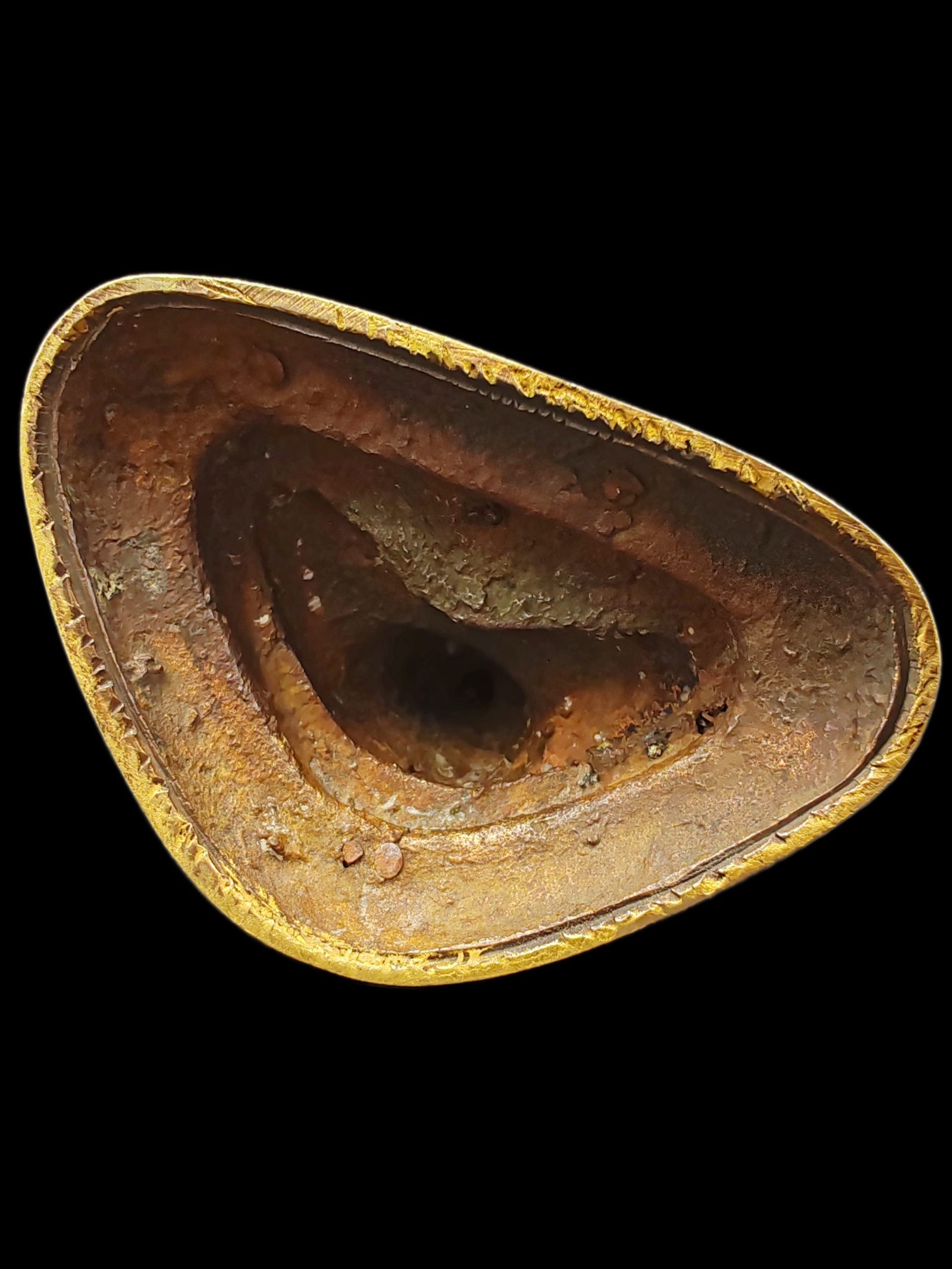
Gilded bronze Tsongkhapa statue from the 18th century. At 10.2 cm high, the statue depicts the famous Tibetan Buddhist monk Tsongkhapa, who was not only an eminent writer, philosopher and yogi, but also the founder of the Gelug, also known as the “Yellow Hat School”, an institute of Buddhist monks.
Tsongkhapa is seated on a double lotus pedestal, in padmasana position (both feet resting on the thighs, turned upwards), as he sits on a throne decorated with lotus flowers. On his body, he wears the traditional dress of a monk, with many layers and simple patterns around the edges of the garment. On his head he wears a so-called pandita cap, a pointed headgear that is a typical accessory of Buddhist monks. The Gelug school is not so named in vain. Tsongkhapa’s face is calm, he is meditating. He holds a lotus flower in each hand while holding dharmachakra mudra (“wheel of dharma”). The circle formed by the index and thumb symbolizes the teaching, the cycle of the Buddha’s law. The lotus symbolises spiritual enlightenment.
Tsongkhapa was a very gifted disciple and later teacher, who had such a great knowledge of religion, life and Buddhist philosophy that he had many followers during his lifetime. He has written many books, 18 volumes in all. The Gelug school was based primarily on the texts of the lamrim (the path of enlightenment) and the doctrines of emptiness, gaining such popularity and influence that it has been associated with influential people such as the Dalai Lama himself.