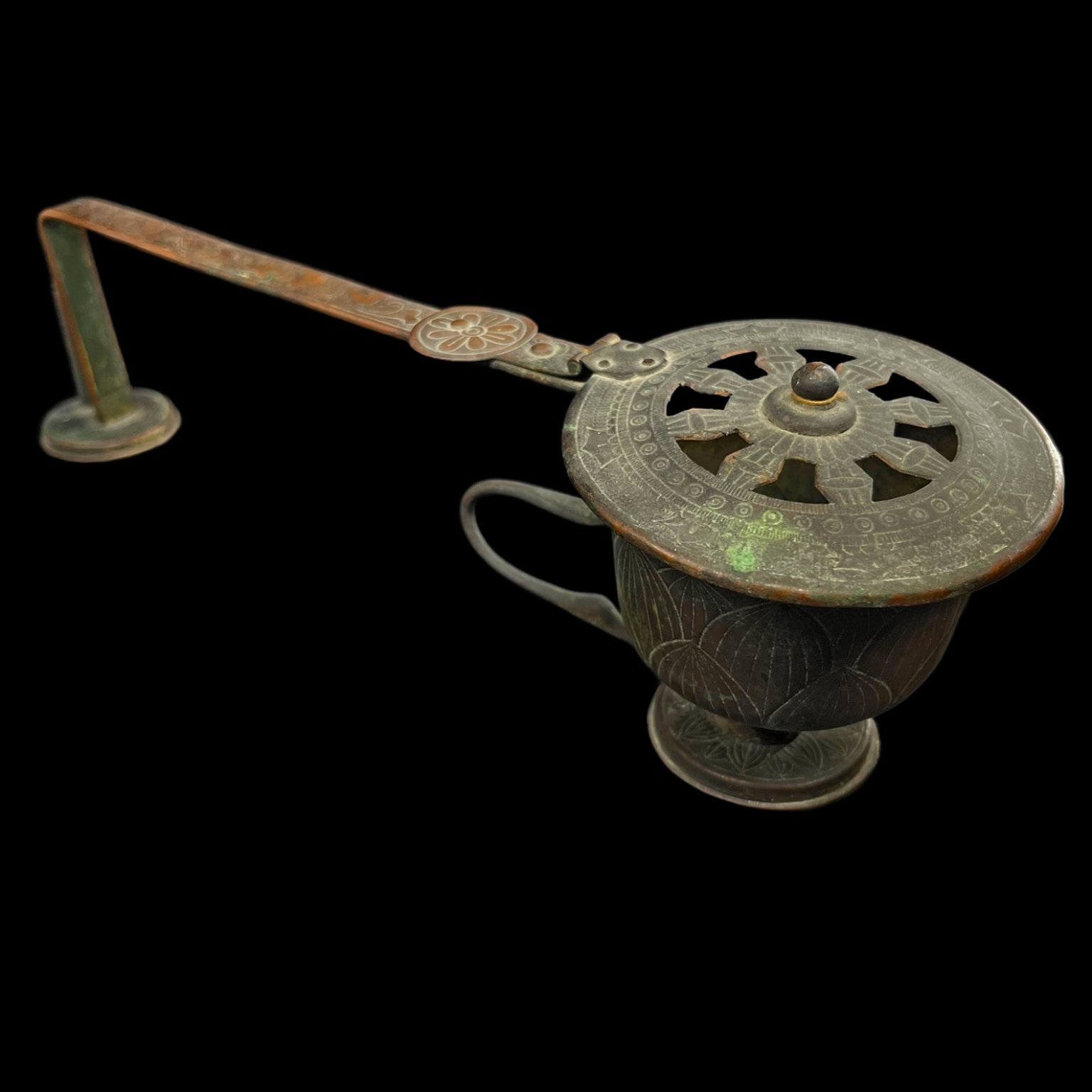
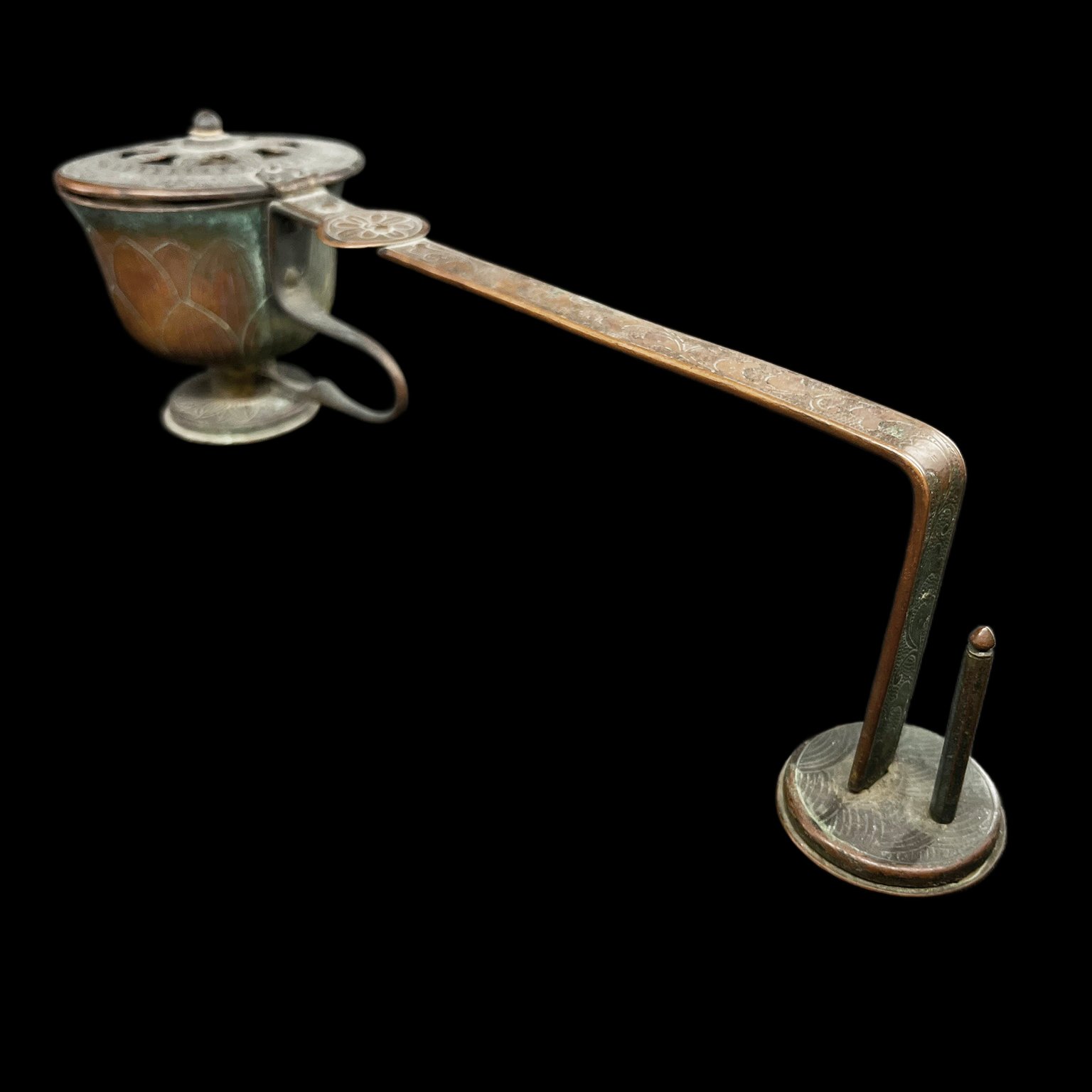
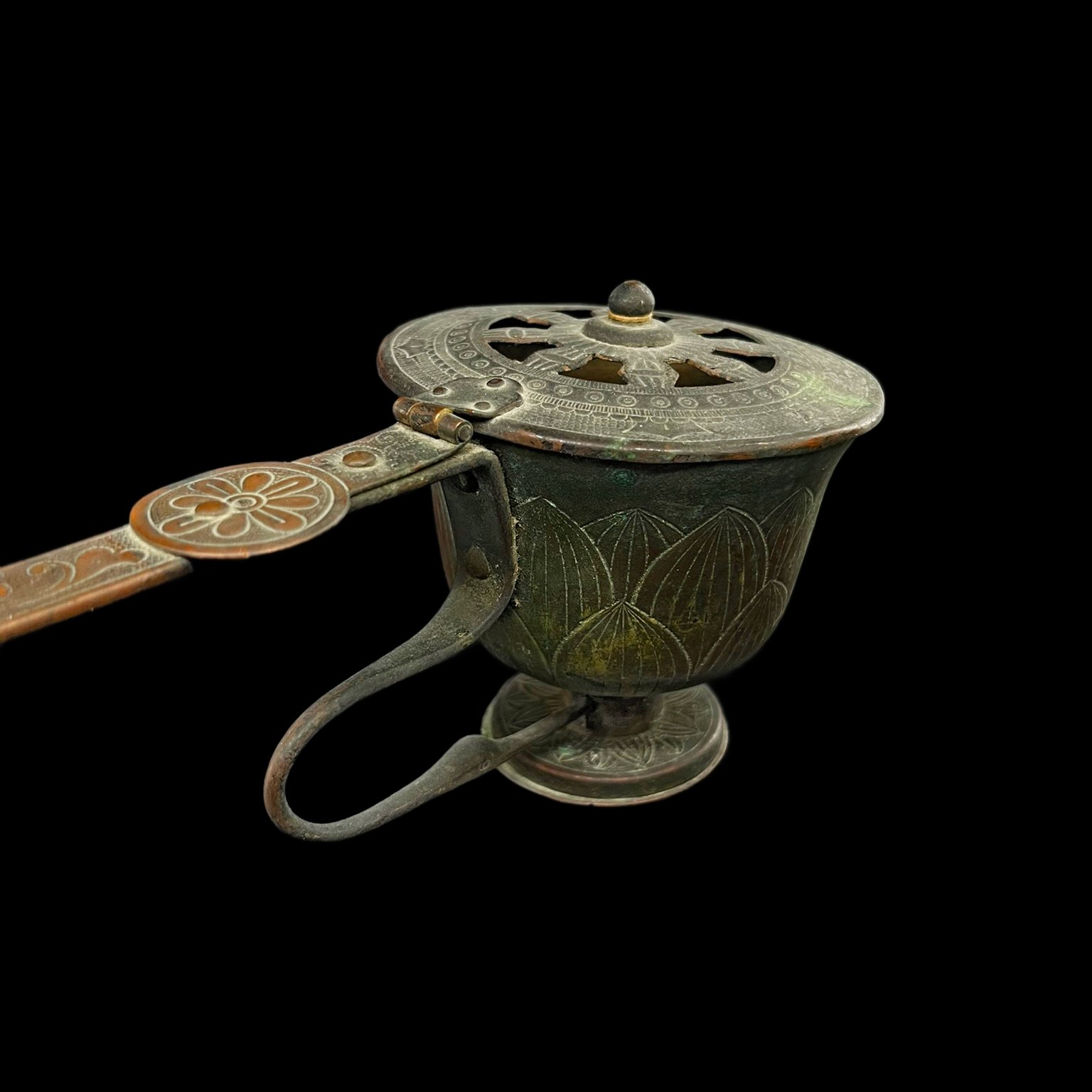
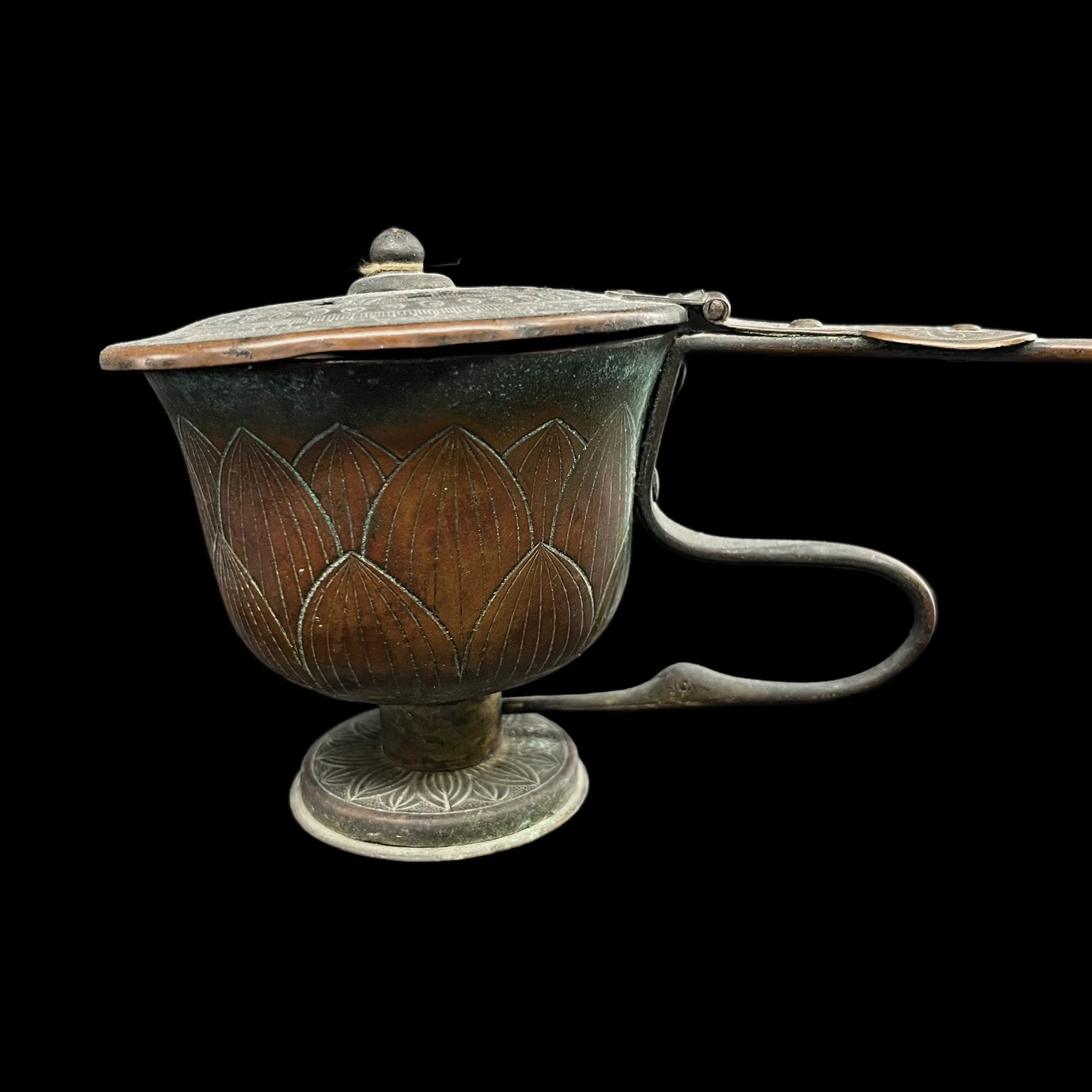
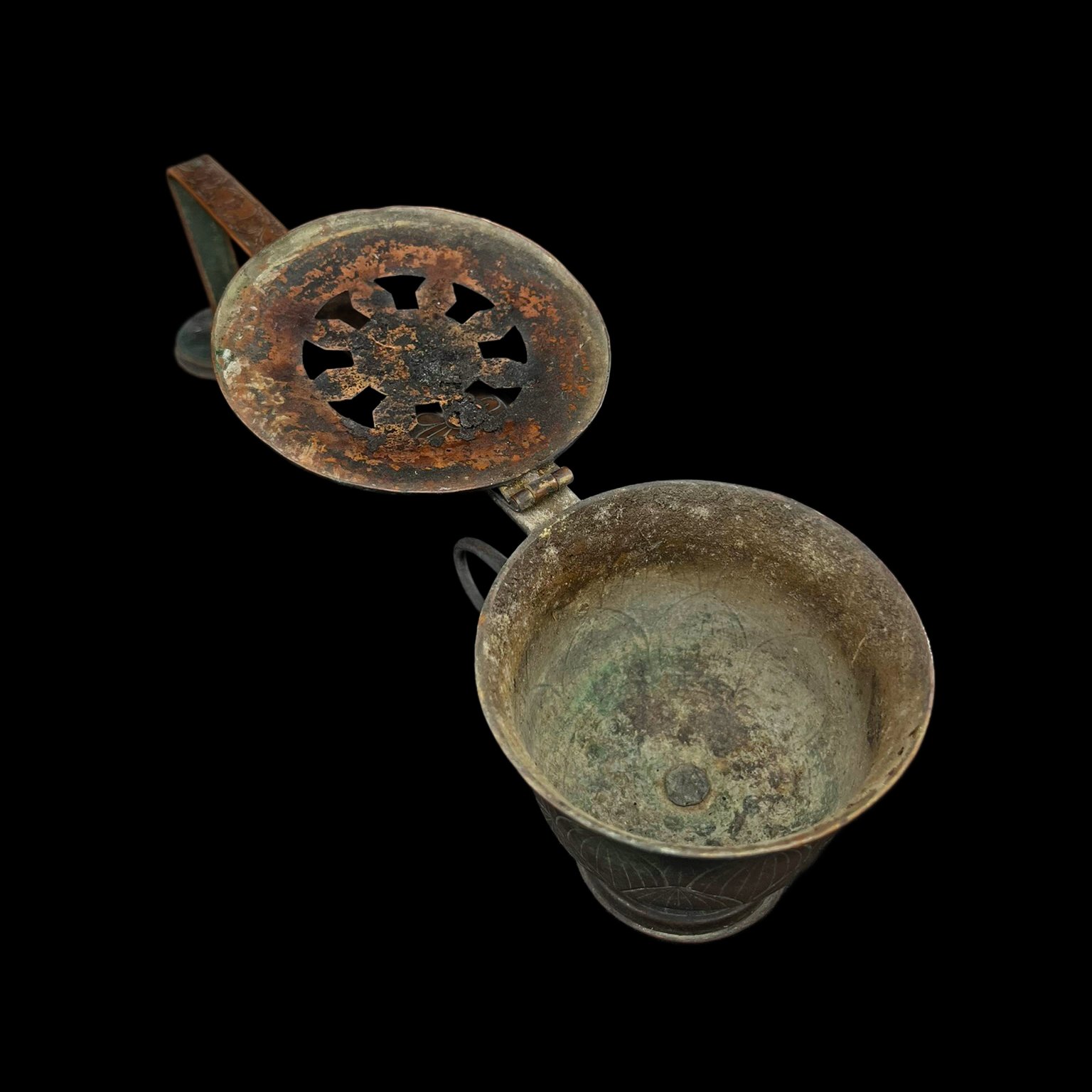
Long-handled fire-gilt bronze incense burner from the Kamakura period (1185-1333)
The slender object with an elongated handle is designed to be easy to use during incense rituals. Although most of the gilding has worn off, the original colour of the incense burner is still visible at the bottom of the cup. The small handle on the side of the cup is in the shape of a graceful bird: its beak is attached to the cup and its body is curved upwards. The animal is identified by the shape of its head and beak, which resemble a crane bird. The crane bird symbolises the Buddha’s enlightenment, wisdom and purity, and thus has a prominent role within Buddhism. This incense burner was probably used in religious ceremonies in Buddhist temples and homes.
The Kamakura period is a significant period in Buddhism, as Japanese Buddhism diversified rapidly in the country. Previously, the Shingon and Tendai schools could only benefit from people of the noble class, but as politics and military conflicts intensified, new schools opened their doors and were able to attract many financial supporters from among the members of the new Kamakura government. With the emergence of new schools, Buddhism also underwent a rethinking; each institution developed its own approach to enlightenment and sacred texts. Their popularity also propelled the Shingon and Tendai into a new era, where politicians and even samurai were allowed into their circle of supporters. Thanks to this religious shift, Buddhism became accessible to all Japanese people, so that the promise of enlightenment was not only extended to the nobility.