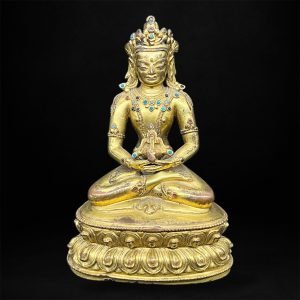
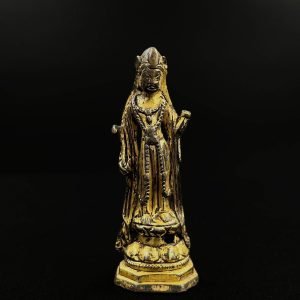
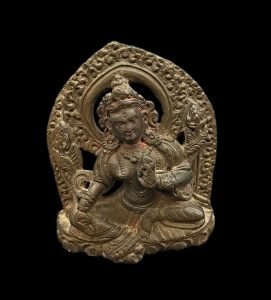
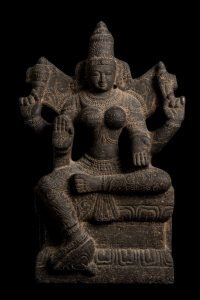
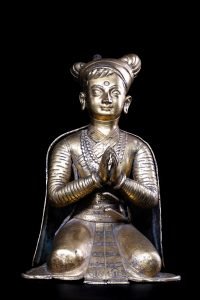
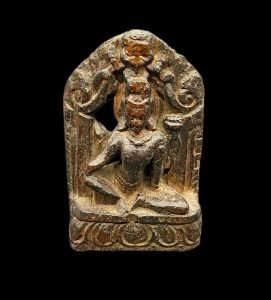
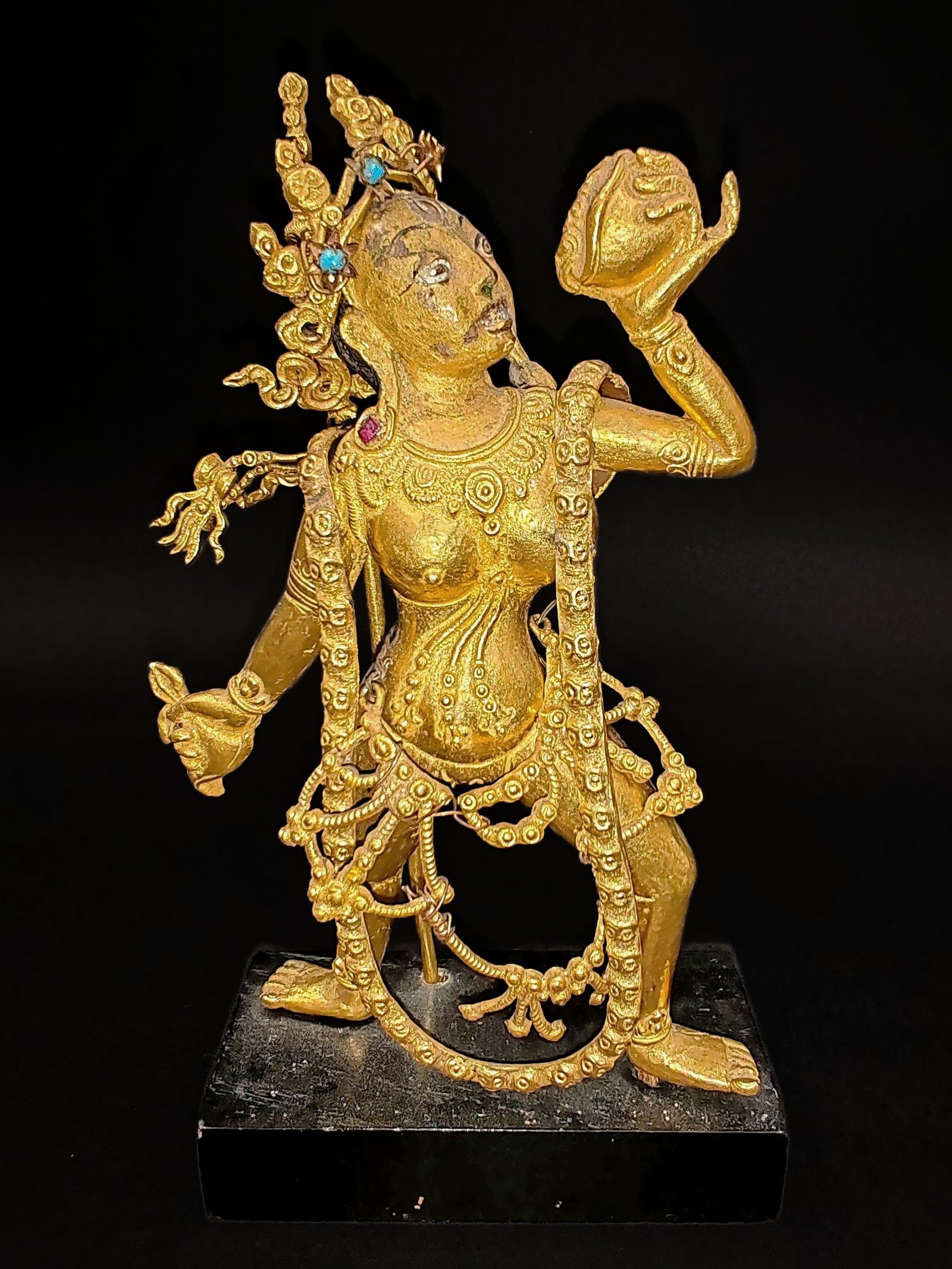
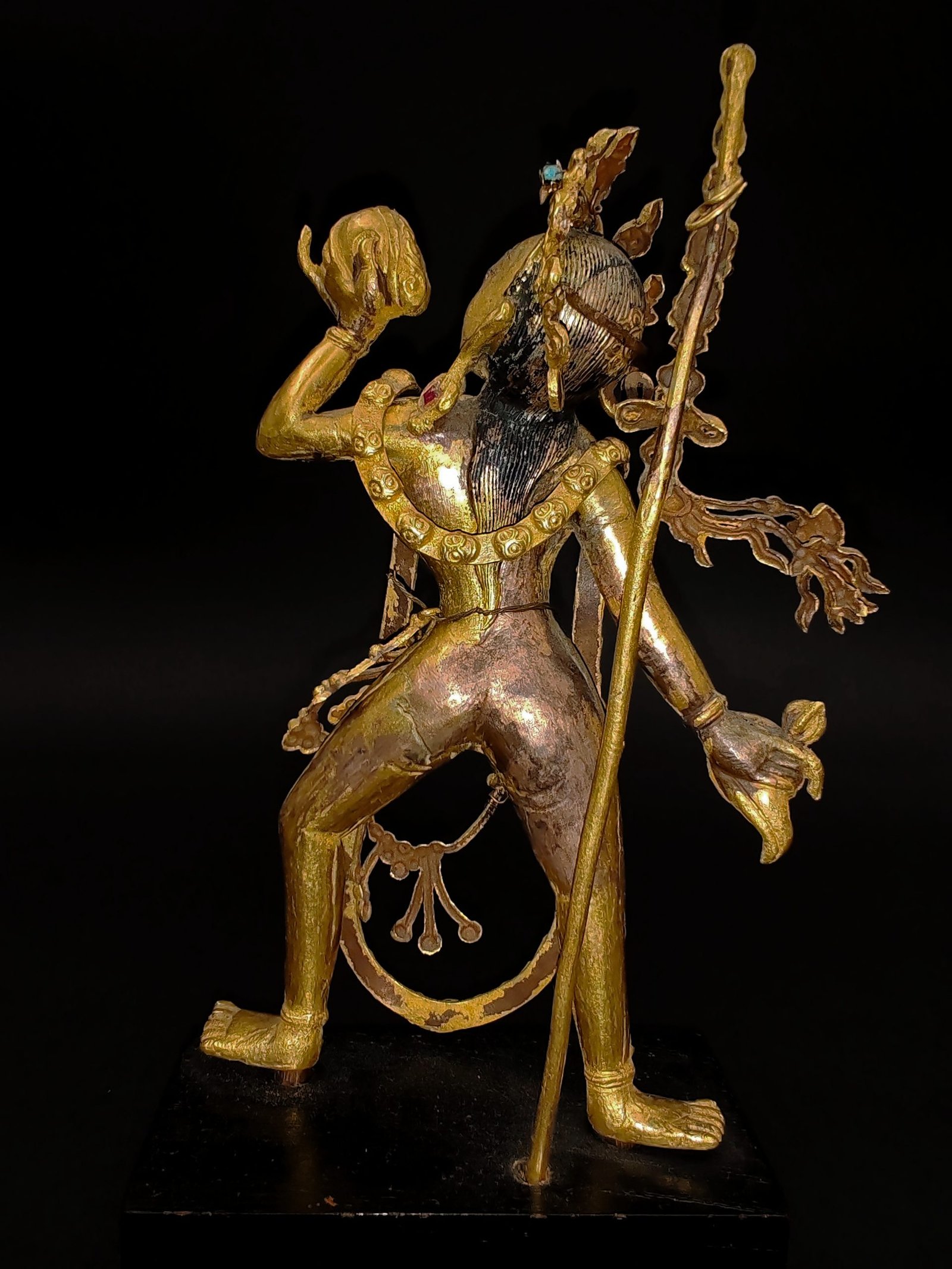
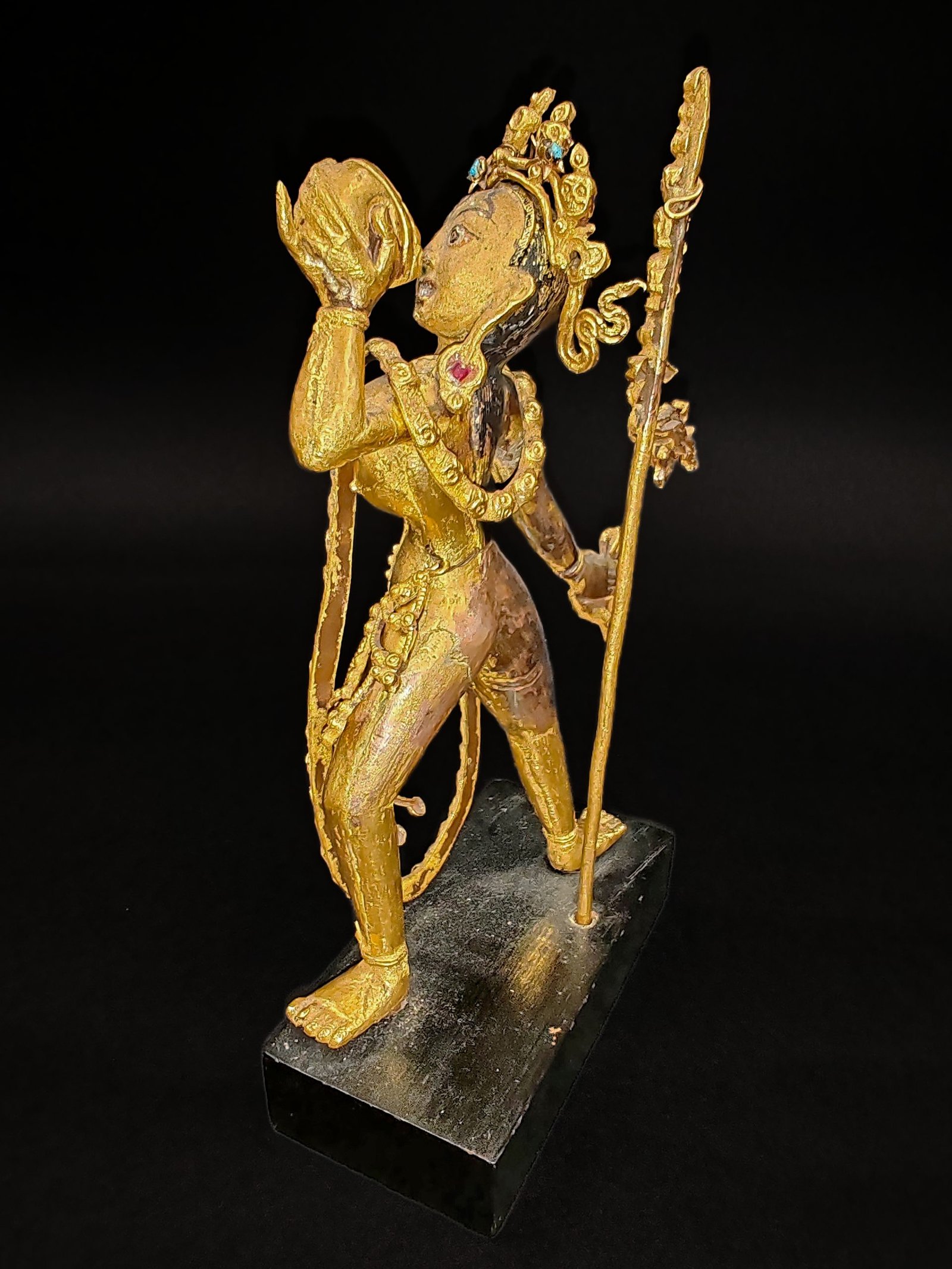
18th century Tibetan religious statue in gilt bronze. Embossed plate statue made by using the repoussé (hammered) technique. According to the views of Vajrayana Buddhism, Dakini is the female embodiment of enlightenment, also known as the “dancer of heaven”, and a spiritual guide on the path to enlightenment. She is often portrayed as dynamic and unpredictable.
The statue is 13 cm tall, standing in the deity’s typical posture, alidhasana, or shooting posture. Her body is well proportioned and naked, but is adorned with a number of jewels, notably a necklace of skulls reaching down to the ground and a crown-like garland of jewels on her head, also with miniature heads (mundamala). In her left hand she holds a skull (kapala), while in her right hand she holds a kartika/kartari knife, a skinning knife used in tantric rituals. It is usually held in the right hand and is often called the Dakini knife. The crown is adorned with turquoise gemstones and the earrings with red coral jewels. The statue is very naturalistic: with a slender waist, wide hips and round breasts, Dakini is the idealised figure of female beauty.
Although the goal of both Dakini and the Bodhisattva is enlightenment, there is a difference between the two. While the bodhisattva works on cultivating compassion and liberating all sentient beings, the Dakini works on directly experiencing enlightenment and dissolving the ego. Dakini uses much more violent methods to break out of limitations, which is why he is portrayed as so powerful and dynamic.