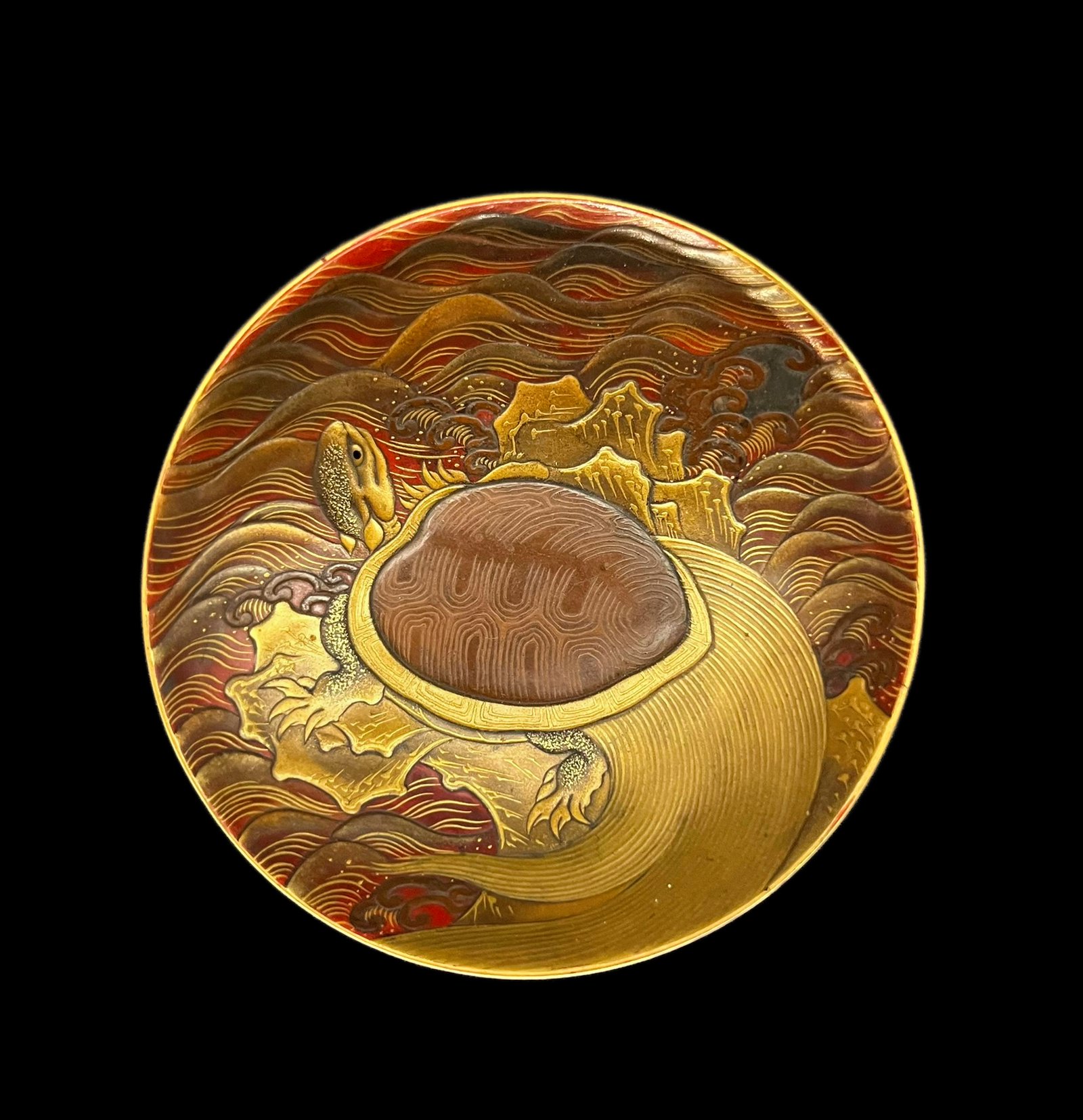
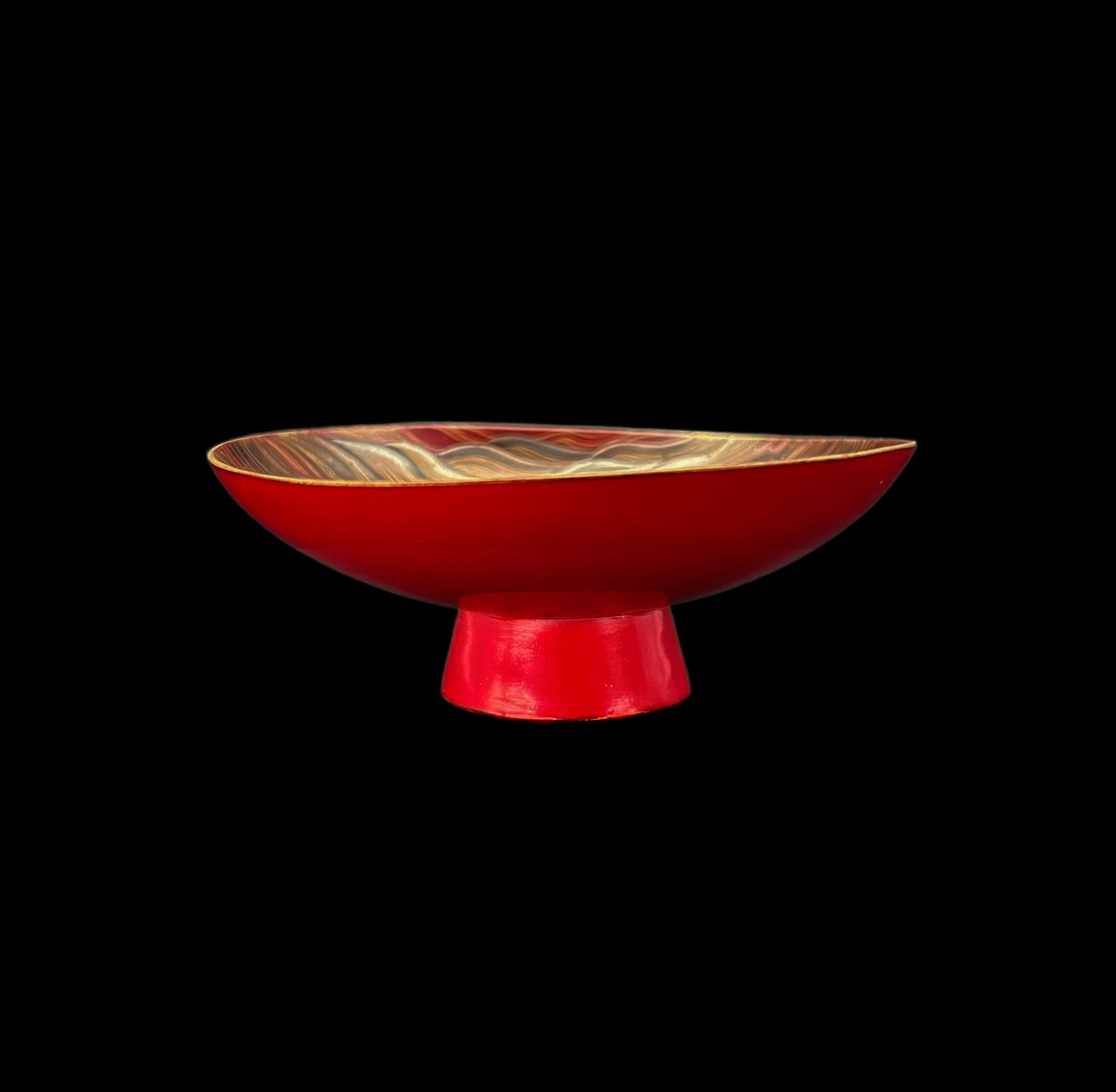
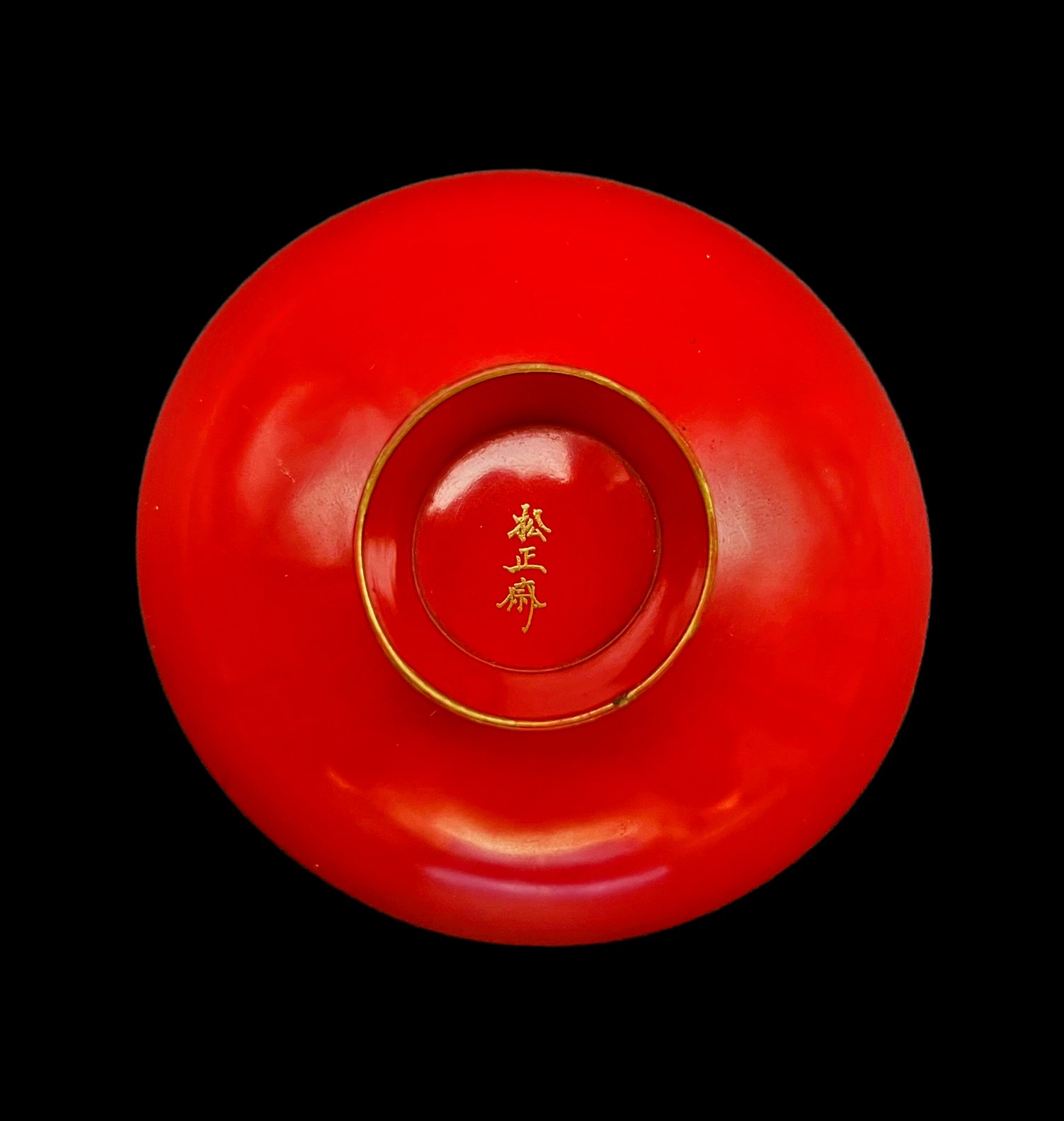
Lacquered Japanese sakazuki sake cup from the Edo period. The stem and the exterior of the cup are bright red, while the interior is decorated with detailed carvings of a turtle looking upwards. In addition to the red exterior, the interior is dominated by warm colours similar to the red: gold, red, pale blue and grey. The turtle is depicted swimming, its webbed feet, of which only 2 of the 4 are visible, are in an extended position, and the movement of its body is illustrated by lines imitating gliding from the animal’s shell. The reddish waves around it reflect the movement of the water. The turtle is an important character in Japanese and Chinese mythology, a symbol of power and immortality.
Sake is the national drink of the Japanese and is made by fermenting rice, turning it into a pleasantly strong, 15-22% clear drink, which is often consumed in a ritualistic way, typical of the nation’s culture. The Japanese word sake itself can be used to describe any alcoholic drink, but if it is this particular rice-based drink that one is looking for, the Japanese prefer to use the word nihonshu.
Its first (recorded) appearance is also found in the book of Wei Shu in the 3rd-5th centuries, but the rice fermentation method itself was invented before Christ. The Heian era used the national drink in religious ceremonies, and in the 10th century Buddhist temples also began producing alcohol, a trend that continued for centuries. As far as the Edo period is concerned, the hashira jōchū method was developed, in which distilled alcohol was mixed with the fermented mixture, making the liquor more aromatic and lighter in taste. Furthermore, as the number of cities and people increased, sake consumption and production boomed; the most prominent production site became Nada-Gogō, Nada-Gogō, Hyogo Prefecture, near Kyoto.
Sake can be consumed hot or cold, depending on taste, usually in smaller, high-walled cups (choko) or in larger, wider and flatter cups, or sakazuki. The latter is usually used for ceremonies such as weddings, while choko is a more casual type. As for the pouring, the drink is stored in a ceramic pot and you can never pour it yourself, someone else always has to do it, but this rule has been relaxed somewhat, but is still followed in many places.