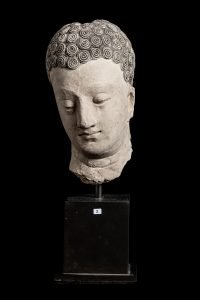
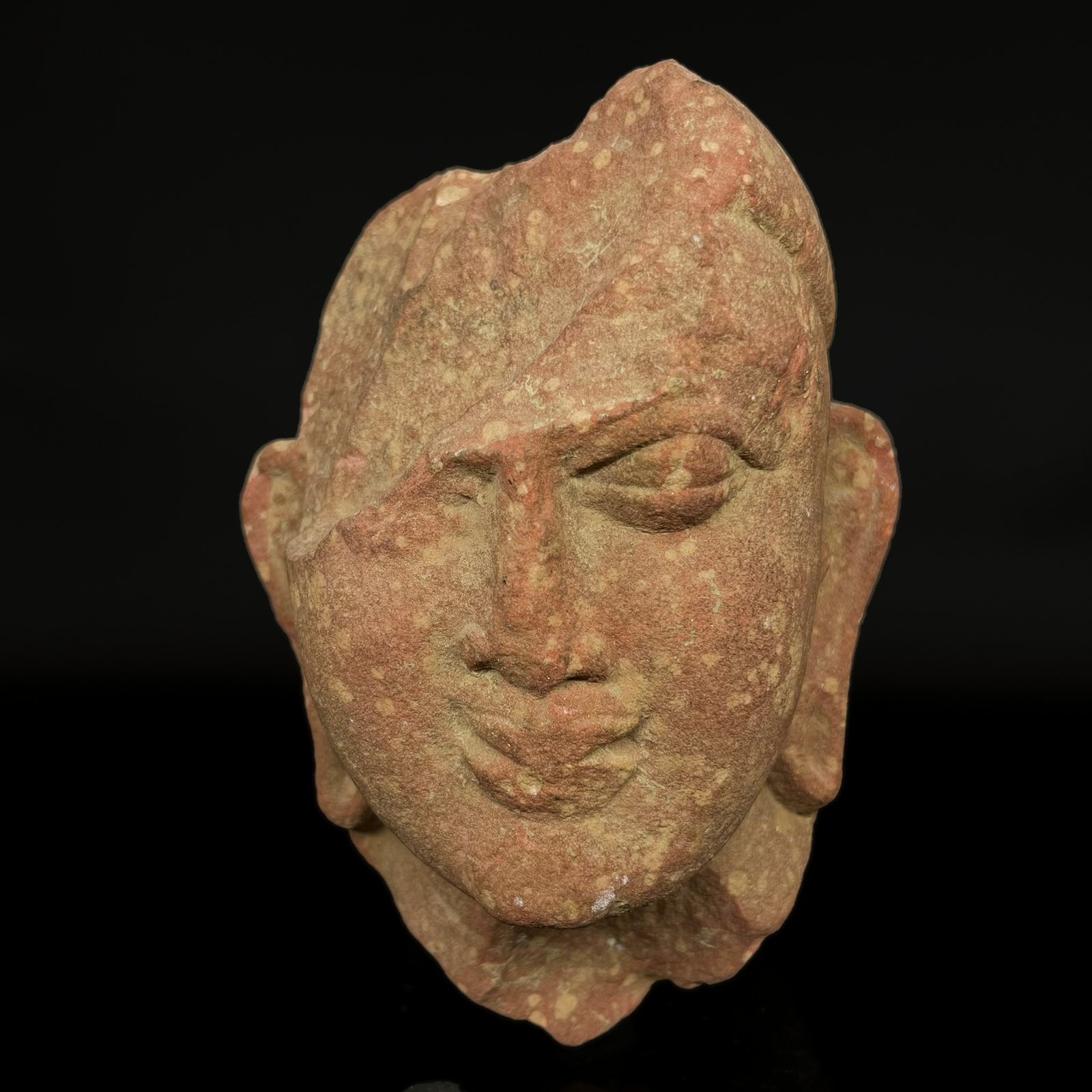
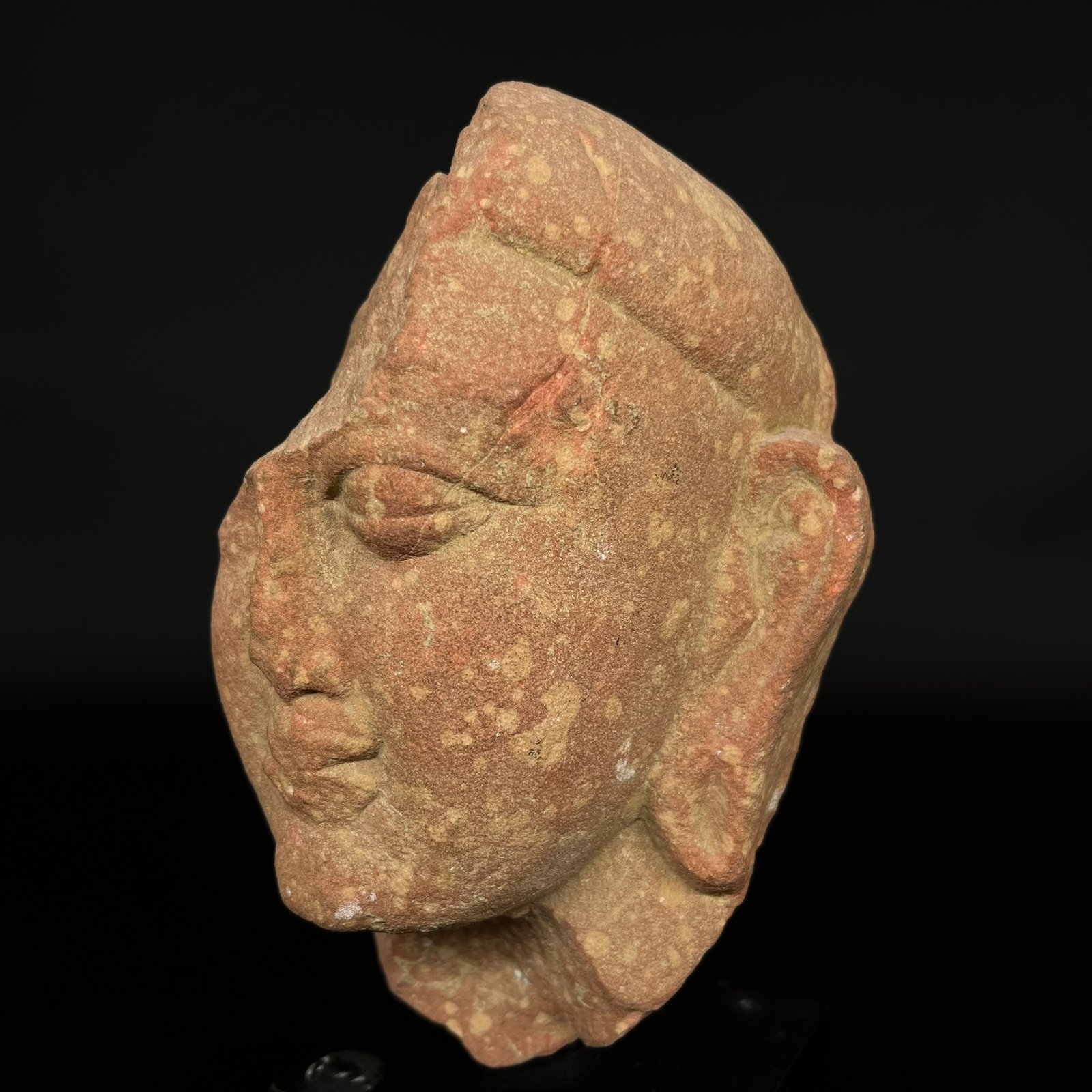
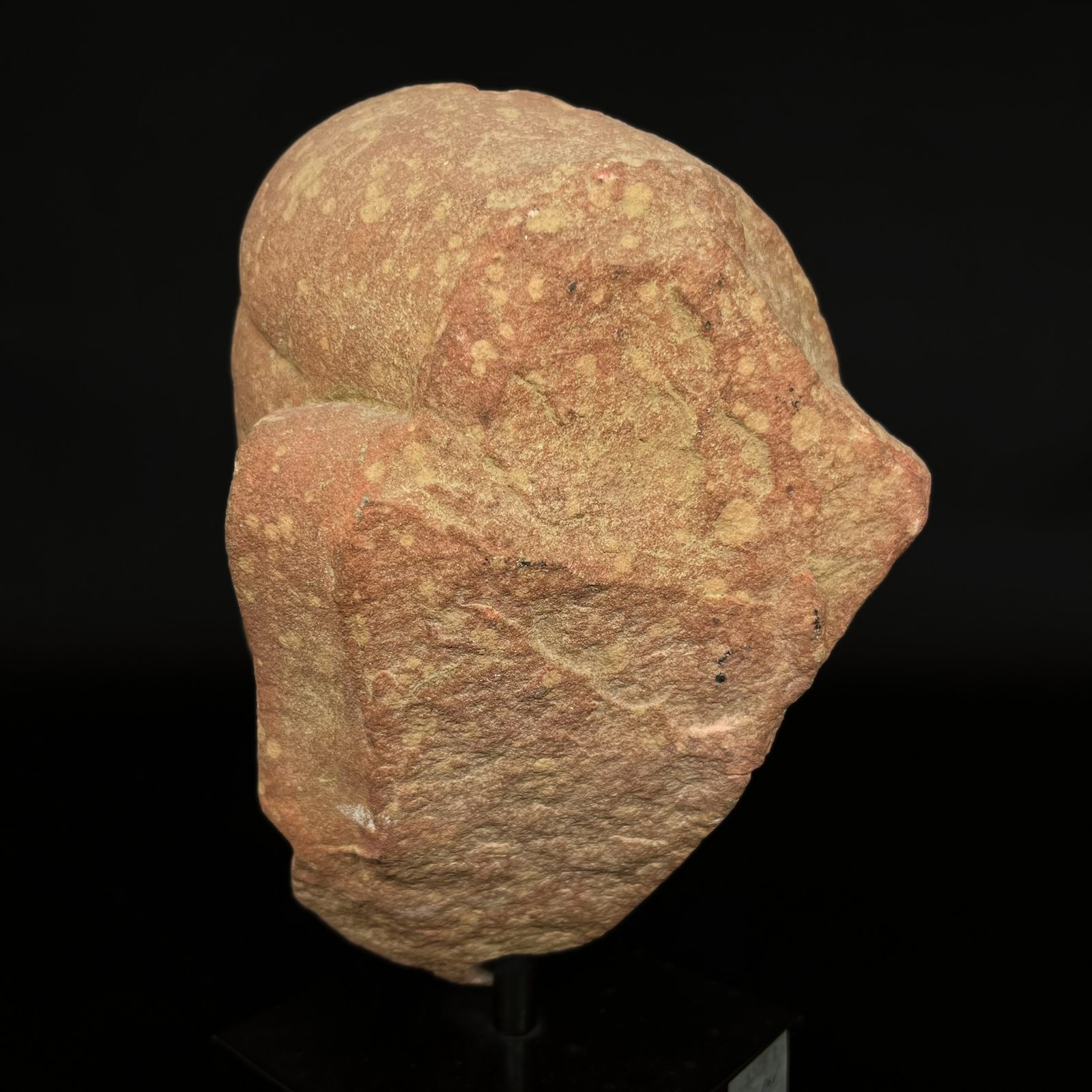
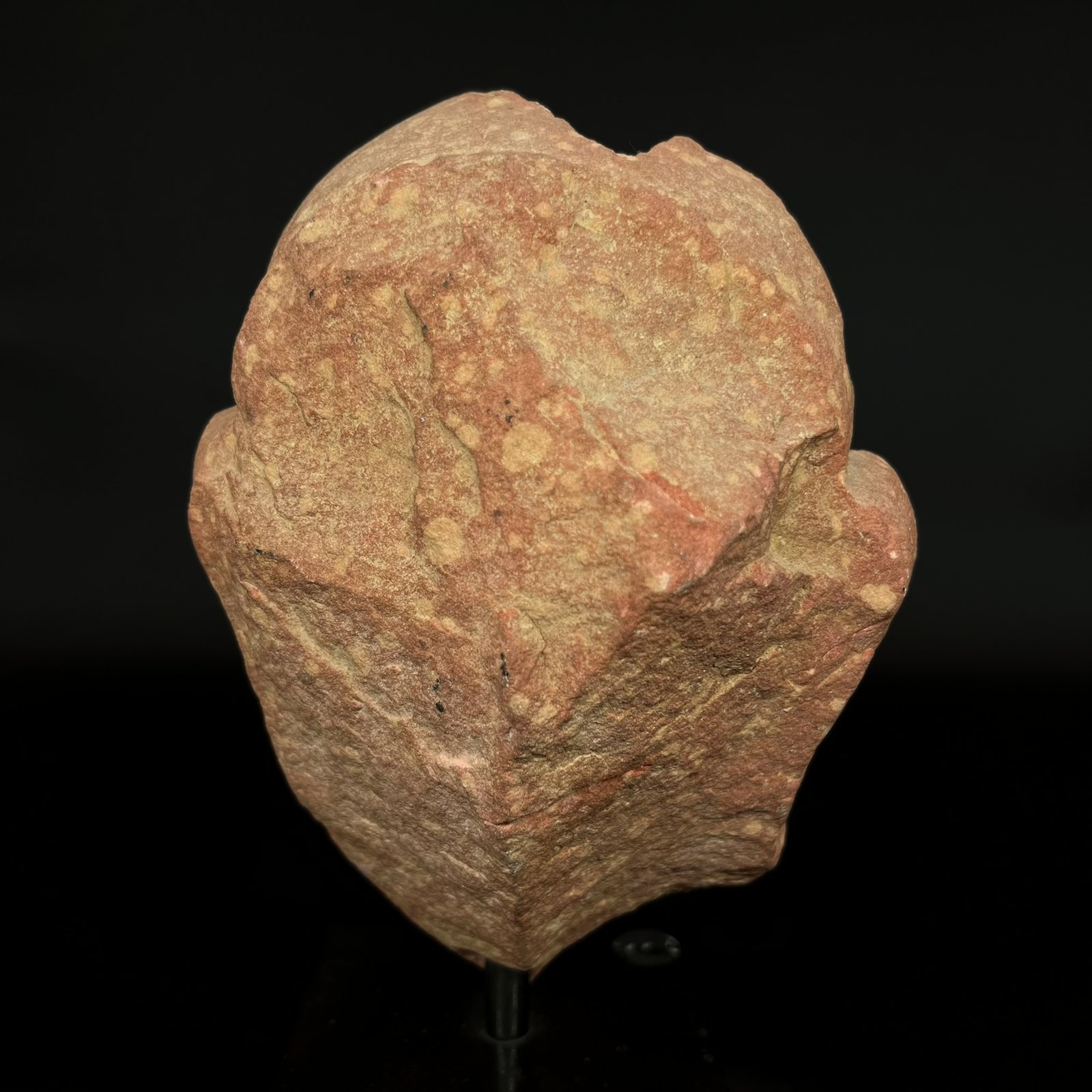
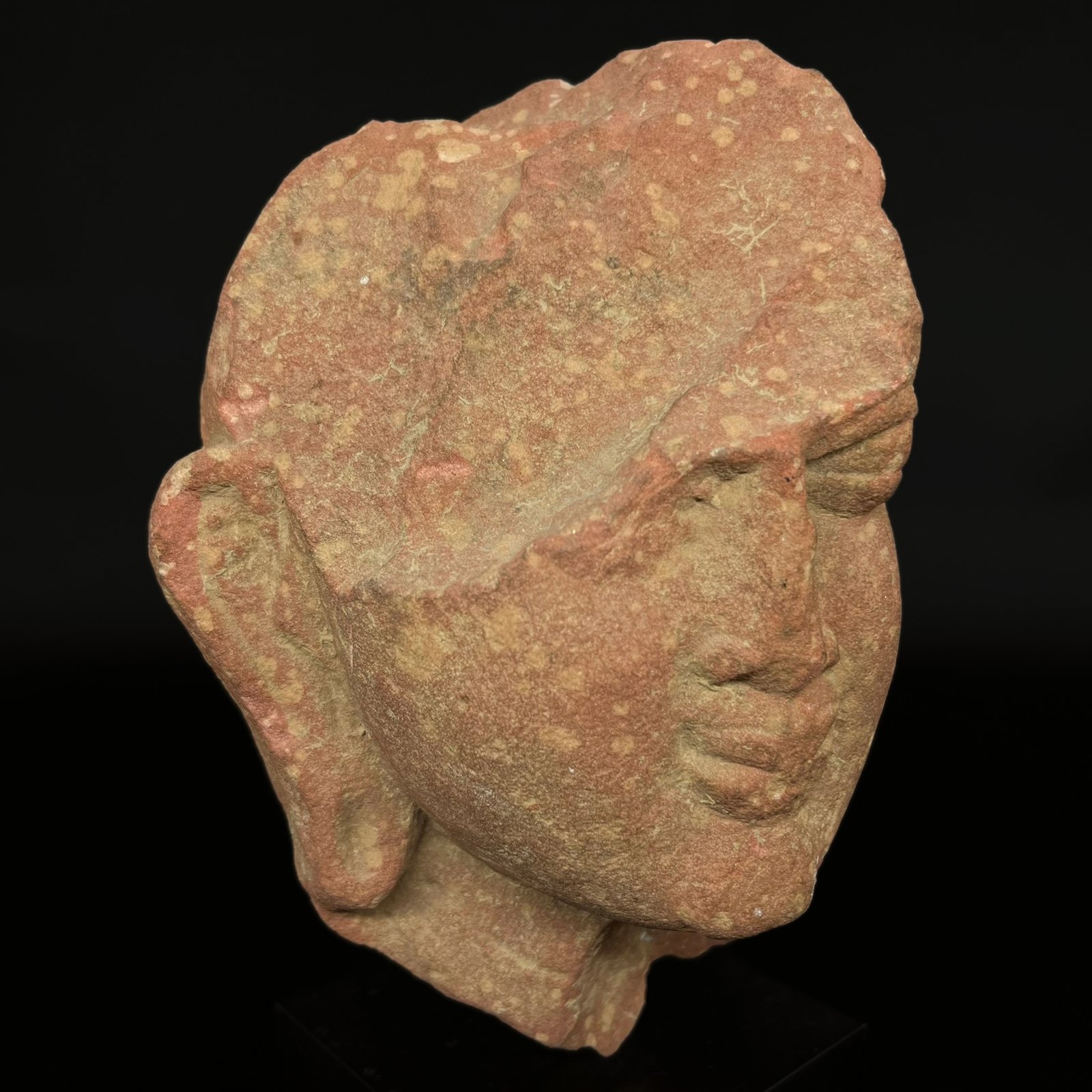
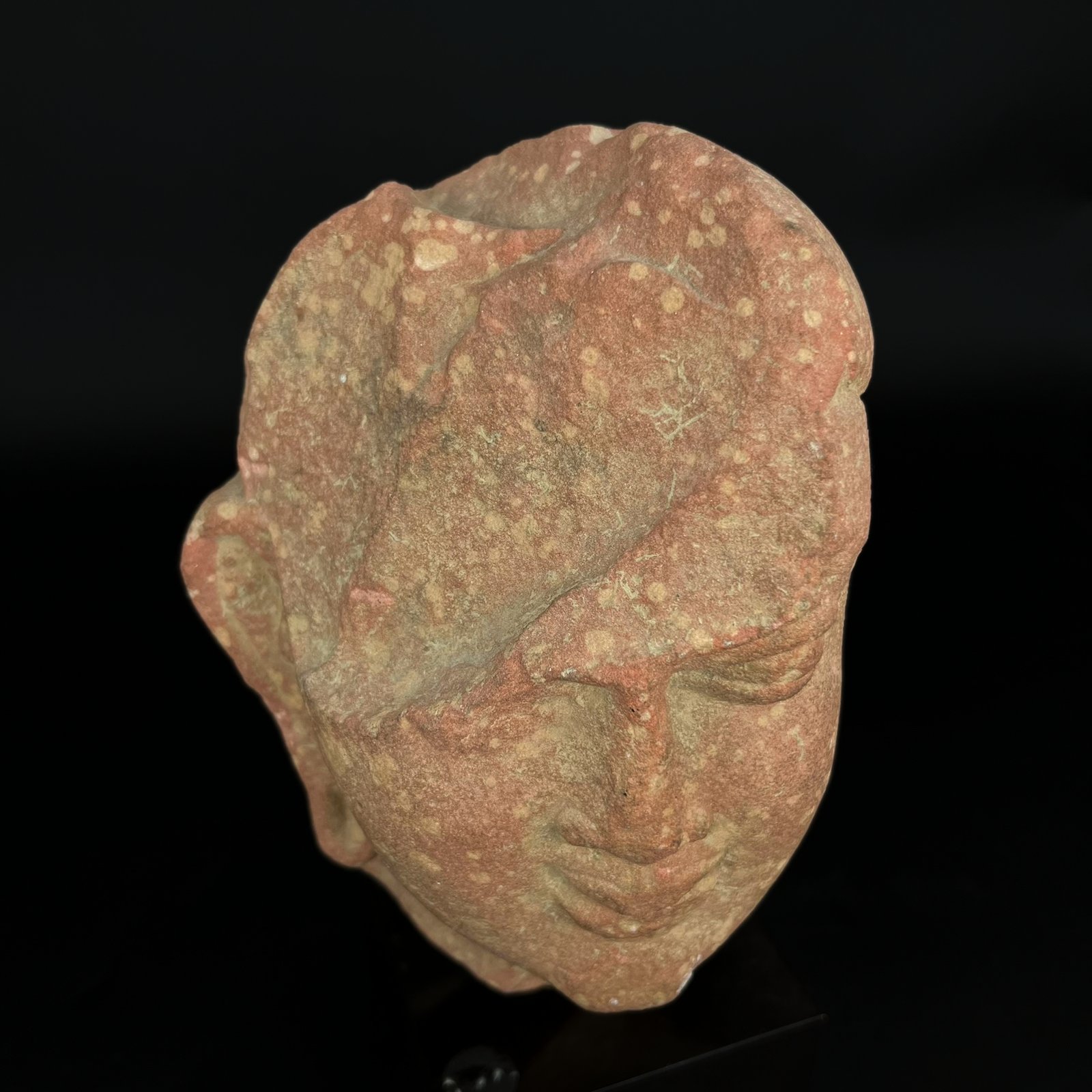
A stone head sculpture from the city of Mathura, dating from the Kushan dynasty. It is made of red sandstone with white specks, which was the most common material found in Mathura, making the red colour one of the city’s trademarks. The surface of the sculpture clearly shows that the sandstone is a coarser material, making the surface more rough. Part of the head is missing, but the lifelike left eye, broad nose and full lips are still visible. The earlobes are thick and long, which is one of the Buddha’s beauty features.
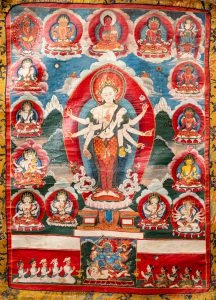
Mathura, one of India’s most famous religious and commercial centres, was already inhabited in the 12th century BC. According to Hinduism, it is the birthplace of one of the greatest deities, Krishna, and is thus considered one of the 7 holy Hindu cities. During the Kushan period, both culture and the arts flourished; Buddhism, Hinduism and Jainism coexisted. The Mathura school of art was established and produced many works of art; for example, it was here that sacred figures were first depicted with multiple arms, legs and heads. The sculptural use of red sandstone was very common.