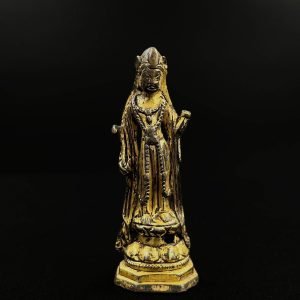
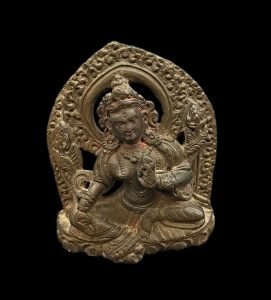
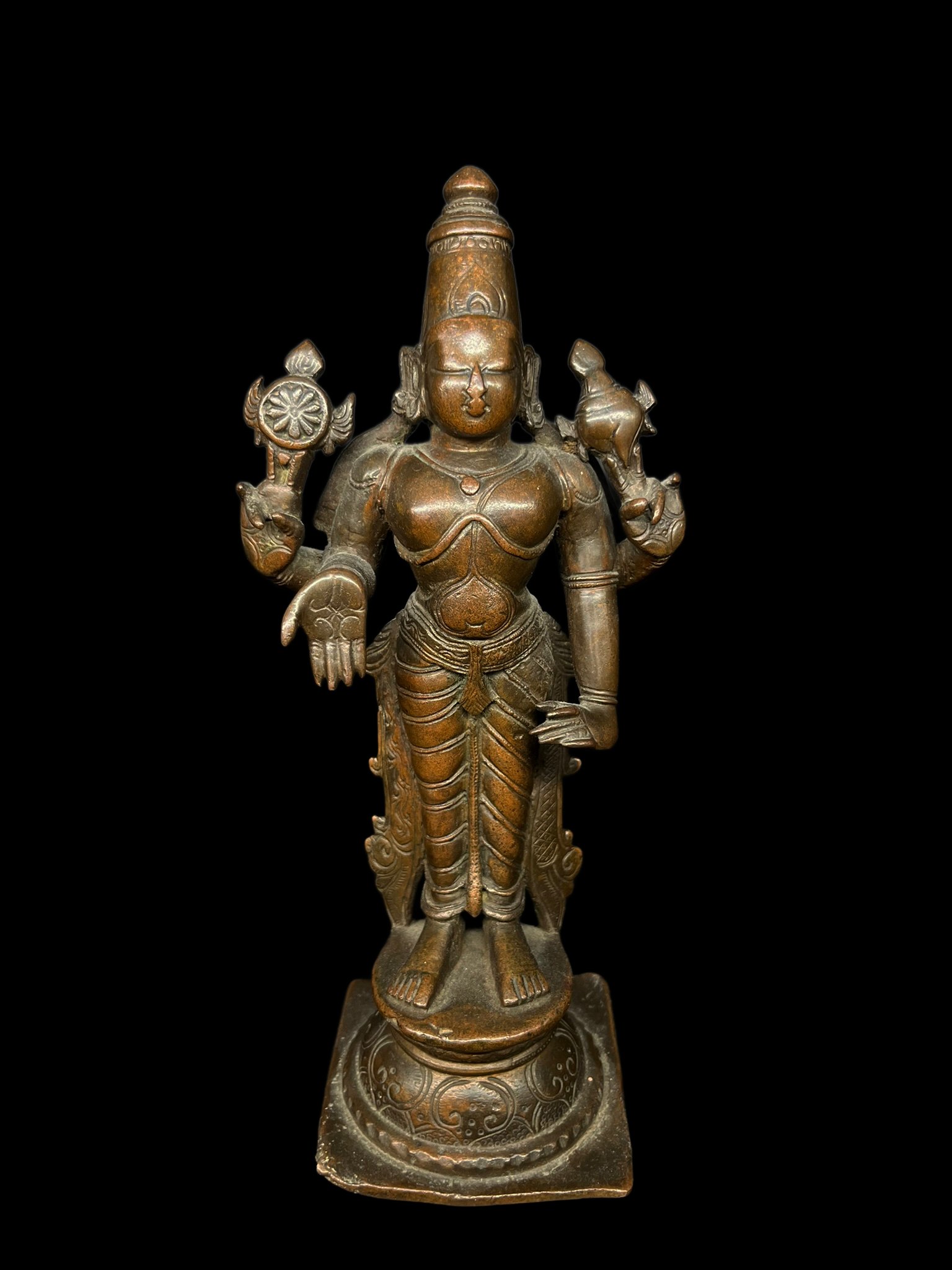
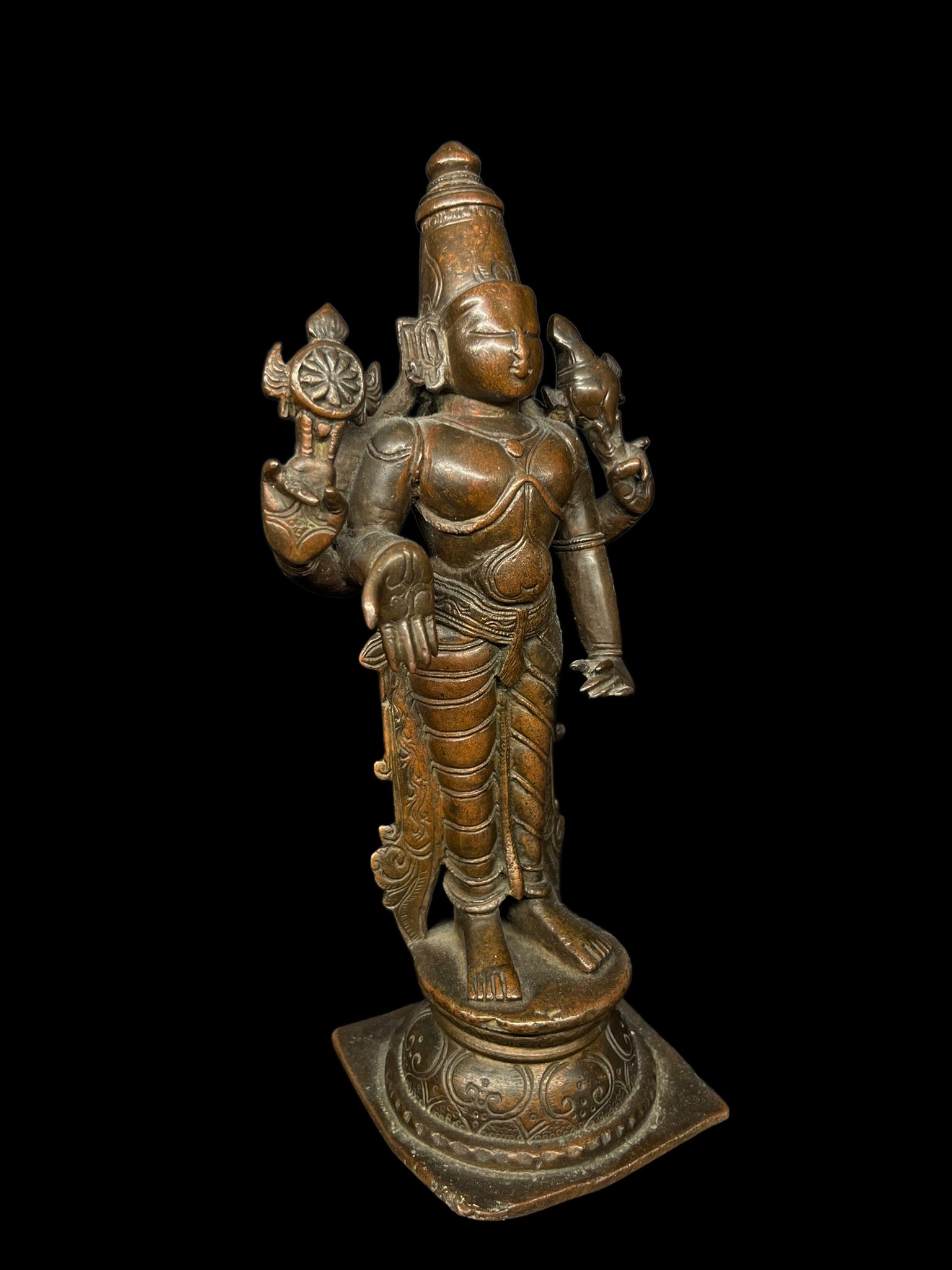
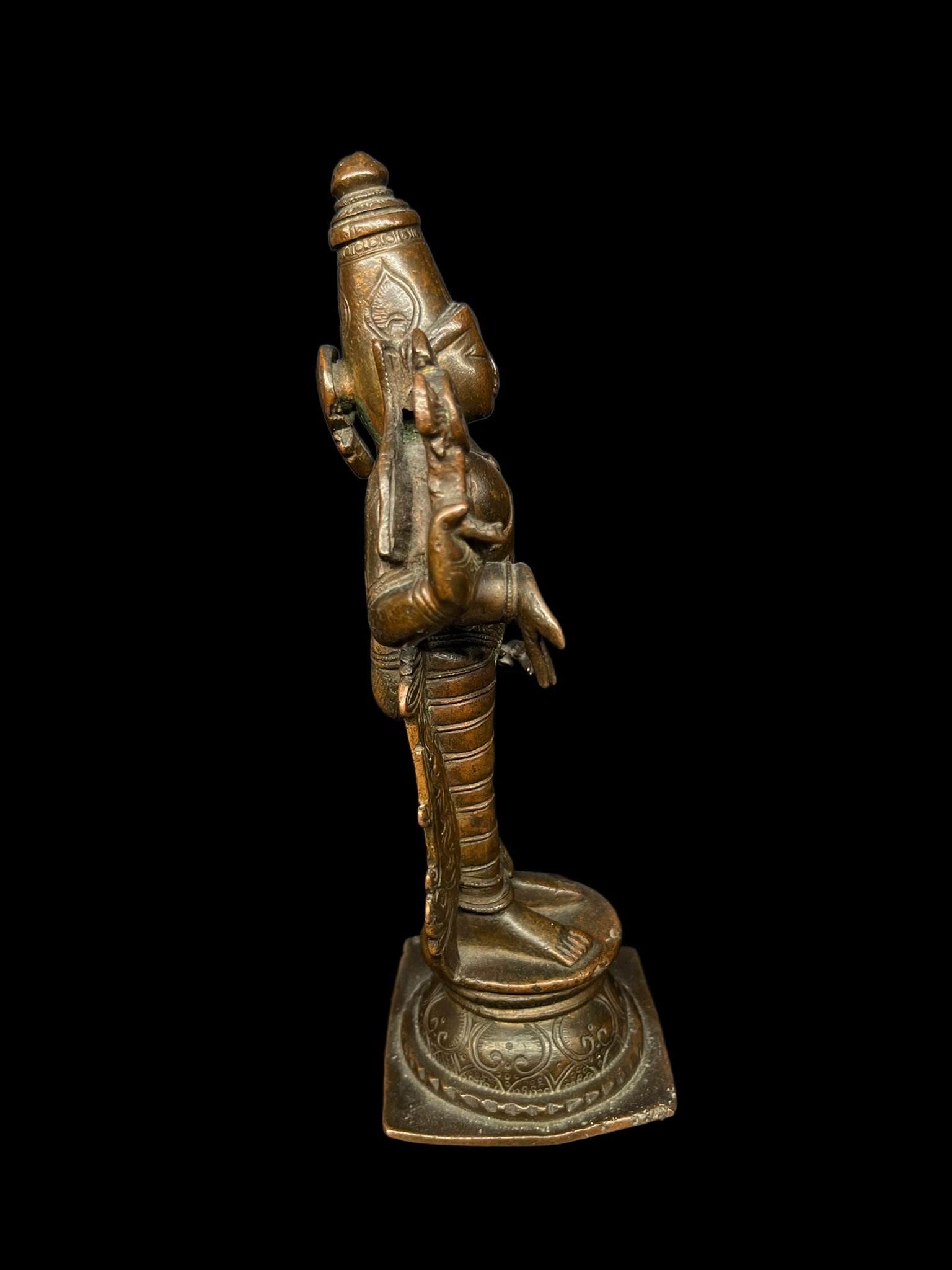
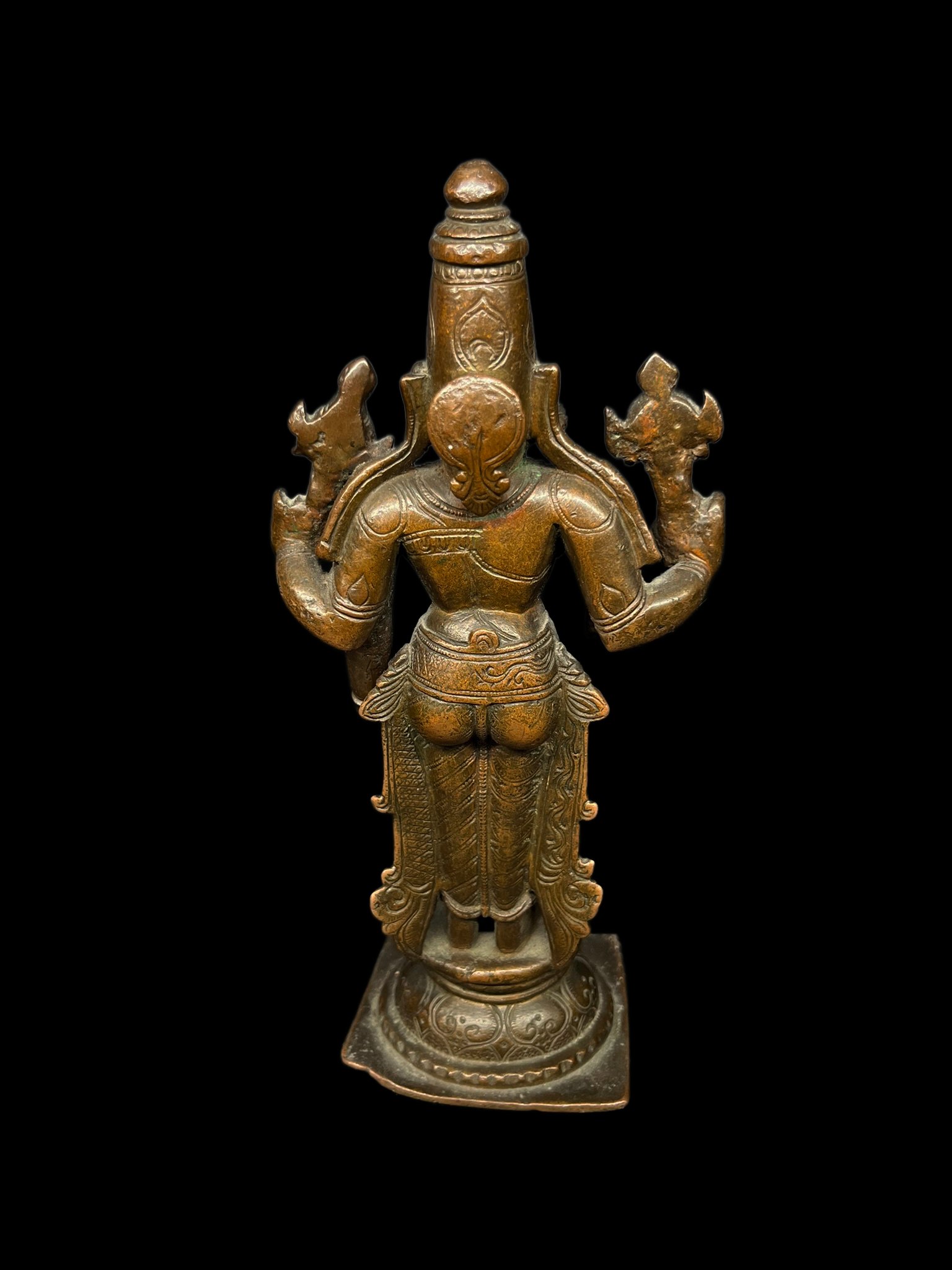
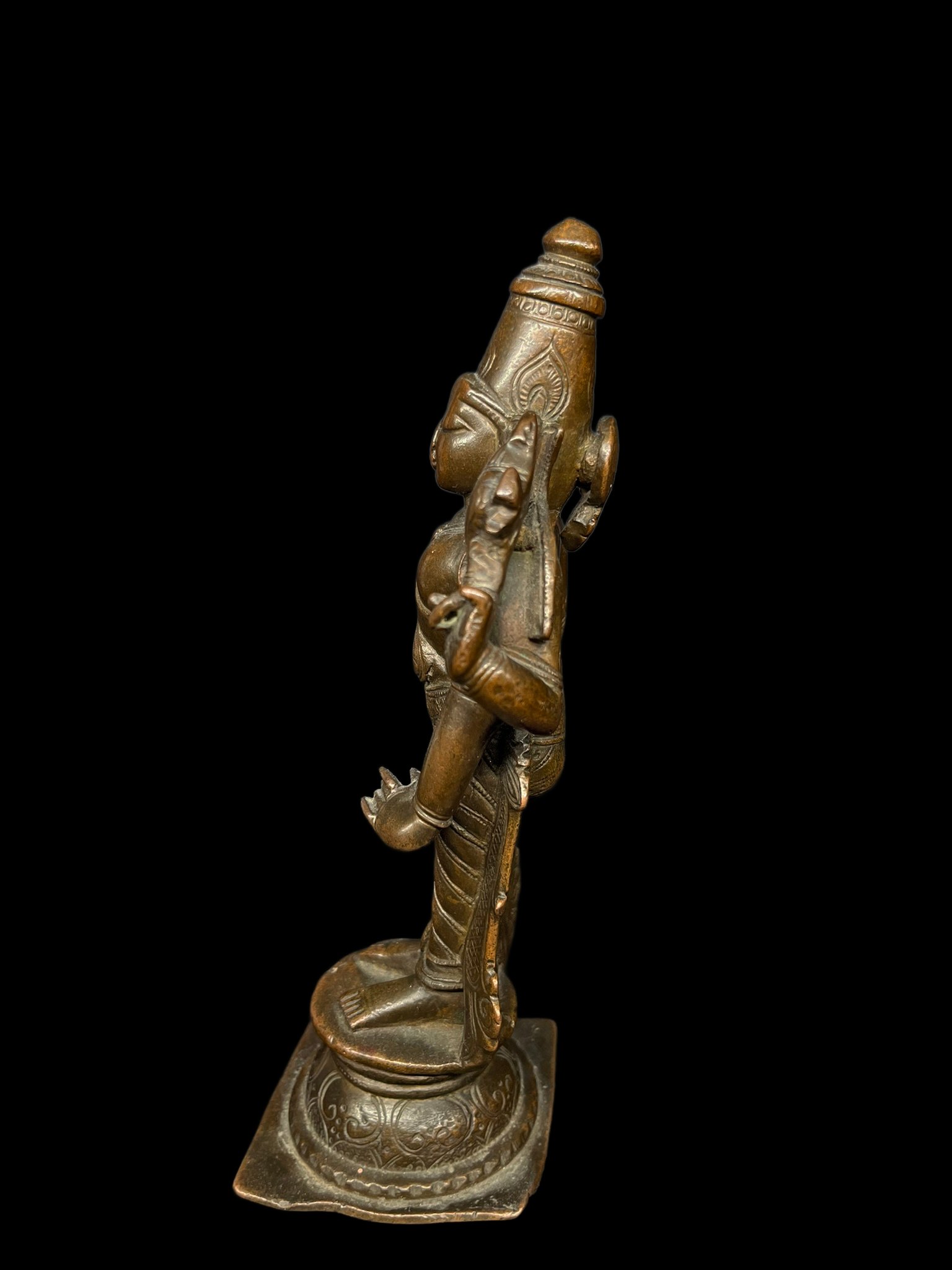
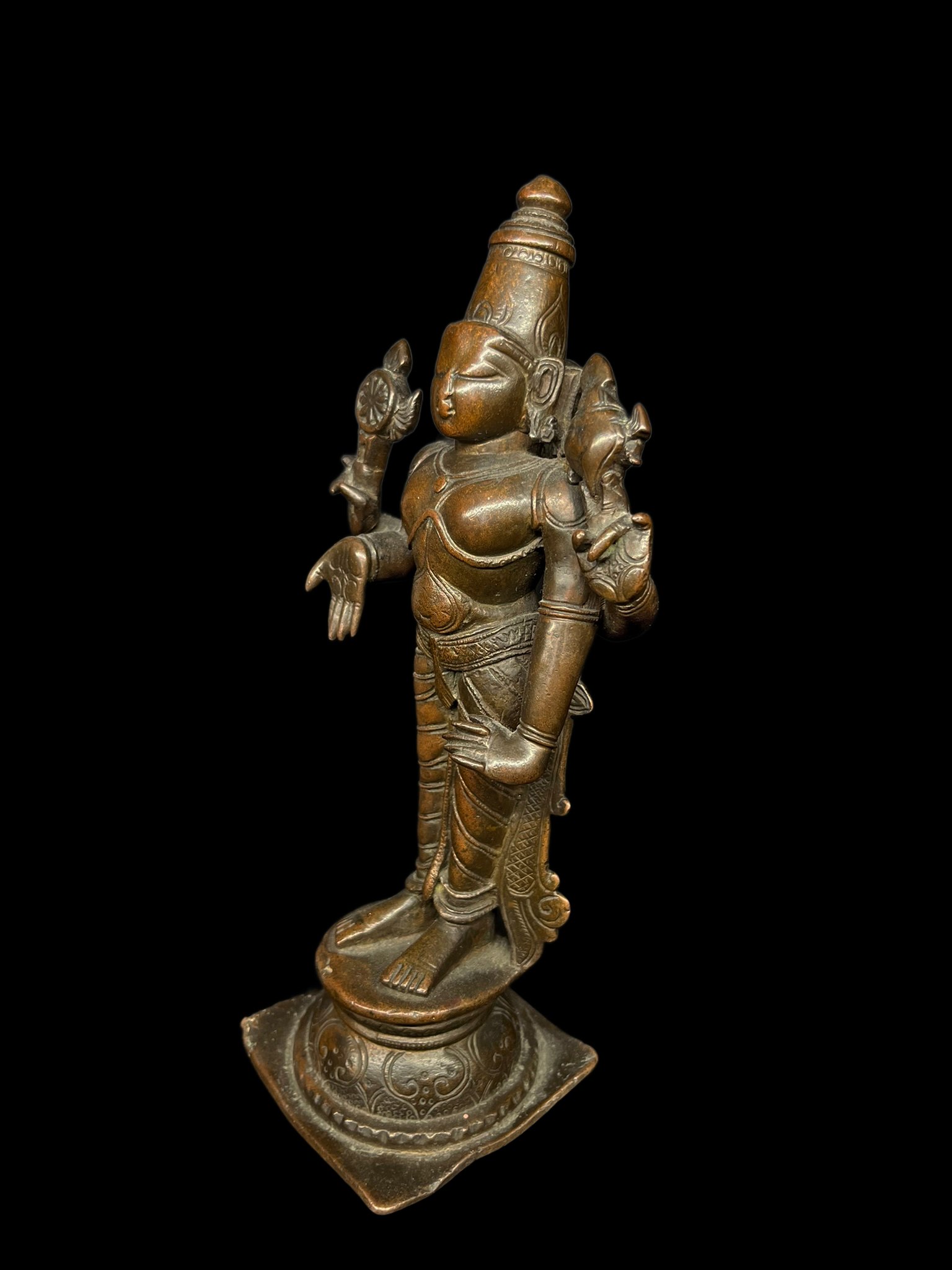
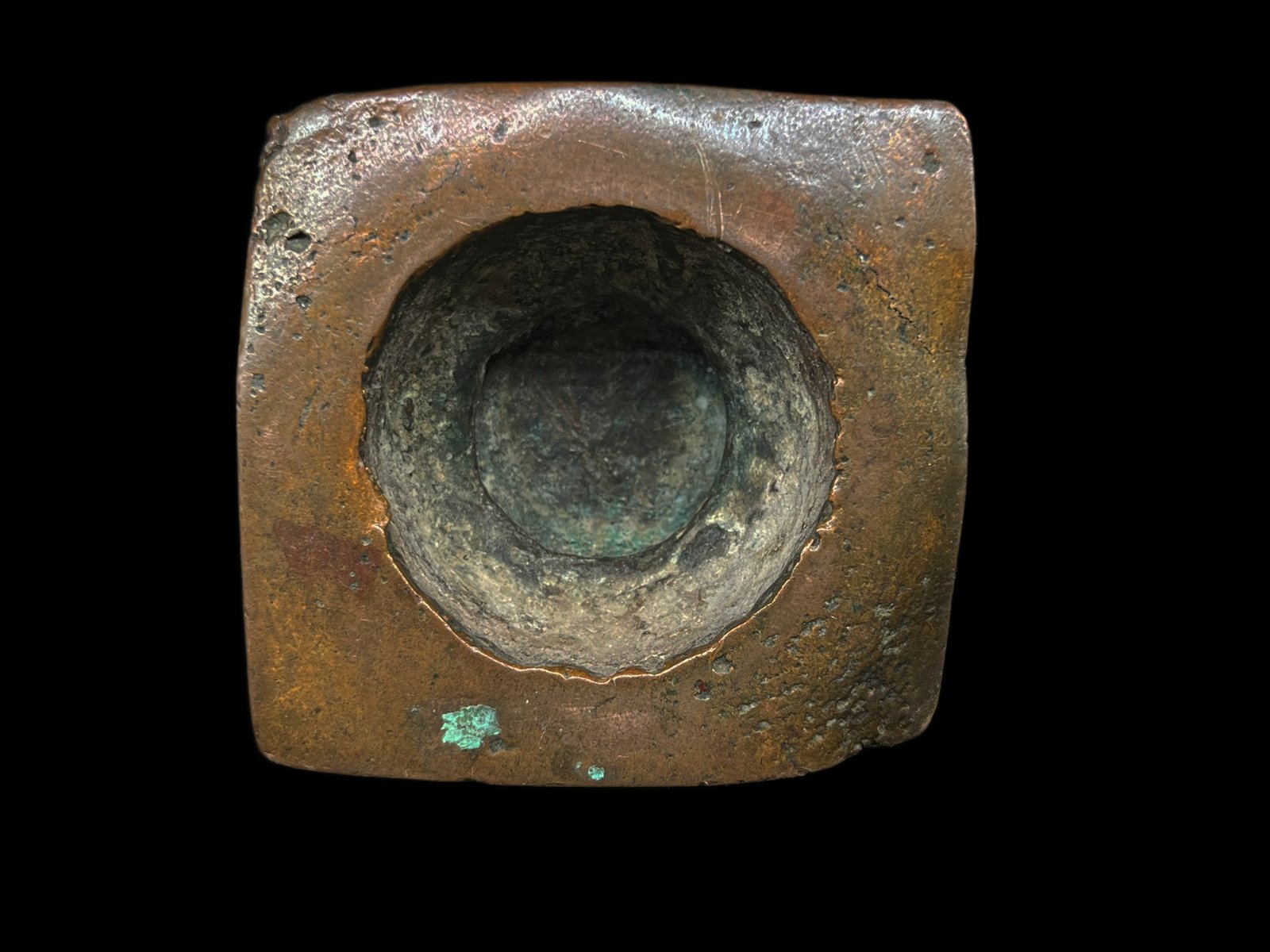
Bronze statue of Lord Krishna from 16th century India. Depicted on a double lotus throne, Krishna is in samabhanga (upright) posture, showing his serene power. He has 4 arms: the upper right hand holds the chakra (discus), symbolizing the mind dharma and the cycle of time, the lower right hand forms abhaya mudra (the gesture of fearlessness and protection), the upper left hand holds the shankha (conch shell), representing the “Om” sound, the purity , creation and victory, the lower left hand forms kataka mudra, which supposed to be holding a lotus bud, the symbol of purity and spiritual growth. Krishna’s head is adorned with a tall, cylindrical crown called the kirita-mukuta, showing his high authority, his divinity. The facial features became softer over the years, due to the touches of devotees. The clothes are intricately folded, falling elegantly around his legs. Graceful representation of the deity.