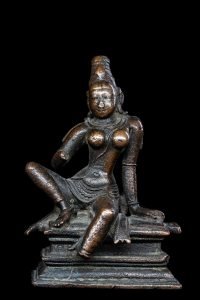
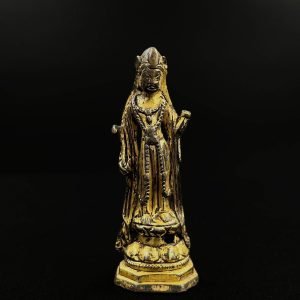
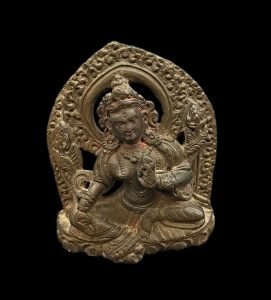
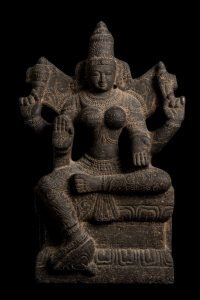
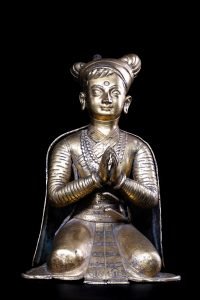
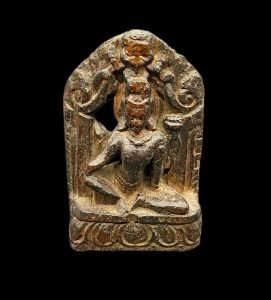
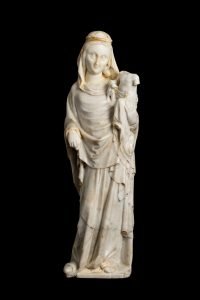
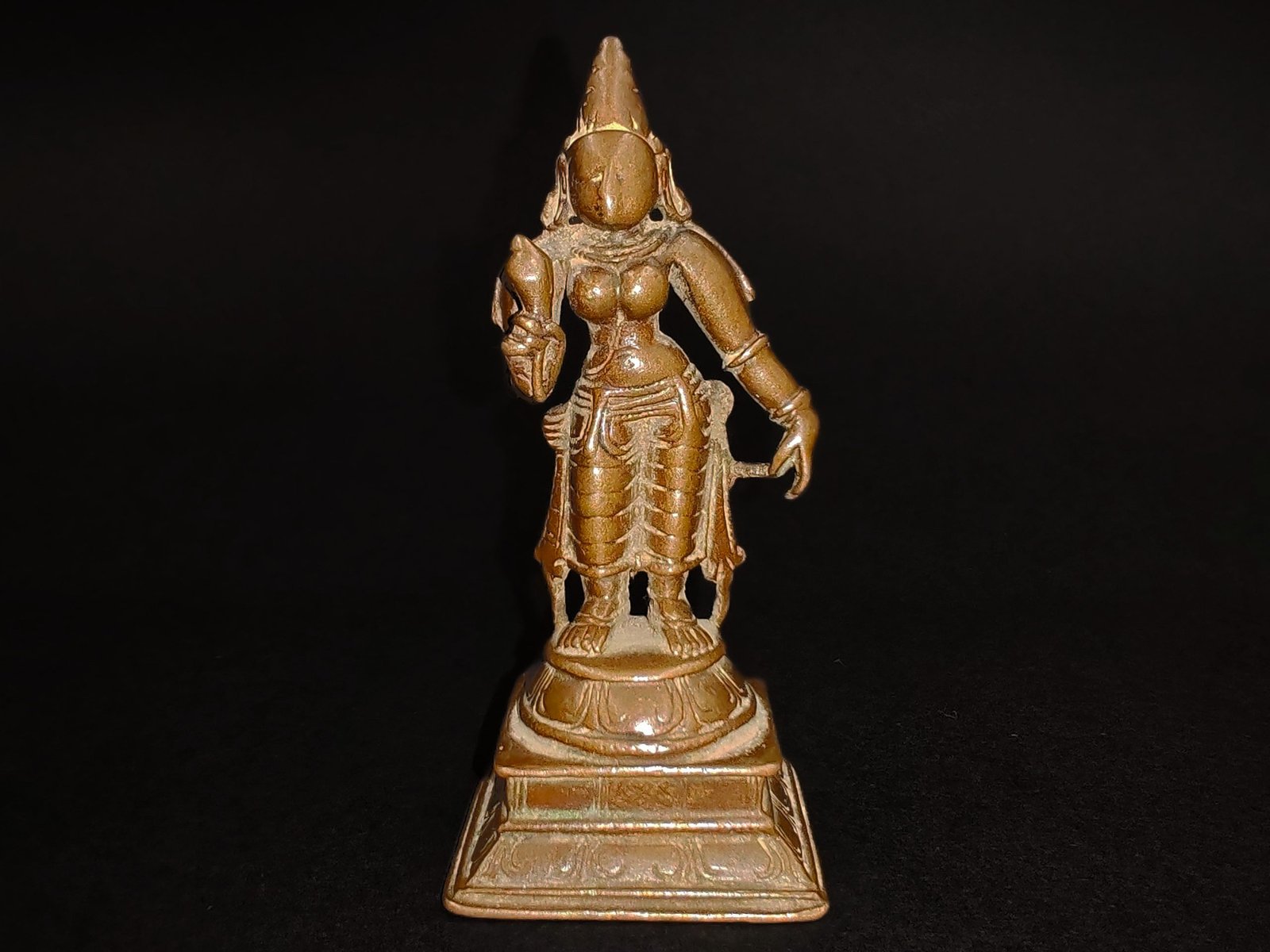
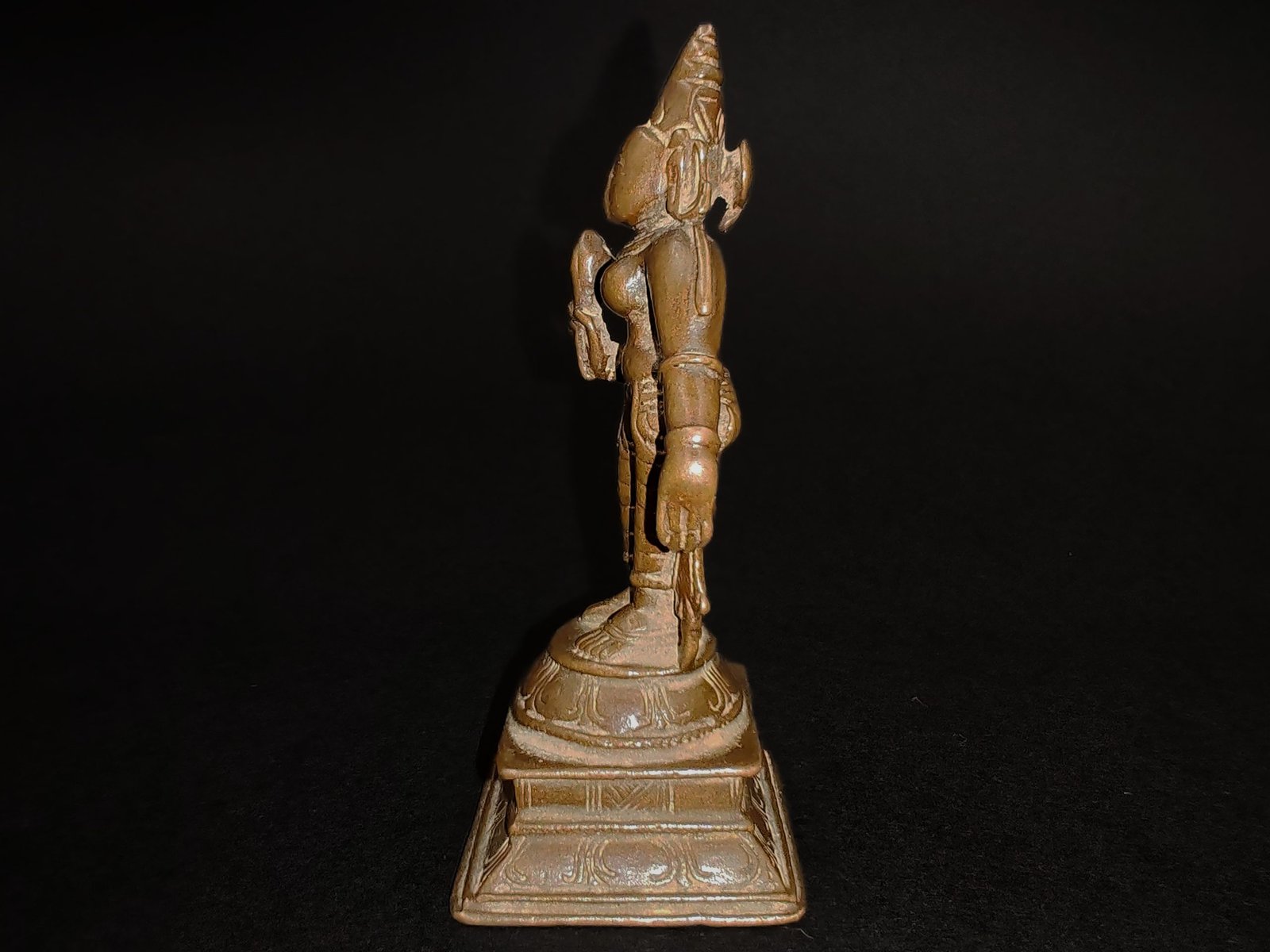
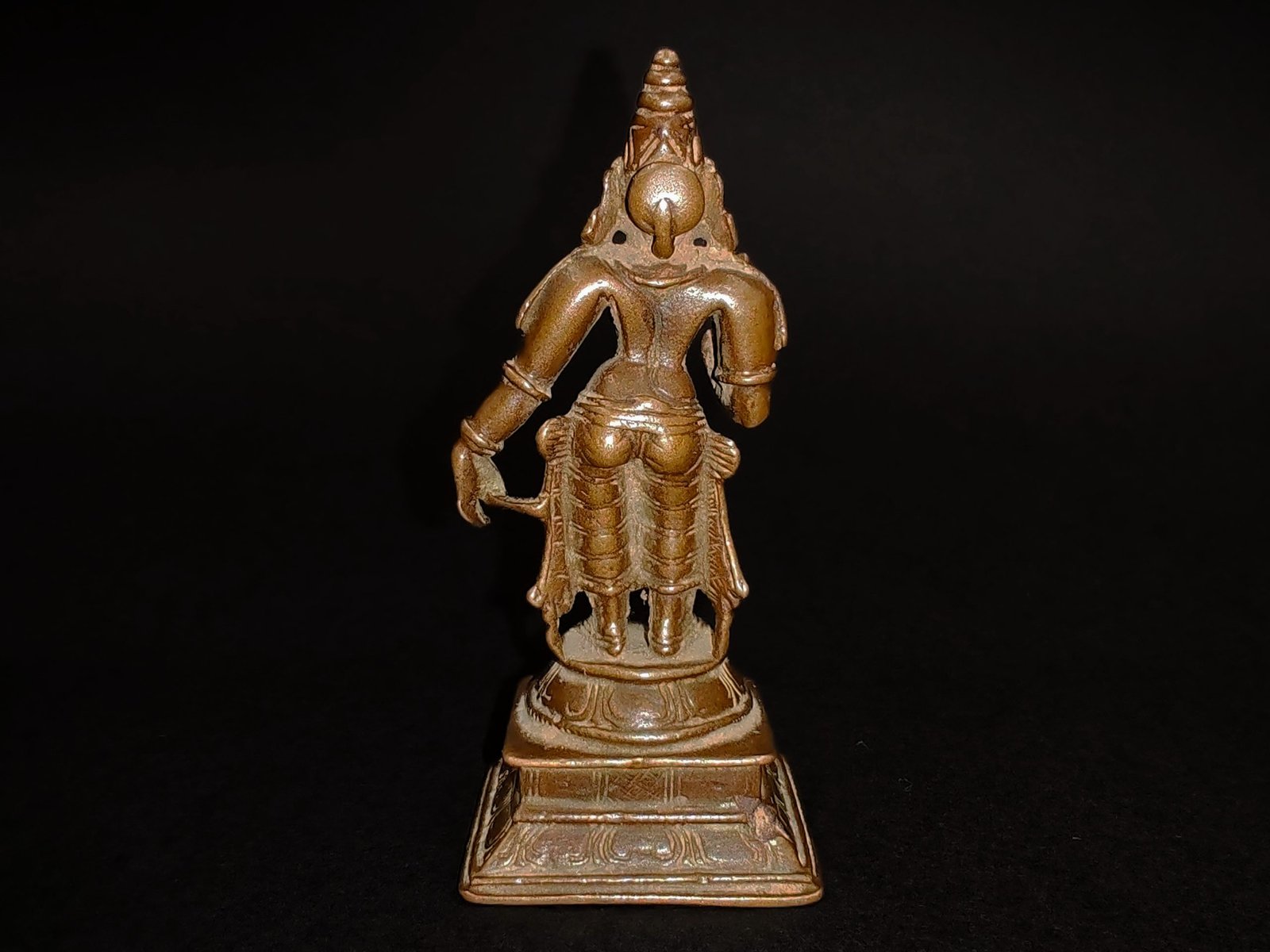
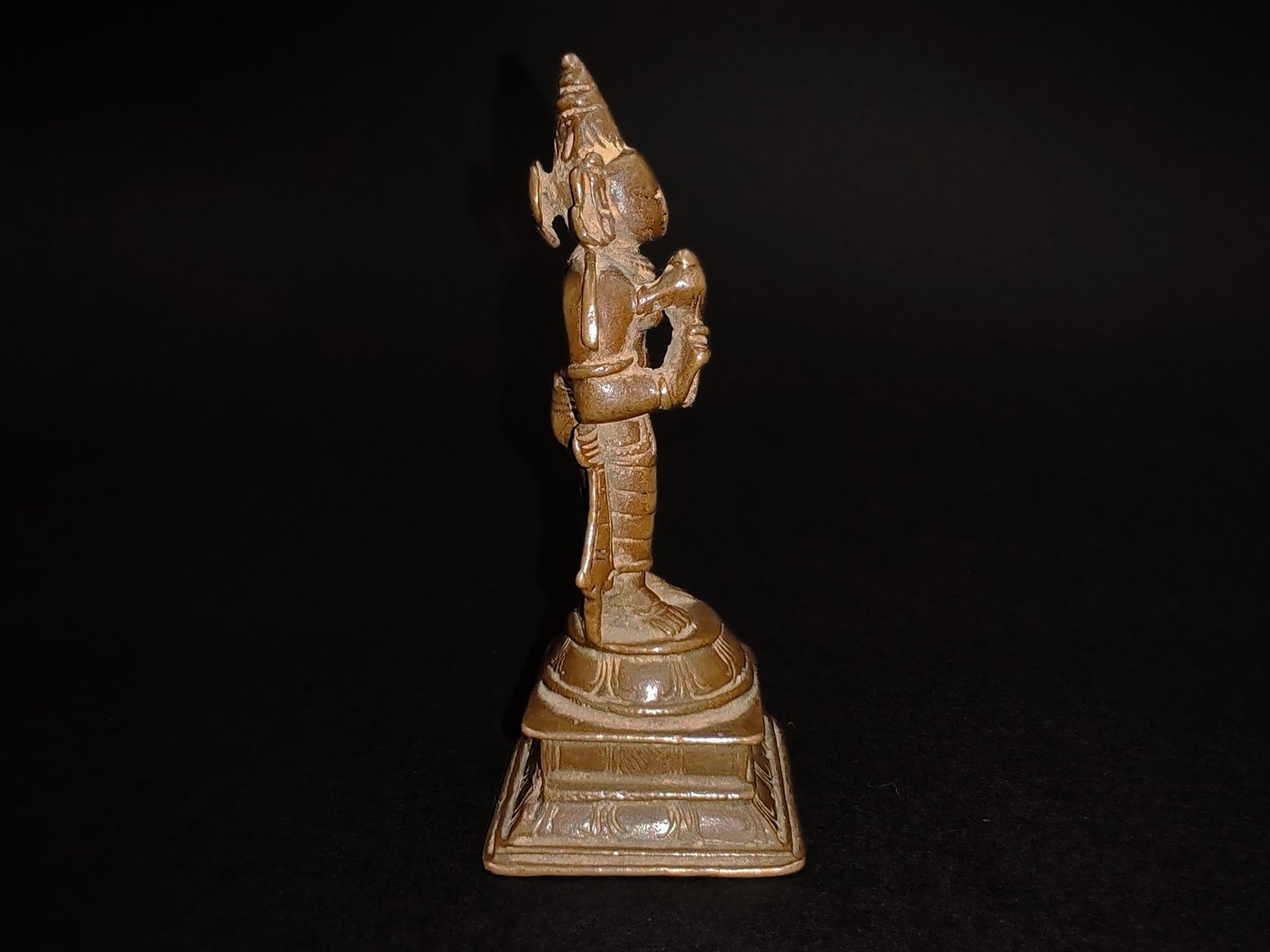
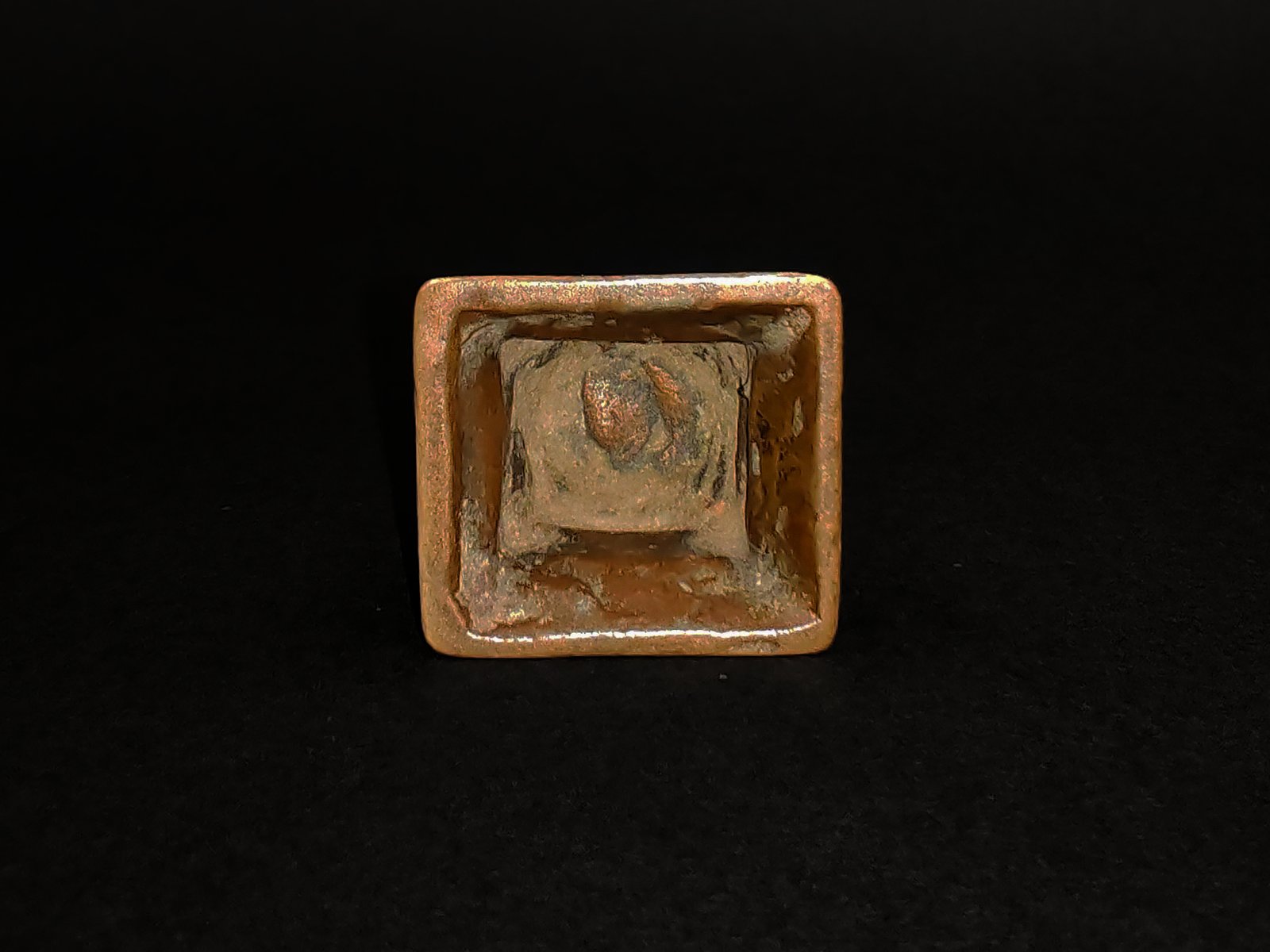
This Indian bronze statue of Bhu Devi dates back to the 16th or 17th century. Bhu Devi, the goddess of the Earth, fertility, and prosperity, was cast using the lost-wax technique, a method common in South India during this period. Despite its small size of 7 cm, the statue beautifully captures the goddess’s femininity and grace. Bhu Devi stands on a double lotus pedestal and in tribhanga pose, a graceful S-shaped posture that accentuates her femininity. In her right hand, she holds a lotus flower in kataka mudra, a gesture symbolizing offering. Her left hand, in lola hasta mudra, hangs elegantly at her side, mimicking the shape of a horse’s tail. Adorned with large earrings, numerous bangles, and elaborate clothing, the statue’s features, particularly her face, showcase a softness due to the countless touches of devotees during rituals.
Bhu Devi or Bhumi is primarily known as the Goddess of the Earth, representing fertility, agriculture and the nurturing side of nature. She is one of the consorts of Vishnu and is often depicted alongside Vishnu’s other consort, Sri Devi, and their husband.