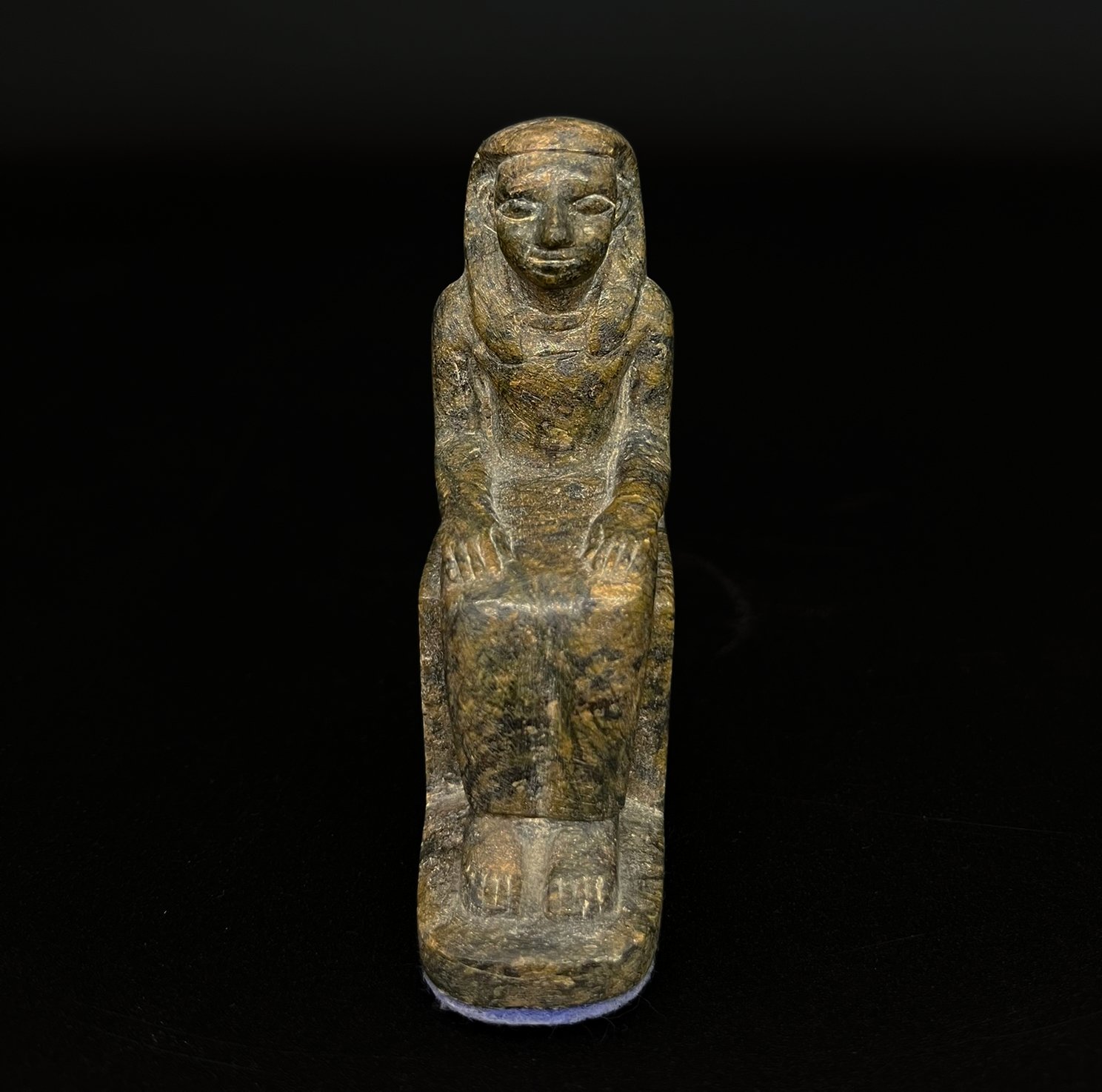
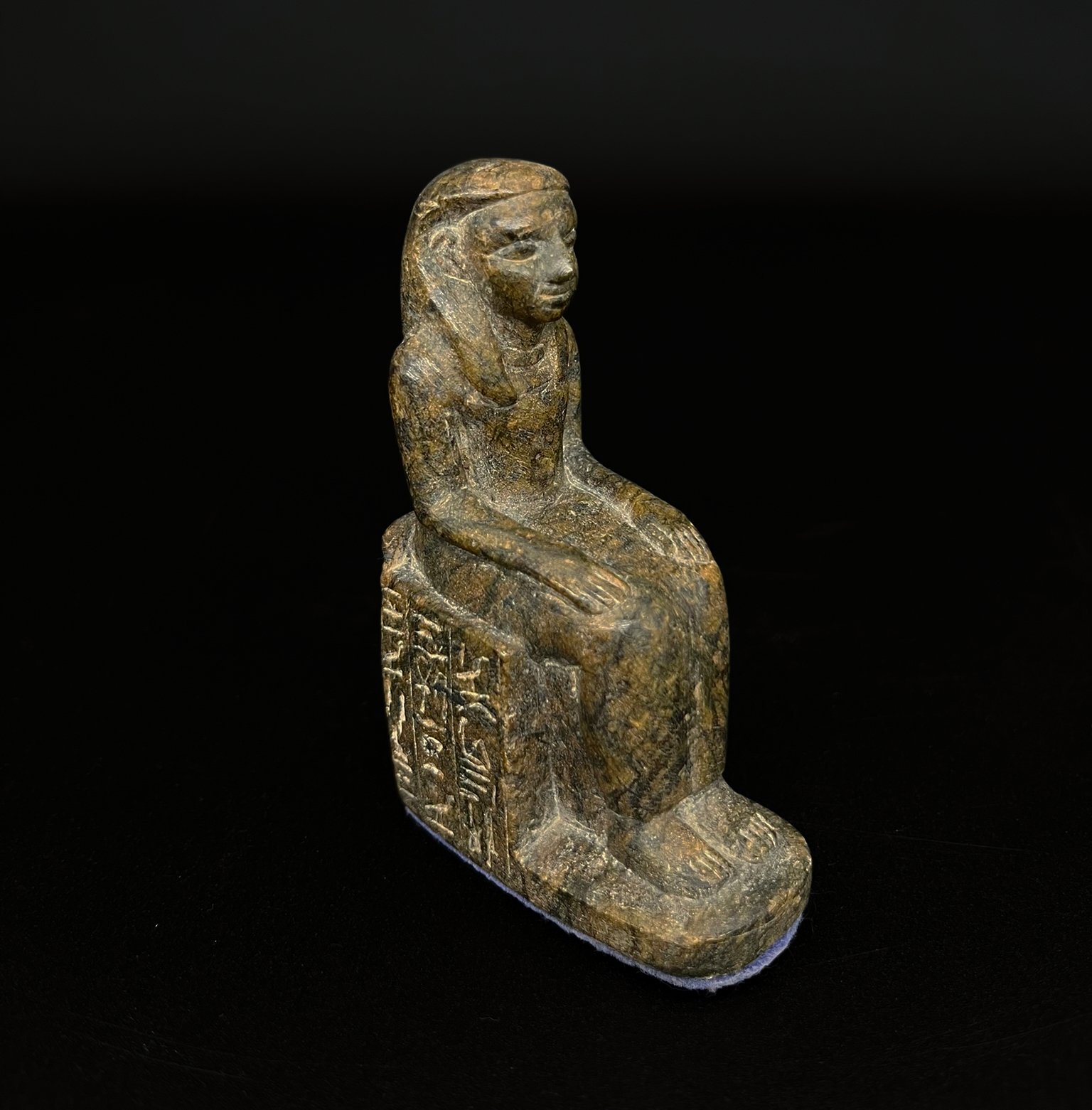
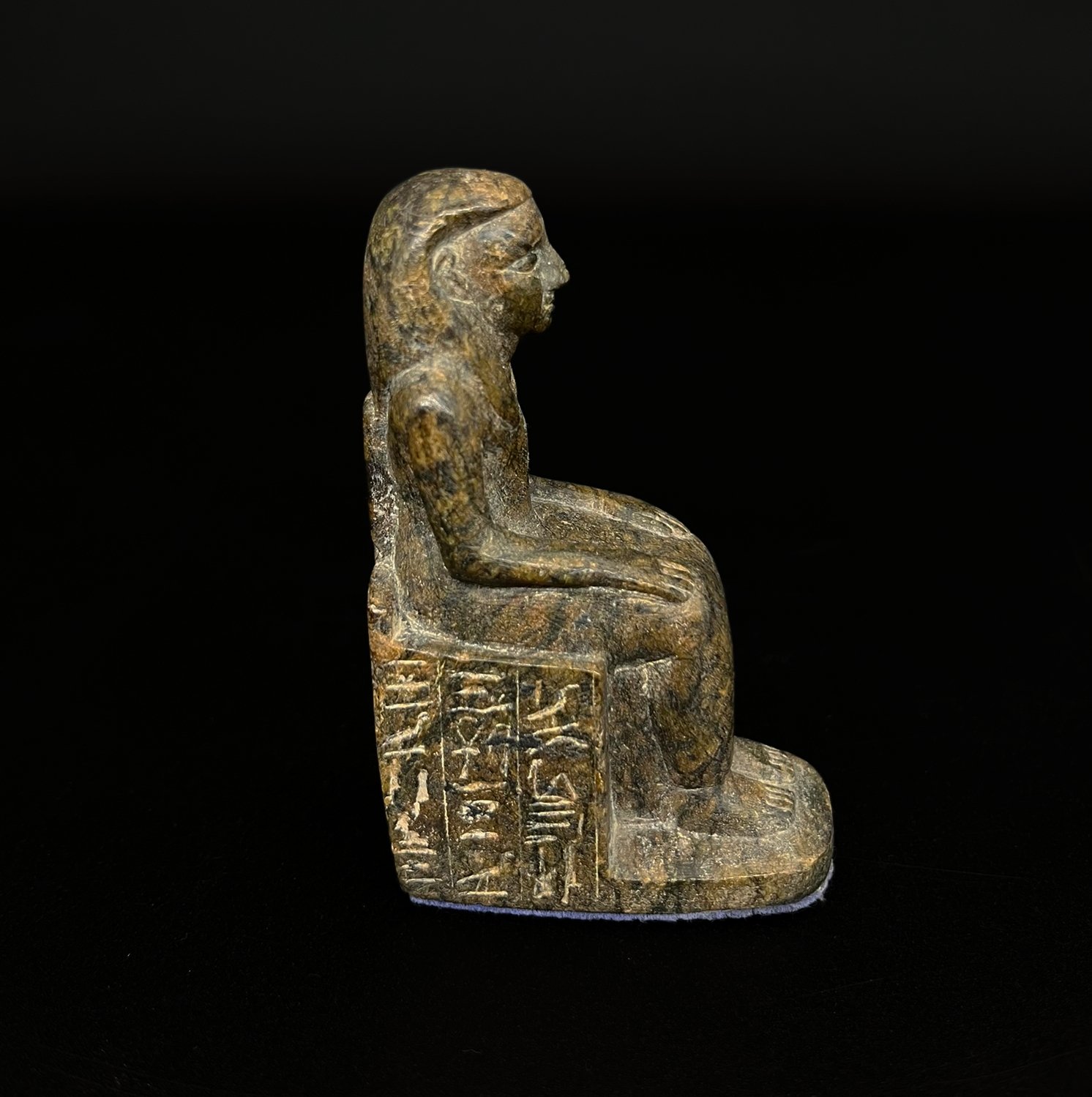
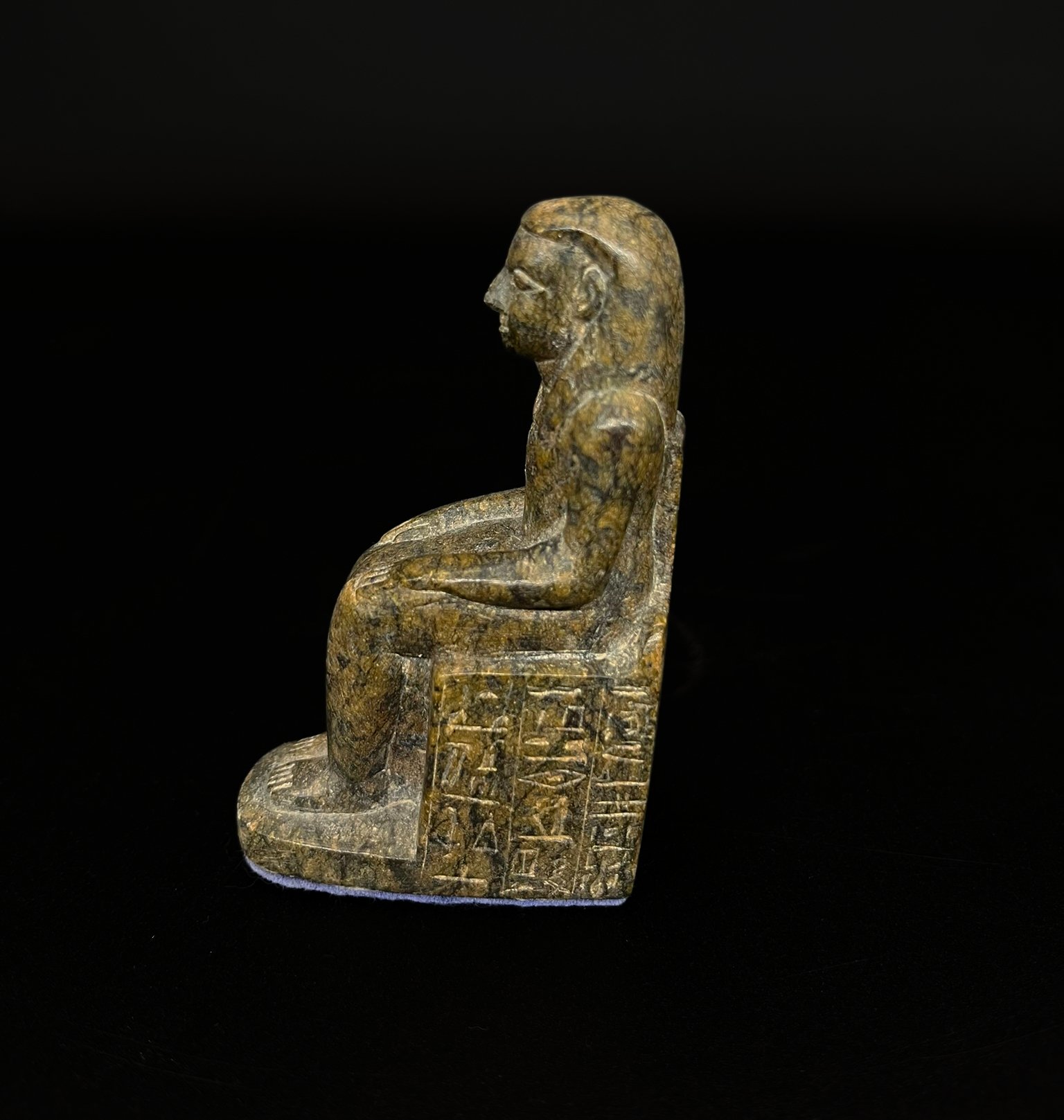
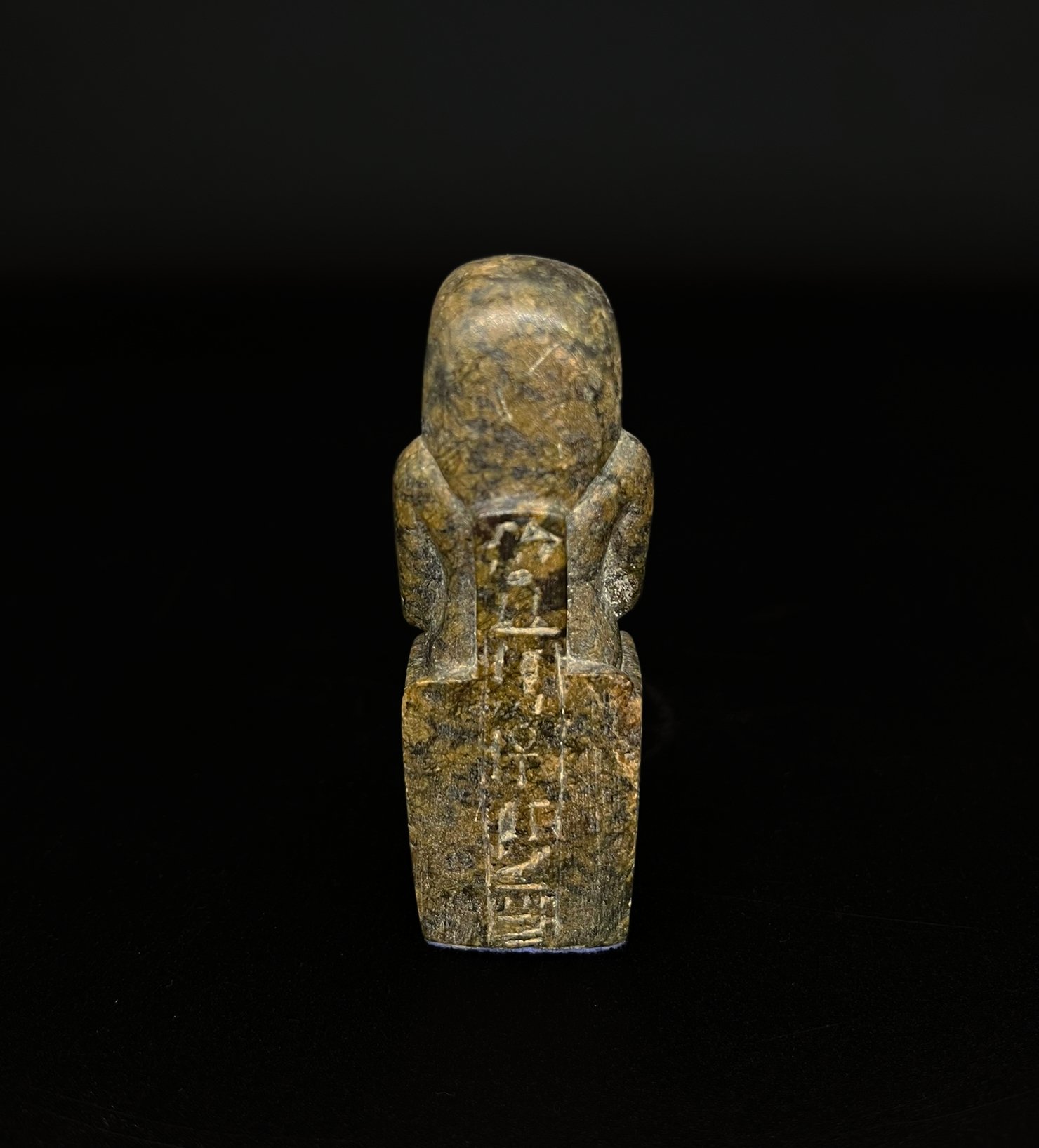
Granodiorite sculpture from the New Kingdom period in Egypt. The sculpture depicts a king, or pharaoh, of the period, seated on a throne decorated with hieroglyphs. The pharaoh’s features are simple and clean, with a head with the typical pharaonic nemes and an ornate chain around his neck. The rest of his body is blurred, his lower garments, which may once have been shendyt (Egyptian skirts), now faded. Even so, the pharaoh’s eyes are prominent, drawn out with the eye paint common in the period. The material of the sculpture, granodiorite, is extremely hard and is often used for construction even today. In the eastern regions of ancient Egypt, there were numerous mines for the extraction of the material and it was even exported to Rome. The Roman Pantheon, for example, was built from this granodiorite.
The Pharaoh’s Eye or the Eye of Horus is a dominant and common motif, showing a heavily painted left eye. The symbol originated in ancient Egyptian religion, representing prosperity, healing and protection. Its history stems from mythology, when the deity Horus was fighting his rival, Seth, and when he plucked out one of Horus’ eyes, the other gods, through a series of healings, were able to cure the eye and return it to its owner. The healed eye then had healing powers of its own, curing Horus’ father of his ills. The eye was also often compared to the moon, since the moon wanes and grows again just like the wounded and healed eye. According to some sources, the right eye of Horus is the sun, while the left eye is the moon, since Horus is the god of the sky.